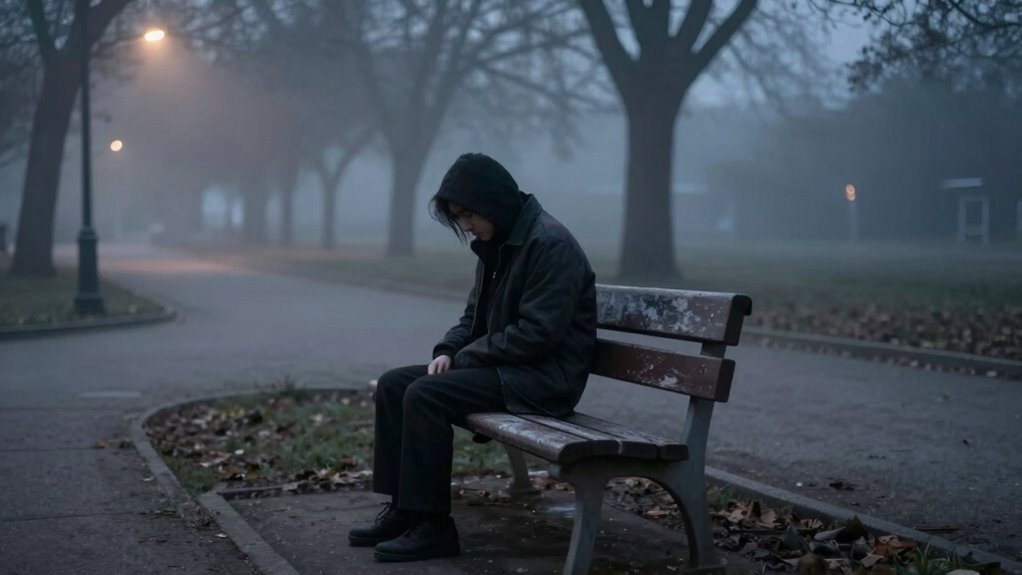

Loneliness quietly affects your mental health by lowering the chemicals that promote happiness and resilience, making daily challenges feel bigger than they are. It leads you to withdraw from social interactions, which worsens feelings of disconnection. Over time, this cycle can deepen sadness, anxiety, or depression, making it harder to cope. Recognizing these signs is essential, and understanding how small social acts can help rebuild your emotional strength might just be the key to feeling better.

Turn your quiet moments into listening time
- Thousands of audiobooks, podcasts and originals
- Listen on your phone, tablet or Echo — also offline
- Cancel anytime
Key Takeaways
- Loneliness decreases happiness-related chemicals, increasing sadness and anxiety over time.
- It fosters negative thought patterns, leading to social withdrawal and worsening emotional isolation.
- Reduced social interactions diminish emotional support, impairing stress management and resilience.
- Prolonged loneliness impacts perceptions of self and surroundings, affecting overall mental health stability.
- Small daily social acts help break the cycle, improving emotional well-being and mental resilience.

Have you ever felt a deep sense of loneliness that seems to weigh on your mind? It’s a quiet burden that can sneak up on you, often without warning. When loneliness takes hold, it chips away at your social connection, which is essential for maintaining emotional well-being. Without meaningful interactions, you might start to feel isolated, even in the midst of busy days or crowded spaces. This sense of disconnection isn’t just a fleeting feeling; it can gradually influence how you see yourself and the world around you.
Loneliness doesn’t just affect your mood—it subtly impacts your mental health over time. When you lack regular social connection, your brain produces fewer of the chemicals that foster happiness and resilience. This decrease can lead to increased feelings of sadness, anxiety, or even depression. Because loneliness often feels like a private struggle, you might not realize how deeply it’s affecting your emotional well-being until it becomes overwhelming. It’s easy to convince yourself that you’re just going through a rough patch, but the truth is, prolonged loneliness can become a persistent cycle that’s hard to break.
Loneliness subtly diminishes happiness chemicals, deepening sadness and depression over time.
Your daily routines and thoughts can be shaped by this emotional state, creating a feedback loop. When you’re lonely, you might withdraw further, avoiding social situations out of fear or habit. This withdrawal worsens your social connection, tightening the grip loneliness has on your mental health. Small interactions—like saying hello to a coworker or chatting with a friend—can feel intimidating, yet they are essential for restoring your emotional well-being. These moments remind you that you’re not alone and that connection exists, even when it’s hard to reach out.
Over time, loneliness can also impair your ability to manage stress. Without a support network, you might find yourself overwhelmed by everyday challenges. Your resilience weakens, and what once seemed manageable now feels insurmountable. It’s a reminder that social connection isn’t just about companionship; it’s an indispensable component of mental health. Building or rebuilding these connections helps restore balance, nurturing your emotional well-being and giving you the strength to face each day. Recognizing this influence is the first step toward breaking free from loneliness’s quiet grip, allowing you to prioritize your mental health and reconnect with others.
Frequently Asked Questions
Can Loneliness Impact Physical Health as Well as Mental Health?
Yes, loneliness can impact both your physical and mental health. When you’re isolated, your social connection weakens, which can lead to increased stress and inflammation. This weakens your emotional resilience, making it harder to cope with daily challenges. Over time, loneliness may raise your risk for heart disease, weakened immune function, and other health issues. Prioritizing social interactions helps boost emotional resilience and supports your overall well-being.
How Quickly Can Loneliness Affect Mental Well-Being?
Like a sudden storm cloud, loneliness can hit your mental well-being within days. It quickly chips away at your emotional resilience, making daily challenges feel overwhelming. As you withdraw, your social skills may weaken, deepening the loneliness. You might notice shifts in mood or motivation almost immediately, highlighting how essential regular social connections are. Addressing loneliness early keeps your mental health steady and preserves your ability to bounce back.
Are Certain Personality Types More Prone to Loneliness?
Yes, certain personality traits and social tendencies make you more prone to loneliness. If you’re introverted, shy, or socially anxious, you might find it harder to form connections, increasing loneliness risk. On the other hand, those with high openness or extraversion typically seek social interactions more actively, reducing feelings of loneliness. Recognizing how your personality traits influence your social tendencies can help you develop strategies to build meaningful relationships and combat loneliness.
What Role Does Technology Play in Loneliness and Mental Health?
Technology can both bridge and widen loneliness. Digital isolation occurs when you rely solely on screens, reducing real social interactions, which can harm your mental health. Conversely, social connectivity through tech allows you to stay in touch with loved ones and build communities. You should be mindful of balancing online interactions with face-to-face connections, ensuring technology serves as a tool for connection rather than an isolator.
Can Loneliness Be Effectively Treated or Managed?
Loneliness can be effectively managed through intentional social connections and emotional support. While it’s tempting to withdraw, reaching out to friends, family, or support groups helps bridge the gap. Building new connections, practicing self-compassion, and seeking professional help when needed can considerably improve your mental health. Remember, fostering genuine relationships and sharing your feelings provide the emotional support necessary to combat loneliness and restore balance in your life.
Conclusion
Just like a single candle in a vast room, loneliness can seem small at first, but over time, its flicker dims your mental well-being. Remember, you’re not alone in this quiet struggle—many have faced similar shadows. Recognizing the subtle effects of loneliness is the first step toward brightening your inner world. Reach out, connect, and let the warmth of companionship reignite your spirit, turning that flicker into a steady, comforting glow.
Products Worth Considering
As an affiliate, we earn on qualifying purchases.