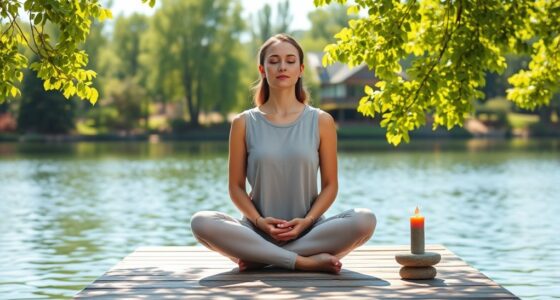

Guided meditations are a helpful tool to reduce stress by grounding you in the present moment through mindfulness and deep breathing exercises. They encourage you to observe thoughts and sensations without judgment, helping you relax and develop a natural routine for managing daily challenges. By regularly practicing these techniques, you’ll build resilience to stress triggers and foster a sense of calm amidst chaos. Keep exploring to discover how you can incorporate these calming practices into your life.
Key Takeaways
- Guided meditations incorporate mindfulness and breathing techniques to help reduce anxiety and promote relaxation.
- They create a calm, quiet environment for practicing stress management and mental clarity.
- Regular practice strengthens the ability to handle daily stressors with a centered and peaceful mindset.
- Techniques like diaphragmatic and box breathing deepen relaxation and improve emotional resilience.
- Guided meditations foster non-reactive awareness, helping to diminish the impact of stress over time.
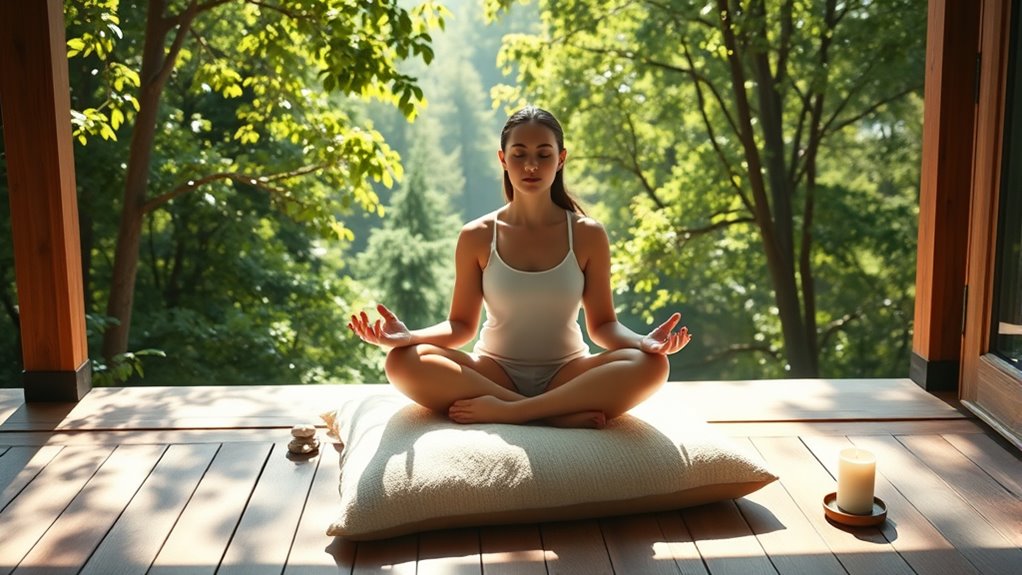
Are you feeling overwhelmed by daily stress? When your mind is racing and tension builds up, guided meditations can be a powerful way to find calm and regain focus. One of the most effective methods is to incorporate mindfulness techniques and breathing exercises into your practice. These tools help you anchor your attention in the present moment, reducing anxiety and promoting relaxation. As you begin, find a quiet space where you won’t be disturbed, sit comfortably, and close your eyes if you feel comfortable doing so. Start by taking slow, deep breaths—inhale deeply through your nose, hold for a count of three, then exhale slowly through your mouth. This simple breathing exercise helps to activate your parasympathetic nervous system, which is responsible for calming your body. With each breath, you begin to release tension, allowing your mind to settle.
Mindfulness techniques are at the core of guided meditations for stress relief. They encourage you to observe your thoughts without judgment, acknowledge your feelings, and gently bring your focus back to your breath or the present moment. Instead of fighting stress, you learn to accept it as a temporary experience, which diminishes its power over you. As you listen to a guided meditation, you may be prompted to notice sensations in your body, sounds around you, or the rhythm of your breath. These practices help you develop a non-reactive awareness that makes it easier to handle stressful situations outside your meditation cushion. Over time, this increased mindfulness becomes a natural part of your daily routine, enabling you to approach challenges with a clearer mind and calmer demeanor. Incorporating guided meditations into your routine can also help reinforce these techniques and make them more effective.
Breathing exercises, when combined with guided meditations, amplify the stress-relieving benefits. Techniques like diaphragmatic breathing or box breathing can deepen your sense of relaxation. For example, with diaphragmatic breathing, you focus on expanding your belly as you inhale, then slowly contracting it as you exhale. This kind of breath work not only soothes your nervous system but also increases oxygen flow to your brain, enhancing mental clarity. Guided meditations often incorporate these exercises seamlessly, guiding you step-by-step through the process so you don’t have to figure it out on your own. As you practice regularly, you’ll notice that stress triggers become less intense and easier to manage. These techniques become your go-to tools for creating a sense of peace amidst chaos, helping you feel more centered and resilient in everyday life.
Frequently Asked Questions
How Long Should I Practice Guided Meditation Daily?
You should aim for at least 10 to 20 minutes of guided meditation daily for effective stress relief. Consistency is key, so try to practice at the same time each day to build a routine. If you’re new, start with shorter sessions and gradually increase the duration as you become more comfortable. Remember, even a few minutes regularly can considerably improve your mental well-being over time.
Can Guided Meditations Replace Traditional Therapy?
You might imagine guided meditations as a calming lake, but they can’t replace traditional therapy. While mindfulness benefits and meditation techniques help reduce stress and improve focus, they don’t address deep-rooted issues or complex emotions that therapy tackles. Think of guided meditations as a peaceful walk, but therapy is like exploring a forest to understand your inner landscape. Combining both offers the most all-encompassing support for your mental health.
Are There Specific Meditations for Work-Related Stress?
Yes, there are specific meditations designed for work-related stress. You can practice mindfulness techniques to stay present and reduce anxiety during busy moments. Breathing exercises help calm your nervous system, especially during stressful deadlines or meetings. These guided meditations focus on releasing tension, improving focus, and managing emotions. Incorporate them into your daily routine to create a mental buffer against work stress, helping you stay centered and productive throughout the day.
What Should I Do if I Can’t Quiet My Mind?
When your mind feels like a busy street, don’t fight the traffic; instead, observe your thoughts like a passing parade. If you can’t quiet your mind, embrace mindfulness challenges and practice concentration strategies like focusing on your breath or sensory details. Gently bring your attention back whenever it wanders. Over time, patience and consistency will help you find calm amidst chaos, making your mind a peaceful garden rather than a noisy street.
Are Guided Meditations Effective for Severe Anxiety?
Yes, guided meditations can be effective for severe anxiety. They help you practice mindfulness benefits like calming your mind and reducing stress. By following meditation techniques such as focused breathing or body scans, you can gradually manage anxiety symptoms. Regular practice enhances your ability to stay present and regain control, making guided meditations a valuable tool in your mental health toolkit. Give them a try consistently for best results.
Conclusion
Now that you’ve experienced these guided meditations, stress doesn’t stand a chance. With each breath, you’ll feel lighter than a feather, calmer than a tranquil lake, more centered than the eye of a hurricane. Keep practicing, and you’ll discover a superpower—turning chaos into calm at the snap of your fingers. So, embrace these moments of peace, because once you master them, stress won’t just be a fleeting shadow; it’ll be a defeated foe forever banished from your life.