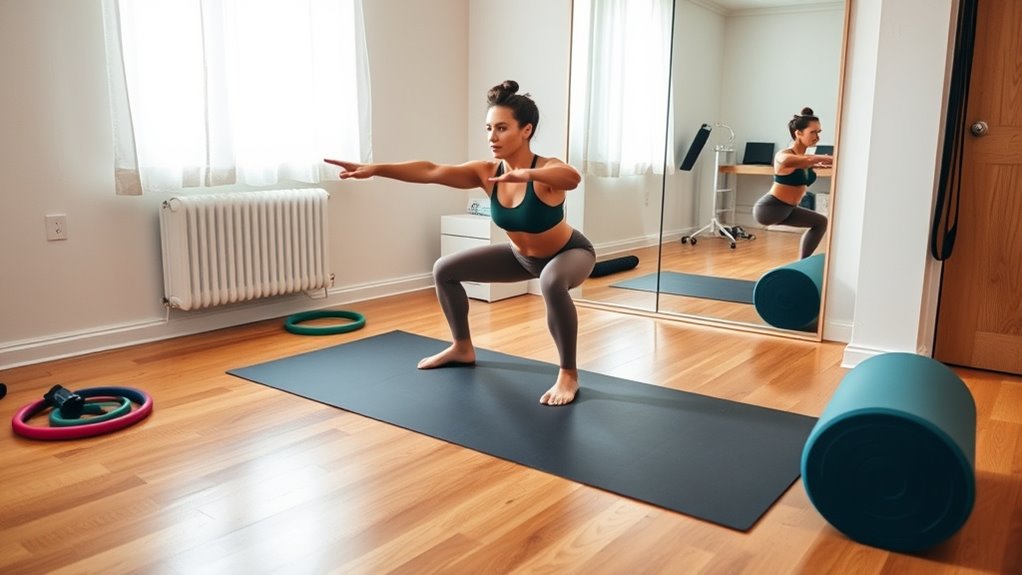

To perform functional movement screens at home, find a clear space and start with simple tests like squats, lunges, and reaching to observe your knee tracking, back posture, and comfort. Focus on identifying asymmetries or discomfort, and use these insights to modify exercises or target mobility issues. Routine self-assessment helps prevent injuries and improves movement quality. Keep exploring to discover detailed steps and tips for effective DIY movement screening.
Key Takeaways
- Choose a clear, open space and perform simple movement tests like squats, lunges, and bending to assess mobility and stability.
- Observe proper knee tracking, back alignment, and comfort during each movement to identify potential issues.
- Use consistent environment and notes to track progress and detect asymmetries or limitations over time.
- Address identified mobility restrictions with targeted stretching, mobility exercises, or adjustments to improve movement quality.
- Prioritize safety by stopping if you experience pain, and consult a professional if significant discomfort or instability occurs.
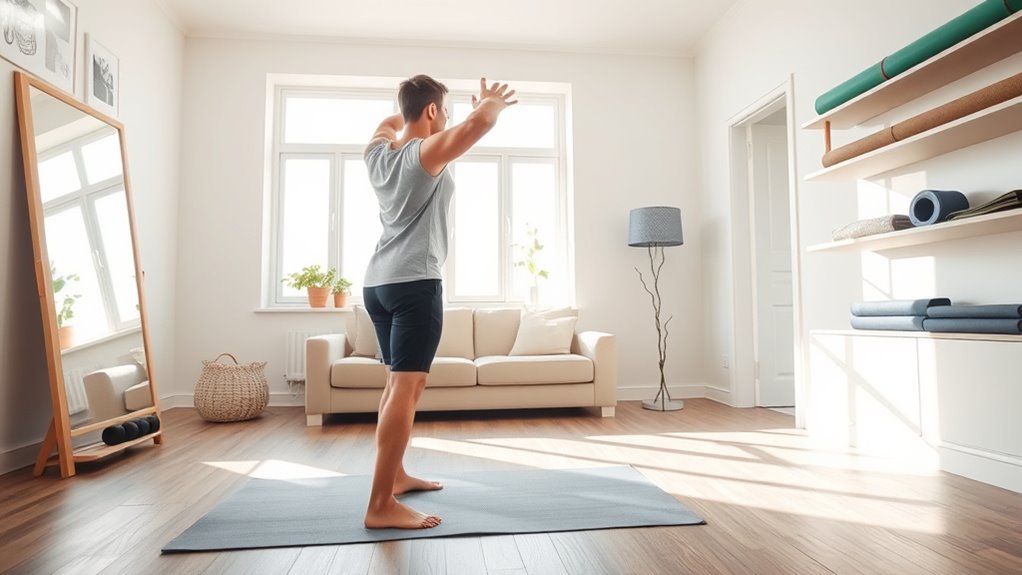
Are you wondering if you can evaluate your movement health without visiting a professional? The good news is, you can get a good sense of how well your body moves right at home. Conducting a DIY functional movement screen allows you to identify areas where your mobility or stability might need improvement. Plus, it’s a practical way to monitor your progress over time. When performed correctly, these assessments can help you make informed decisions about exercise modifications, ensuring you stay safe and avoid injuries. Regular self-assessment can also be a proactive step towards injury prevention, as you catch potential issues early before they turn into more serious problems.
You can assess your movement health at home to prevent injuries and improve mobility safely.
To start, find a clear, open space free of clutter. You’ll want to perform a series of simple tests that evaluate different movement patterns—such as squatting, lunging, reaching, and bending. These exercises are designed to mimic daily activities and common physical movements. Begin with a basic squat, paying attention to how your knees track over your toes, your back stays straight, and you can descend comfortably. If you notice difficulty or discomfort, it might indicate the need for exercise modifications in your routine or targeted mobility work. Similarly, during lunges, observe your balance and leg strength. A shaky or uneven lunge could point to instability or weakness that, if addressed early, helps prevent injury down the line.
When evaluating reaching and bending movements, focus on your flexibility and spinal mobility. If you find yourself compensating—like twisting your torso or overextending your neck—it could mean tight muscles or limited range of motion. In such cases, incorporating stretching or mobility exercises can improve your movement quality. Making these adjustments not only enhances your performance but also reduces the risk of injury. For example, if your squat form is compromised, you might need to work on ankle mobility or core strength before increasing load or intensity. These small tweaks serve as exercise modifications tailored to your current movement capabilities, helping you progress safely.
Throughout your at-home assessment, listen to your body. Pain or sharp discomfort signals that you should pause and seek professional guidance. However, mild soreness or fatigue is normal, especially if you’re challenging your muscles in new ways. Keep track of your observations—note any limitations or asymmetries—and use this information to guide your training. By routinely checking your movement patterns, you empower yourself to make smarter exercise modifications, which ultimately supports injury prevention. This simple DIY approach can be a valuable tool to maintain your mobility, improve your strength, and enjoy a safer, more effective fitness journey—all without leaving your home.
Frequently Asked Questions
Can I Perform a Functional Movement Screen Without Any Prior Training?
You can try a basic movement assessment at home without prior training, but it’s important to be cautious. While it may help identify some mobility or stability issues, proper injury prevention relies on correct technique and understanding. Without professional guidance, you risk misinterpreting results or missing underlying problems. For an accurate, safe, and effective assessment, consider consulting a trained specialist or following a validated DIY guide to guarantee you’re doing it correctly.
What Equipment Do I Need for a DIY Movement Screen?
For a DIY movement assessment, you only need basic equipment like a mirror to observe your form, a stopwatch for timing exercises, and maybe a yoga mat for comfort. These tools help you accurately evaluate your movement patterns and identify areas needing exercise modifications. With just these simple items, you can effectively perform a movement assessment at home, track progress, and tailor your workout plan to improve mobility and strength.
How Often Should I Repeat the Movement Screen at Home?
You should repeat the movement screen every 4 to 6 weeks to effectively track your progress and adjust your exercise routine. Regular exercise frequency helps you identify improvements or areas needing attention. By consistently doing the screen, you stay aware of your body’s changes, ensuring your workouts remain effective and safe. This routine keeps you motivated and informed about your fitness journey, making it easier to set new goals.
Are There Age-Specific Modifications for the Movement Tests?
Think of your body as a garden that blooms differently with age. When doing movement tests, age considerations matter, just like choosing the right plants for your climate. For children, pediatric modifications are essential, like adjusting watering schedules. As you grow older, modifications help prevent strain, like pruning overgrown branches. Tailoring tests to your age guarantees safe, effective assessments, nurturing your body’s unique growth and needs at every stage.
What Should I Do if I Find Abnormal Movement Patterns?
If you find abnormal movement patterns, prioritize injury prevention by stopping the activity and avoiding further strain. It’s crucial to consult a professional for an accurate assessment and tailored advice. They can identify underlying issues and recommend exercises or treatments to improve movement and prevent future injuries. Remember, addressing these patterns early helps maintain your overall health and keeps you active safely.
Conclusion
By performing these screens at home, you can catch potential movement issues early and take control of your fitness journey. For example, imagine noticing limited hip mobility during a simple squat, prompting you to focus on targeted stretches and exercises. Regular self-assessments help prevent injuries and improve overall function, keeping you active and confident. So, grab a mirror, follow the guide, and start optimizing your movement today—your body will thank you!