To practice fire-resistant gardening, choose native, drought-tolerant plants that naturally resist fire and stay moist during dry periods. Incorporate non-flammable mulches like gravel or lava rock, and keep plants well-spaced to prevent heat buildup. Regularly remove dead leaves and debris, prune trees, and use hardscape features such as stone pathways or fences as firebreaks. Continue exploring these strategies to create a safer, more resilient landscape around your home.
Key Takeaways
- Select native, fire-resistant plants with high moisture content and strong roots; avoid oily or resinous species.
- Use inorganic mulches like gravel or lava rock instead of organic mulches that can ignite easily.
- Space plants properly, remove debris regularly, and prune to prevent overcrowding and reduce fire fuel.
- Incorporate hardscape features such as stone pathways and fences to act as fire barriers and firebreaks.
- Maintain consistent watering, clear dead material, and create defensible zones around structures for enhanced safety.

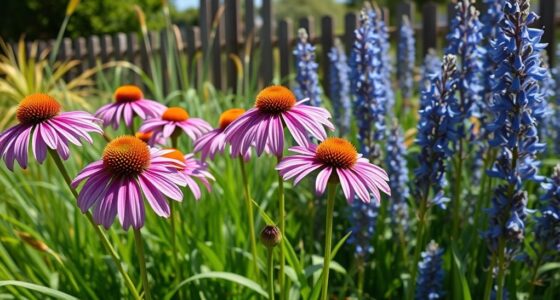
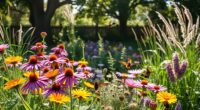
Are you looking for ways to protect your garden from wildfires? One of the most effective strategies is choosing the right plants and materials that reduce fire risk. Incorporating native plants into your landscape is a smart move. Native plants are naturally adapted to your local climate and soil, making them more resilient and less likely to ignite easily. They often have thicker leaves, higher moisture content, and stronger root systems, all of which help prevent fires from spreading quickly. By planting native species, you not only support local ecosystems but also create a more fire-resistant landscape. When selecting plants, avoid those with flammable characteristics, such as highly oily or resinous leaves, and opt for those that maintain moisture well, especially during dry seasons.
Mulch selection plays a *essential* role in fire-resistant gardening. Many gardeners use mulch to retain soil moisture and suppress weeds, but not all mulches are equal in fire safety. Organic mulches like wood chips, bark, or straw can be combustible if not chosen carefully. To reduce fire risk, select non-flammable or minimally flammable mulching materials. For example, inorganic mulches like gravel, decomposed granite, or lava rock are excellent choices because they don’t ignite and can create a barrier that slows fire spread. If you prefer organic mulch, make sure to keep it moist, and maintain a safe distance from your home and structures. Creating a firebreak around your property by removing or reducing combustible materials within a certain radius can also help contain potential fires.
Designing your garden with fire safety in mind involves more than plant and mulch choices. Space plants properly to prevent overcrowding, which can trap heat and dry out vegetation, making it more flammable. Keep the area around your home clear of dead leaves, fallen branches, and other debris that can act as kindling. Incorporate hardscape features such as stone pathways, patios, and fences to create natural fire barriers. Regular maintenance is *crucial* — prune plants to remove dead or overgrown branches, and water your garden deeply during dry spells. By combining these practices, you create a landscape that’s both beautiful and resilient in the face of wildfire threats, giving you peace of mind and protecting your investment over time.
Frequently Asked Questions
How Often Should Fire-Resistant Plants Be Pruned?
You should prune fire-resistant plants every 6 to 12 months, depending on their growth rate. Regular pruning helps maintain plant health by removing dead or overgrown branches, reducing fuel for fires, and promoting healthy growth. Keep an eye on your plants and prune as needed to control size and shape. Consistent pruning not only enhances their appearance but also guarantees they stay resilient and fire-safe over time.
Are Fire-Resistant Plants Suitable for Container Gardening?
Yes, fire-resistant plants are suitable for container gardening. You should focus on container design that enhances safety, such as using non-flammable materials and proper drainage. When selecting plants, choose fire-resistant varieties like succulents, herbs, and certain perennials. They thrive in containers, making it easier to control their environment and reduce fire risks. Regularly maintain your containers by pruning and watering appropriately to keep your garden both beautiful and safe.
What Are the Best Mulch Options for Fire-Prone Areas?
You should choose inorganic mulch materials like gravel, stone, or fire-resistant rubber mulch for fire-prone areas. These options won’t ignite and help prevent fire spread. Proper mulch application techniques involve keeping mulch layers shallow and away from structures, reducing fuel load. When selecting mulch material, focus on durability and fire resistance, and always guarantee even coverage to create a safe barrier. This simple step could make all the difference in safeguarding your landscape.
Can Fire-Resistant Plants Attract Pests or Diseases?
Fire-resistant plants can attract pests or diseases if you don’t maintain proper care. Pest attraction occurs when plants aren’t healthy or are stressed, making them more vulnerable. Disease susceptibility rises if you overwater or neglect sanitation. To minimize risks, keep your plants healthy with proper watering, prune regularly, and monitor for pests and diseases. Good garden hygiene helps prevent pest attraction and reduces disease susceptibility, keeping your fire-resistant garden thriving and safe.
How Do Climate Changes Affect Fire-Resistant Gardening Strategies?
Climate change influences your fire-resistant gardening strategies by altering local wildfire trends and climate adaptation needs. As hotter, drier conditions become more common, you’ll need to select plants that withstand drought and heat, reducing fire risk. Stay aware of evolving wildfire trends to adjust your plant choices and maintenance practices accordingly. This proactive approach helps guarantee your garden remains resilient and safe amidst changing climate patterns.
Conclusion
By adopting fire-resistant gardening practices, you create a safer outdoor space and help prevent wildfires. Many believe that choosing drought-tolerant plants alone can stop fires, but it’s more about combining multiple strategies—like proper spacing, removing dead materials, and maintaining healthy plants—that truly make a difference. When you implement these practices, you not only protect your home but also contribute to a broader effort in wildfire prevention, proving that small actions can have a big impact.