
TL;DR

Turn your quiet moments into listening time
- Thousands of audiobooks, podcasts and originals
- Listen on your phone, tablet or Echo — also offline
- Cancel anytime
Crystals for meditation and healing serve as meaningful symbols and focus objects that can enhance relaxation and mindfulness. While they may support emotional well-being, they do not replace medical treatment. Use them thoughtfully and safely for a richer spiritual practice.
Imagine holding a smooth, cool stone that instantly grounds you. Crystals have long been used to enhance meditation and foster emotional calm. But do they really work? Or are they just pretty objects with symbolic meaning?
In this article, you’ll learn which crystals are popular for meditation, how to use them safely, and what science says about their healing claims. Expect practical tips, honest insights, and a clear view of their role in your wellness routine.
Crystals serve as symbolic tools that enhance focus, intention, and mindfulness in meditation.
Choose stones based on personal resonance—appearance, meaning, or both—rather than price or rarity.
Use crystals safely: avoid ingestion, water exposure, and handling sharp points, especially around children and pets.
Expectations influence perceived benefits; scientific evidence does not support crystals as direct healers.
Verify authenticity by checking mineral properties, origin info, and consulting professionals when needed.
What Do Crystals Actually Do in Meditation?
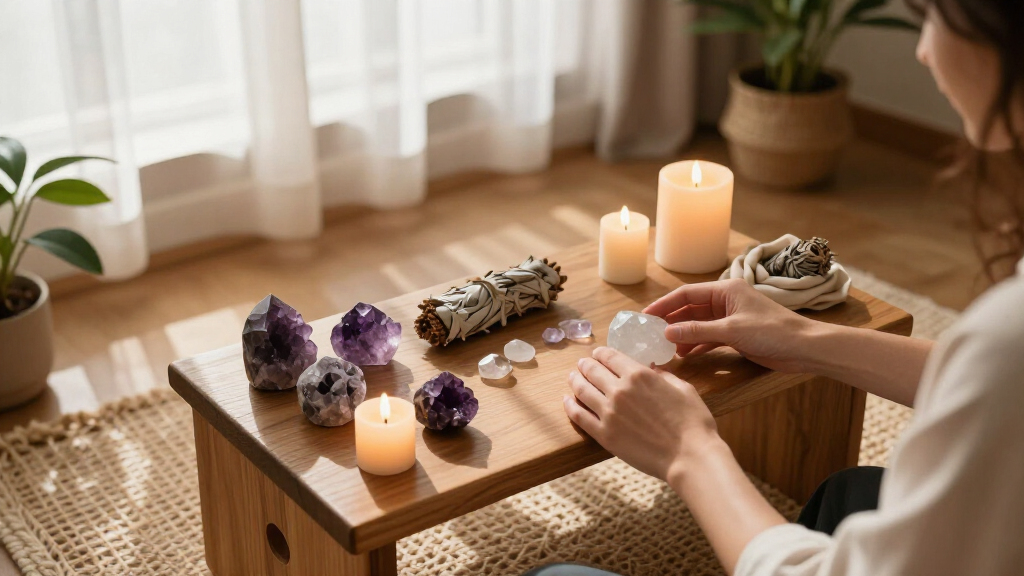
Crystals are powerful symbols and tactile anchors. They help focus your mind, deepen your intention, and create a calming ritual. When you hold or gaze at a crystal, it serves as a physical reminder of your purpose—whether it’s seeking peace, clarity, or emotional balance. This act of physical interaction can help quiet mental chatter and establish a mental space conducive to meditation.
Imagine sitting quietly, a smooth rose quartz in your hand, as you breathe slowly. The physical sensation, combined with your intention, can make your practice feel more meaningful and grounded. Over time, this repeated association can strengthen your mental focus and emotional resilience. Many practitioners find that the act of engaging with a crystal enhances mindfulness because it anchors their awareness in the present moment.
They act like prayer beads or a visual cue—helping you stay present and committed to your purpose. This symbolism and tactile feedback can be especially helpful for beginners or those struggling to maintain focus, but it’s important to remember that the real power lies in your intention and consistency, not the crystal itself.
Which Crystals Are Most Popular for Meditation and Why?
| Crystal | Traditional Meaning | Common Use |
|---|---|---|
| Clear Quartz | Clarity, amplifying intentions | Focus, manifestation |
| Amethyst | Calm, spiritual awareness | Sleep, stress relief |
| Rose Quartz | Love, compassion | Emotional comfort |
| Black Tourmaline | Protection, grounding | Stress reduction, protection |
| Citrine | Confidence, abundance | Motivation, positivity |
These stones aren’t just pretty—they carry symbolic meanings that many find helpful in guiding their emotional and spiritual practices. For example, someone battling anxiety might choose amethyst for its calming vibe or rose quartz for emotional support. The significance of these stones often aligns with personal needs or goals, creating a mental association that can enhance your focus and intention during meditation. Choosing a crystal that resonates with you can serve as a reminder of your desired state or intention, reinforcing your mental and emotional commitment over time. It’s not just about the stone’s appearance but what it represents in your personal journey—this symbolic connection can influence your mindset and openness to the practice.
How to Use Crystals in Your Meditation Practice
Follow these simple steps to incorporate crystals into your routine:
- Pick a crystal that speaks to your intention or appeals to your senses. Consider what qualities you want to cultivate—calm, clarity, love—and select a stone that symbolically aligns with those goals.
- Set a clear, realistic goal—like calming anxiety or sharpening focus. Clarifying your purpose helps direct your energy and attention during the ritual.
- Hold the stone in your hand, or place it nearby where you can see or feel it. This physical connection acts as a focal point, anchoring your attention and reinforcing your intention.
- Focus on your breathing, the texture of the crystal, and your bodily sensations. Use the crystal as a tactile anchor to deepen your mindfulness and keep your mind from wandering.
- Whenever your mind wanders, gently bring it back to your breath and the crystal’s presence. This act of refocusing trains your mind to stay present and reduces mental clutter.
- Finish with a moment of reflection or journaling about your experience. This helps integrate the practice into your awareness and can reveal insights or emotional shifts.
Think of the crystal as a helper—like a familiar object that keeps your attention anchored. Over time, this simple ritual can deepen your sense of calm and clarity, making your meditation more intentional and meaningful. The key is consistency and genuine intention—using the crystal as a tool to support your mental focus rather than expecting it to do the work for you.
Are Crystals Safe? What You Need to Know Before Using Them
Most handling of crystals is low-risk, but some safety tips matter. Never ingest crystals or crystal powders, as some stones contain toxic substances. Avoid making crystal elixirs by soaking unknown or untreated stones in water—some can leach harmful chemicals. Improper use can lead to health risks, especially if toxins are unknowingly ingested or if chemicals leach into your water or skin.
Keep small stones away from children and pets—they’re choking hazards. Also, handle sharp points carefully to avoid cuts. Certain minerals contain lead, arsenic, or other toxins, so it’s wise to research before placing stones in your water or near your body. Being aware of these risks helps you prevent accidental poisoning or injury, which can undermine your wellness goals.
If you’re unsure about a stone’s safety, consult a gemologist or trusted supplier. Remember: crystals are tools for meditation, not medical devices. Persistent health issues need qualified medical attention. Using crystals safely ensures that your spiritual practice remains a positive, health-conscious experience rather than a source of harm or disappointment.
What Science Really Says About Crystal Healing
Crystals are wonderful symbols and focus objects, but scientific evidence for their healing powers is lacking. According to rigorous research, any perceived benefits are often attributable to expectation, ritual, or placebo effects—where your belief in the effect creates a real psychological or emotional response. This doesn’t diminish the value of ritual, but it clarifies that the effects are largely psychological rather than physical.
For example, a 2015 comprehensive review of studies found no credible scientific proof that crystals emit healing energy or directly influence biological systems. Instead, their value lies in their capacity to serve as meaningful symbols or ritual tools that help structure your mental and emotional states. Engaging with crystals can facilitate relaxation, reflection, and intention-setting, but these benefits are rooted in your mindset and the context of your practice.
So, while crystals can support your emotional or spiritual practice, they shouldn’t be viewed as substitutes for evidence-based medical treatments. Recognizing their symbolic and ritual significance helps maintain realistic expectations and preserves the integrity of your wellness approach.
How to Spot Genuine Crystals and Avoid Imitations
Genuine crystals have specific features: they’re often hard, dense, and display natural inclusions or imperfections. These characteristics indicate natural formation processes and contribute to a stone’s unique beauty and energy profile. If a stone feels unusually lightweight, looks overly perfect, or exhibits unnatural colors, it might be synthetic, dyed, or heavily treated—potentially reducing its authenticity and the integrity of your practice.
Ask for mineral information—like the chemical name and origin. Reputable sellers will provide safety warnings and clear descriptions, which help you assess quality and authenticity. For valuable stones, consider having a professional gemologist verify their identity and purity, especially if you’re making significant investments. Recognizing genuine crystals ensures you’re working with their authentic energetic and symbolic qualities, which can influence your experience and trust in your practice.
Be cautious of overly cheap or overly perfect stones. Remember, higher price often reflects rarity or quality, not necessarily greater healing power. Authenticity and quality matter because they preserve the integrity of your intention and connection with the stone.
Conclusion
Crystals can deepen your meditation and emotional rituals, adding color, texture, and meaning. But remember—they are symbols, not magic cures. Use them thoughtfully, safely, and with clear expectations.
Imagine holding a stone that reminds you of your intention—beautiful, grounding, and personal. That’s the true power of crystals in your wellness journey: their ability to connect you to your purpose, one moment at a time.
Products Worth Considering
crystals for meditation and healing
As an affiliate, we earn on qualifying purchases.
As an affiliate, we earn on qualifying purchases.