TL;DR
Crystal healing gift sets usually bundle several named stones with accessories such as a pouch, guide, or display tray. Choose a set based on the recipient’s interests, check the itemized contents and care instructions, and treat crystal healing as a spiritual or personal practice rather than a scientifically proven medical treatment.
Choose a set by the recipient’s interests and verify the itemized contents, since similarly named sets can include different stones and accessories.
Treat crystal meanings as spiritual or personal associations; reliable scientific evidence does not show that crystals heal illness.
Check mineral names, treatment disclosures, and sourcing details, and ask the seller direct questions when descriptions stay vague.
Follow care instructions for each stone, since water, sunlight, or salt can damage some minerals.
Store small crystals away from young children and pets, and never allow anyone to swallow them.

Turn your quiet moments into listening time
- Thousands of audiobooks, podcasts and originals
- Listen on your phone, tablet or Echo — also offline
- Cancel anytime
What you’ll usually find inside a crystal gift set
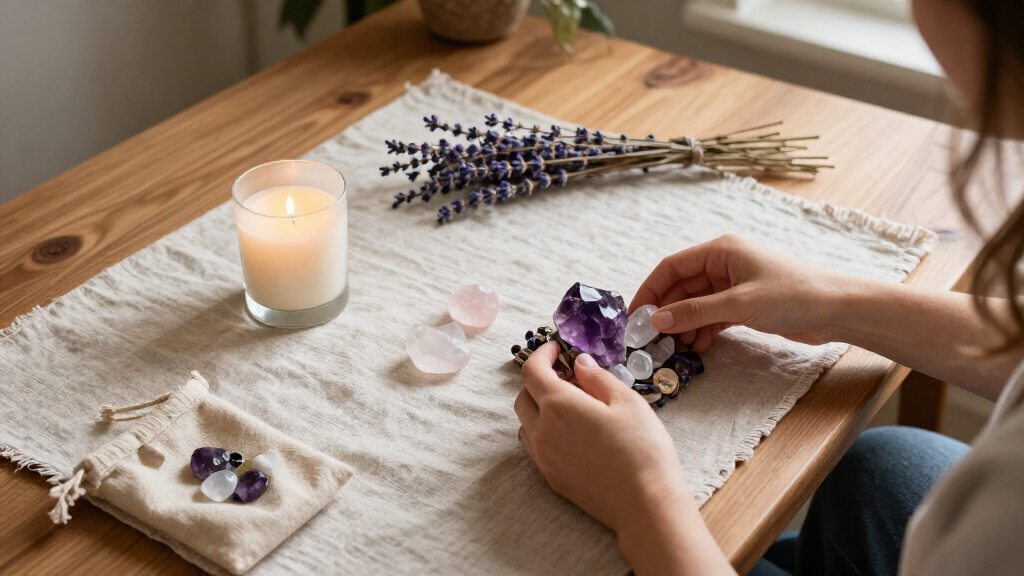
A crystal healing gift set usually contains several stones chosen around a theme, plus accessories that help you identify, display, or carry them. Common extras include a small guide, a fabric pouch, affirmation cards, a display tray, or items sellers describe as cleansing accessories. Since contents vary, the listing’s itemized inventory tells you more than the set name. A beginner set might include amethyst, clear quartz, and rose quartz. A seller may describe amethyst as a meditation stone, clear quartz as a focus for intention, and rose quartz as a symbol of love or compassion; these are traditional or personal associations, not proven effects. One box may include polished palm stones, while another offers rough points that feel cool and uneven in your hand. Check whether the package names each stone and says how many pieces you’ll receive. “Several healing crystals” leaves you guessing; “one amethyst tumble, one rose quartz tumble, one clear quartz point, and a printed guide” gives you something concrete to compare. The set’s theme can help you shop, but the actual stones and accessories shape the experience. A concise guide can make a set easier to explore. For example, someone new to crystals can read a card, choose a stone that appeals to them, and place it on a desk as a reminder to take a quiet break. That simple ritual can feel personal without asking the gift to do more than it can.How to choose a set that feels personal
Choose a crystal healing gift set by matching its theme, presentation, and level of guidance to the person receiving it. A clear inventory and accurate care notes matter as much as the color palette, especially if the recipient is new to crystals. Think about what they enjoy: meditation, collecting minerals, decorating a shelf, or simply opening a beautifully arranged gift. If your friend keeps a journal and likes quiet rituals, a relaxation-themed box with a small guide and pouch may suit them. If your sibling collects rocks, they may care more about mineral names, stone finishes, and origin details than affirmation cards. A general set can work when you don’t know the person’s preferred theme, but the seller should still list every piece. Use these checks before you buy:- Match the theme to the recipient’s interests, such as meditation, decor, or collecting.
- Read the inventory for stone names, quantities, accessories, and any treatments the seller discloses.
- Look for useful guidance on identification, intended spiritual use, and material-specific care.
- Check the presentation for secure packaging and a tray or pouch that the recipient can reuse.
- Compare price with contents instead of assuming a larger box offers better value.
How people use crystals without mistaking belief for medical care
People use crystals as decorative objects, meditation prompts, or parts of personal spiritual practice; those uses can carry meaning without establishing a medical effect. There is no reliable scientific evidence that crystals heal illness or have powers beyond their ordinary physical properties. A gift guide should describe beliefs as beliefs and avoid claims that stones treat anxiety, pain, insomnia, or other health conditions. For instance, a recipient might keep a smooth rose quartz beside a journal and pick it up before writing about a difficult day. The stone gives their hands something cool and solid to hold while they pause. Someone else might arrange amethyst on a windowsill because its violet color suits the room. Neither use requires a promise that the crystal changes health. Words on cards and packaging shape expectations. “Some people use this stone as a reminder to set an intention” leaves room for the recipient’s own beliefs. “This crystal cures stress” makes a medical claim the evidence does not support. If someone has a health concern, crystal rituals should never replace qualified medical care or treatment. A respectful gift can acknowledge spirituality without steering anyone toward a belief. You might write, “I thought you’d enjoy these colors and the quiet ritual ideas,” then let the recipient decide whether to use the stones, display them, or pass them along. Meaning belongs to the person who receives the gift.How to check stone labels, treatments, and sourcing
Check the mineral names, treatment disclosures, and sourcing details before buying a crystal healing gift set. Trade names, dyed stones, heat-treated materials, and imitations can appear in crystal listings, and appearance alone may not identify a stone reliably. Specific product information helps you judge what you’re purchasing and what the recipient can expect. A listing that says “natural amethyst, polished, one piece” gives you more to work with than “rare energy crystal.” If the color seems unusually vivid or every piece looks identical, ask whether the seller dyes or treats the material. A low price alone cannot prove a stone is fake, but a very low price paired with grand claims and no mineral names should prompt more questions. Sourcing transparency varies. Look for sellers who identify the country or region of origin when known and explain what they can verify about the supply chain. Broad phrases such as “100% ethical” mean little without details. You can send a short message asking, “Can you share the mineral names, any treatments, and what you know about where these stones came from?” These details matter especially if the recipient collects minerals or values responsible purchasing. You may not get a full chain-of-custody report for every small stone, but a seller’s willingness to answer clearly is useful information. Accurate labels make the set easier to enjoy and reduce the chance that a gift card repeats claims the seller cannot support.How to care for crystals and keep the set safe
Care depends on the mineral: some stones can be damaged by water, sunlight, or salt, so follow the seller’s instructions before cleaning or displaying them. A general “cleanse every stone in water” card can be poor practical advice for a material that reacts badly to moisture. Spiritual cleansing customs vary; they are personal traditions rather than scientifically established processes. Imagine your recipient setting a set on a bright kitchen sill. The colors may look lovely at first, but direct sunlight can fade some materials over time. A soft, dry cloth and a shaded shelf may suit the collection better. If the seller recommends water or salt, confirm that each named mineral can tolerate it before following the suggestion. Small loose stones can also pose choking risks to young children and pets. Keep them in a closed pouch or display case when little hands or curious noses are nearby, and never let anyone swallow a stone. For a household with a toddler, a larger decorative specimen may be a safer choice than a handful of tiny tumbled crystals. Include care instructions with the gift if the seller provides them. If the set lacks clear notes, the recipient can look up guidance for each identified mineral before cleaning it. Good care protects the stones’ finish and helps the gift remain a pleasant object on a desk, shelf, or meditation corner.What makes the packaging feel thoughtful, not overpromised
Thoughtful packaging makes a crystal healing gift set easier to understand and enjoy: secure wrapping, a complete contents card, and a short guide can turn loose stones into a considered present. The strongest presentation stays honest about spiritual meanings and avoids medical promises. A lovely box matters, but clear information gives the recipient confidence about what they’ve received. Picture opening a small kraft box lined with soft tissue paper. Each stone sits in its own paper nest, with a card naming the mineral and a reusable pouch tucked underneath. The guide offers a few optional ideas—display one on a desk, hold one during a quiet pause, or read about its mineral properties. That feels welcoming because the recipient can choose what fits. Before ordering, check whether the seller shows the actual set or only a sample photograph. Ask whether the stones vary in color and shape; natural minerals often do. If a blog article or product guide describes what sets usually bundle, treat it as a starting point and verify the specific listing rather than assuming every box includes the same items. You can add a personal note that centers the recipient rather than the seller’s claims: “I picked these for the colors and thought you might enjoy arranging them.” Such a message leaves room for spiritual meaning, collecting, or simple decoration. That flexibility often makes a small gift feel warmer than grand promises printed in gold foil.Frequently Asked Questions
What is usually included in a crystal healing gift set?
It depends on the seller. Sets often include several stones and may add a guide, pouch, display tray, affirmation cards, or cleansing accessories. Check the itemized listing for exact names and quantities.Which crystals are good for beginners?
Many beginner sets include familiar stones such as amethyst, clear quartz, or rose quartz. Choose based on the recipient’s preferences and the quality of the descriptions; these stones are not proven treatments.Do crystals have scientifically proven healing effects?
No reliable scientific evidence shows that crystals heal illness or have powers beyond their ordinary physical properties. Some people find them meaningful in meditation or personal spiritual practice, but a set should not replace medical care.How can you tell whether a crystal is real?
Appearance alone may not be enough to identify a stone. Ask for the mineral name, treatment details, and any sourcing information the seller can provide, and be cautious about vague labels or unsupported claims.How should you cleanse or charge crystals?
People follow different spiritual practices, but cleansing or charging is not a scientifically established process. Check each mineral’s care needs before using water, sunlight, or salt, since some stones can be damaged by them.Are crystal sets safe for children or pets?
Small stones can be choking hazards, and some minerals may be unsuitable to handle or ingest. Keep the set out of reach, and never let anyone swallow a stone.Conclusion
Choose the set for the person, check the stones and care notes, and keep the claims honest. A crystal gift can offer color, texture, and a small moment of reflection without pretending to treat a health problem. Let the recipient decide what the stones mean to them; sometimes the best thing in the box is simply a cool purple stone catching the afternoon light.Products Worth Considering

Coway Airmega AP-1512HHS Smart Air Purifier, Black

Garmin Forerunner 165 GPS Running Smartwatch, 43 mm, Whitestone

Garmin Forerunner 55 GPS Running Smartwatch, Black
As an affiliate, we earn on qualifying purchases.