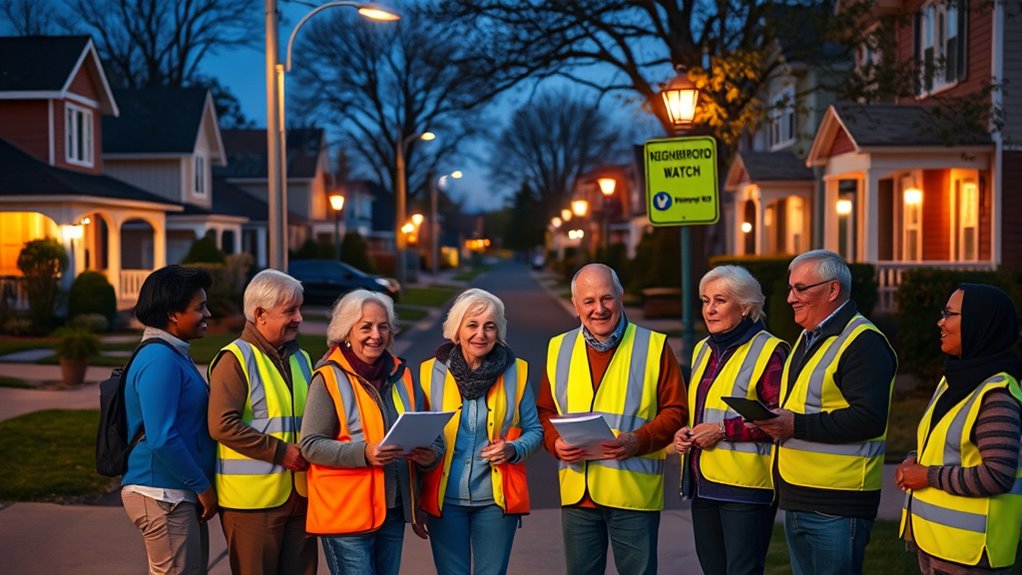

Neighborhood watch programs help you and your neighbors work together to improve safety and prevent vandalism. By staying vigilant, reporting suspicious activity early, and organizing community clean-ups, you can make your neighborhood less appealing to troublemakers. Installing better lighting and increasing patrols also deter crime. Performance metrics guide your efforts, allowing you to target vulnerable areas effectively. If you’re interested, you’ll discover more ways to strengthen your community and keep everyone safe.
Key Takeaways
- Neighborhood watch programs foster community-led efforts to prevent crime and enhance safety through vigilance and collective responsibility.
- Effective vandalism prevention involves prompt reporting, improved lighting, and community clean-up activities.
- Performance metrics help identify high-risk areas, allocate resources, and monitor progress in reducing vandalism.
- Community engagement builds trust, encourages information sharing, and promotes neighborhood patrols for increased security.
- Active participation in neighborhood watch efforts leads to safer, more connected communities with reduced crime rates.
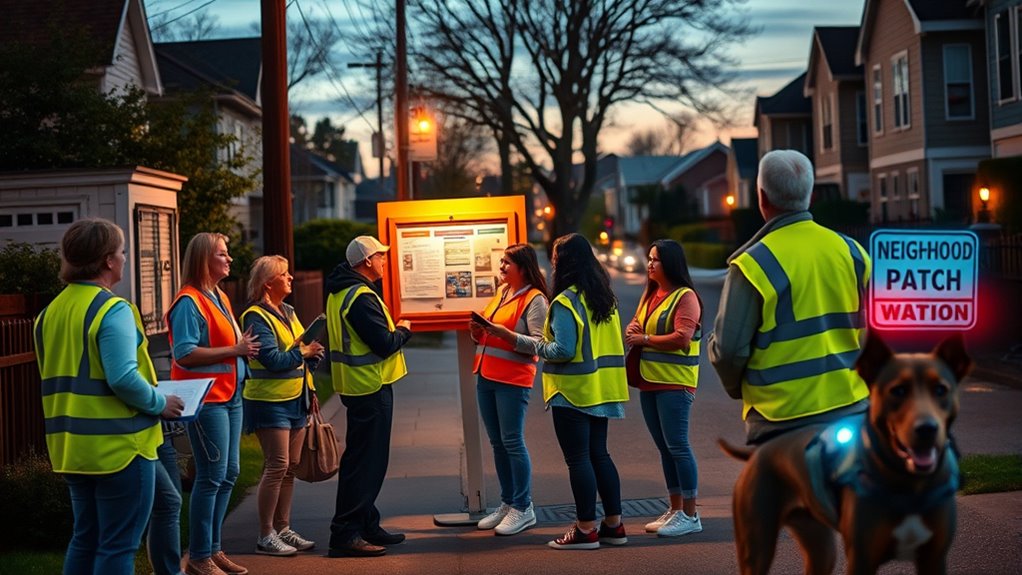
Neighborhood watch programs are community-led initiatives that help residents work together to prevent crime and improve safety. By forming these programs, you become part of a collective effort to keep your neighborhood secure and welcoming. One key aspect of effective neighborhood watch programs is vandalism prevention. When residents actively look out for suspicious activity and report it early, they can deter acts of vandalism such as graffiti, property damage, or defacement of public spaces. Vandalism can quickly erode the sense of pride and security in a community, but with a vigilant neighborhood, you can substantially reduce its occurrence. Encouraging residents to promptly report vandalism helps authorities respond faster and take necessary action, which discourages repeat offenses. Furthermore, vandalism prevention isn’t just about reporting; it involves fostering a sense of ownership among residents. When everyone feels responsible for maintaining the appearance and integrity of shared spaces, they’re more likely to take steps to protect their environment, whether that’s organizing clean-up days or installing better lighting in problem areas. Utilizing performance metrics can help communities identify the most vulnerable spots and allocate resources effectively.
Community engagement plays a crucial role in the success of neighborhood watch programs. When you actively participate, you help build trust and strengthen relationships among neighbors. This engagement creates a network of people who know each other’s routines, making it easier to spot unusual or suspicious behavior. The more involved you are, the more confident you become in recognizing potential threats early on. Community engagement also means sharing information effectively—whether through meetings, social media, or neighborhood newsletters—so everyone stays informed about safety concerns and initiatives. As residents unite around common goals, such as vandalism prevention, you create a culture of collective responsibility that discourages criminal activity. When neighbors look out for one another, it fosters an environment where crime becomes less appealing because there’s less anonymity and more oversight. You’ll find that simple actions like organizing neighborhood patrols, hosting safety workshops, or simply chatting with your neighbors encourage a sense of camaraderie and shared purpose.
Ultimately, neighborhood watch programs thrive on community engagement and proactive measures against vandalism. Your participation doesn’t just help prevent crime; it transforms your neighborhood into a safer, more connected place to live. By working together, you create a resilient community where everyone feels responsible for maintaining safety and protecting shared spaces. Active engagement and vigilance are your best tools in making sure that your neighborhood remains a secure, vibrant environment for all residents.
Frequently Asked Questions
How Do I Start a Neighborhood Watch in My Community?
To start a neighborhood watch, gather your neighbors for a meeting and discuss safety concerns. Encourage community engagement by sharing ideas and forming a leadership team. Establish regular neighborhood patrols and communication channels like social media groups or phone trees. Promote trust and cooperation, making everyone feel responsible for safety. With active participation and organized patrols, you’ll create a safer, more connected community where residents look out for each other.
What Training Is Available for Neighborhood Watch Volunteers?
You can access training that covers surveillance techniques and communication protocols through local law enforcement, community organizations, or online courses. These programs teach you how to observe suspicious activity safely, record essential details, and communicate effectively with neighbors and authorities. Attending workshops or webinars guarantees you’re well-prepared to handle security issues, stay vigilant, and contribute to a safer neighborhood. Always stay updated on best practices and safety procedures.
How Do Neighborhood Watch Programs Coordinate With Local Law Enforcement?
You coordinate with local law enforcement by establishing clear communication channels, like regular meetings or phone lines, to share information quickly. Community patrols work alongside officers, providing valuable observations. Stay proactive by reporting suspicious activity promptly, and make sure your team understands law enforcement protocols. This collaboration helps create a safer neighborhood, as you work together to monitor, respond to, and prevent crime effectively.
Are There Legal Liabilities for Neighborhood Watch Members?
Like a knight’s shield in medieval times, legal protections guard you as a neighborhood watch member today. You generally won’t face liability concerns if you act in good faith and within your role, but it’s wise to understand the legal liabilities that could arise. Local laws vary, so check your jurisdiction’s policies. Knowing your rights and responsibilities helps you stay protected while keeping your community safe.
How Effective Are Neighborhood Watch Programs in Reducing Crime?
Neighborhood watch programs are quite effective in reducing crime because they boost community engagement and foster a sense of collective responsibility. When neighbors stay vigilant and report suspicious activities, crime statistics often decline. Your active participation helps create a safer environment, making it harder for criminals to operate. By working together, you and your community can substantially deter crime and build a more secure neighborhood.
Conclusion
You might believe that neighborhood watch programs solely deter crime, but research suggests they also foster strong community bonds and trust. When neighbors actively look out for one another, everyone feels safer and more connected. This sense of unity actually reduces crime rates more effectively than surveillance alone. So, it’s not just about watching; it’s about building a community that cares. Embracing these programs can truly transform your neighborhood into a safer, more supportive place to live.