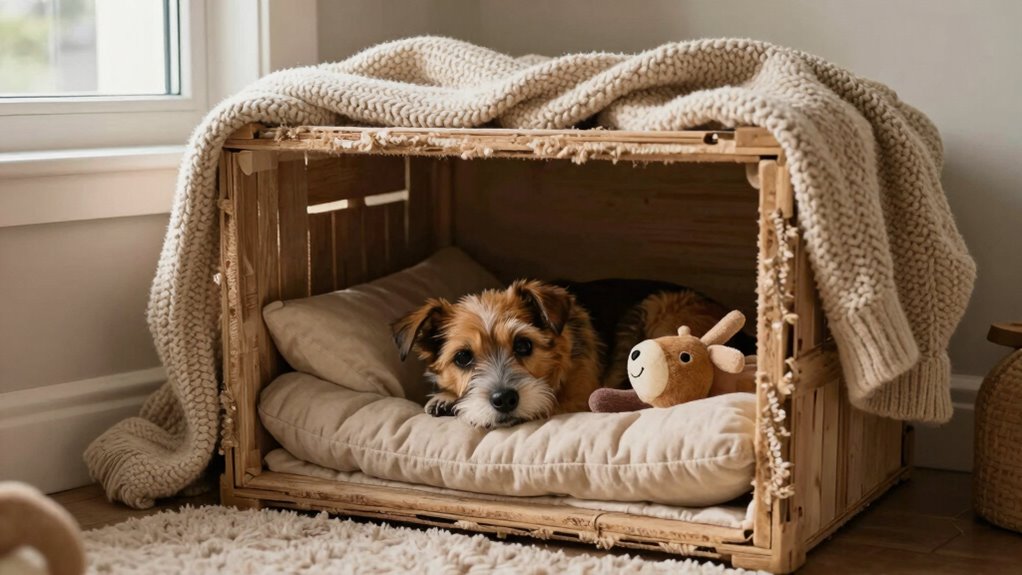

Calming crates give your nervous dog a secure space where they can relax and feel in control. They help reduce anxiety symptoms like barking, trembling, and destructive behavior by creating a peaceful environment. Features like soft bedding, calming scents, and pheromone diffusers enhance their effectiveness. Using the crate regularly, with positive reinforcement, helps your dog trust and associate it with comfort. If you want to discover more ways to support your anxious pup, keep exploring these helpful tips.

Turn your quiet moments into listening time
- Thousands of audiobooks, podcasts and originals
- Listen on your phone, tablet or Echo — also offline
- Cancel anytime
Key Takeaways
- Calming crates provide a secure, comfortable space that reduces anxiety during stressful situations.
- They help nervous dogs build trust and positive associations through gradual, reward-based training.
- Features like scents and pheromone diffusers enhance the crate’s calming effect.
- Regular, positive crate routines promote emotional regulation and a sense of safety.
- Calming crates support overall well-being without isolating the dog, aiding emotional resilience.
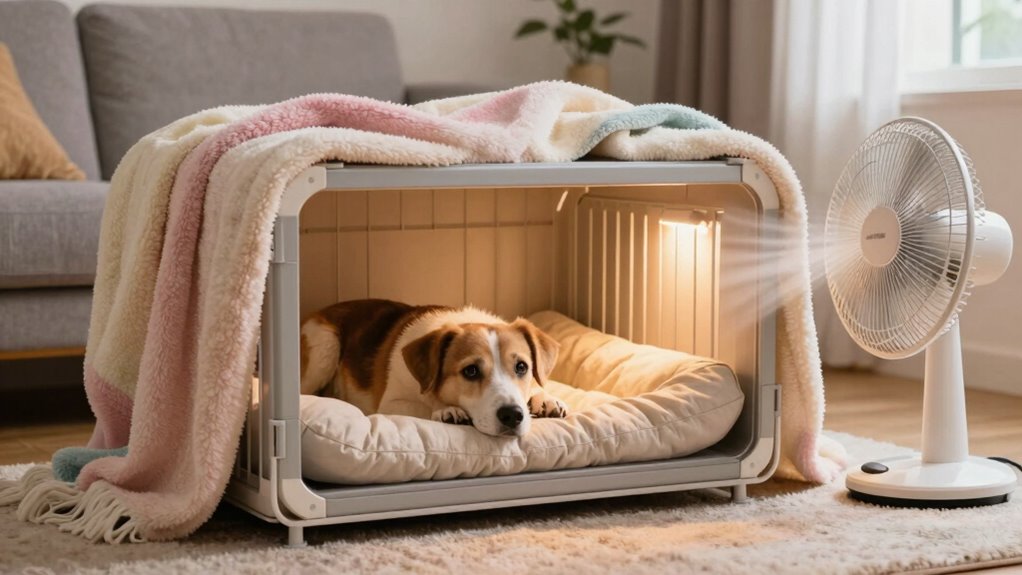
Dealing with a nervous dog can be challenging, but providing the right support at home can make a significant difference. One effective way to help your dog feel safe and secure is through the use of calming crates. These crates aren’t just confinement tools; they serve as a safe haven where your dog can relax and unwind. Understanding dog behavior is essential here. Nervous dogs often seek a space where they can retreat and feel in control. A calming crate, designed specifically to reduce anxiety, can become that space.
A calming crate provides nervous dogs a safe, relaxed retreat to feel secure and in control.
Crate training techniques are critical in helping your dog associate the crate with comfort rather than punishment. Start by introducing the crate gradually, using positive reinforcement like treats and praise. Place it in a quiet, comfortable area of your home where your dog spends a lot of time. Encourage your dog to explore the crate voluntarily, tossing treats inside and letting them enter at their own pace. Over time, you can begin to close the door for short periods while remaining nearby, always rewarding calm behavior. This process helps build trust and positive associations with the crate.
A calming crate often includes features like soft bedding, calming scents, or even pheromone diffusers that mimic natural canine signals of safety. These additions can help soothe your dog’s nerves, especially during stressful situations such as thunderstorms, fireworks, or when you’re away. Incorporating biodiversity-friendly calming features into the crate can also promote a more holistic approach to your dog’s well-being. Additionally, understanding and incorporating dog behavior principles can help tailor the crate environment to better suit your dog’s individual needs. Remember, the goal isn’t to isolate your dog but to provide a dedicated space where they can regulate their emotions. When your dog feels secure in their crate, they’re less likely to exhibit signs of anxiety, such as excessive barking, destructive behavior, or trembling.
Incorporating calming features into the crate can significantly enhance its effectiveness in reducing your dog’s stress. Utilizing calming scents or pheromone diffusers that mimic natural signals of safety can further help to soothe and relax your dog. Consistency is key. Incorporate crate time into daily routines, making it a normal part of your dog’s life. Avoid using the crate as a punishment, which can worsen anxiety and undermine the training. Instead, view it as a supportive tool that promotes calmness. Be patient; some dogs take longer to adjust, especially if they’ve experienced trauma or neglect. Keep sessions positive, and never force your dog into the crate if they’re hesitant. Over time, the crate will become a trusted space, helping your nervous dog feel more secure and less overwhelmed.
Frequently Asked Questions
How Long Should a Dog Stay in a Calming Crate Daily?
You should limit your dog’s time in a calming crate to around 1-3 hours at a stretch, ensuring they have plenty of breaks. Make sure the crate has good ventilation and is placed in a quiet, comfortable spot. Observe your dog’s behavior; if they seem stressed or anxious, reduce crate time. Always accompany them initially and gradually increase duration as they become more comfortable.
Are Calming Crates Suitable for All Dog Breeds?
Calming crates aren’t suitable for all dog breeds, as each has unique needs. You should consider breed-specific requirements and customize the crate accordingly, ensuring it’s comfortable and appropriately sized. Some breeds may thrive in a calming crate, while others might find it restrictive. Always observe your dog’s behavior and consult a vet or trainer to decide if a calming crate fits your dog’s temperament and physical needs.
Can Calming Crates Replace Training for Anxiety?
Calming crates can’t fully replace training for anxiety, but they’re a helpful tool in your anxiety management plan. While crate training provides a safe space and reduces stress, you still need to address the root causes of your dog’s anxiety through behavior modification and positive reinforcement. Use calming crates alongside consistent training to create an all-encompassing approach, helping your dog feel secure and confident over time.
What Are Signs of Discomfort in a Calming Crate?
You’ll notice your dog’s discomfort through signs like pawing, whining, or trying to escape, as if they’re trapped in a thunderstorm. Watch for excessive barking or drooling—these are their signals of distress. Guarantee crate safety by avoiding sharp edges and providing comfort enhancements like soft bedding. If your dog shows these signs, it’s time to adjust the environment or consult a trainer, so your furry friend feels safe and secure.
How Do I Introduce a Calming Crate to My Dog?
To introduce a calming crate, start by choosing the right crate size so your dog can stand, turn around, and lie comfortably. Place soft bedding materials inside to make it inviting. Gradually encourage your dog to explore the crate by offering treats and praise. Keep the door open initially, then slowly close it for short periods. Be patient, and always use positive reinforcement to help your dog associate the crate with comfort.
Conclusion
By providing calming crates, you create a safe haven that eases your nervous dog’s anxiety and helps them feel secure. With patience and consistent support, you’ll notice your dog gradually becoming more relaxed and confident in their space. Isn’t it worth giving your furry friend the comfort they deserve? Remember, a calm dog starts with a calm home — your gentle approach can make all the difference in their journey toward peace.
Products Worth Considering
calming dog crate with soft bedding
As an affiliate, we earn on qualifying purchases.
As an affiliate, we earn on qualifying purchases.