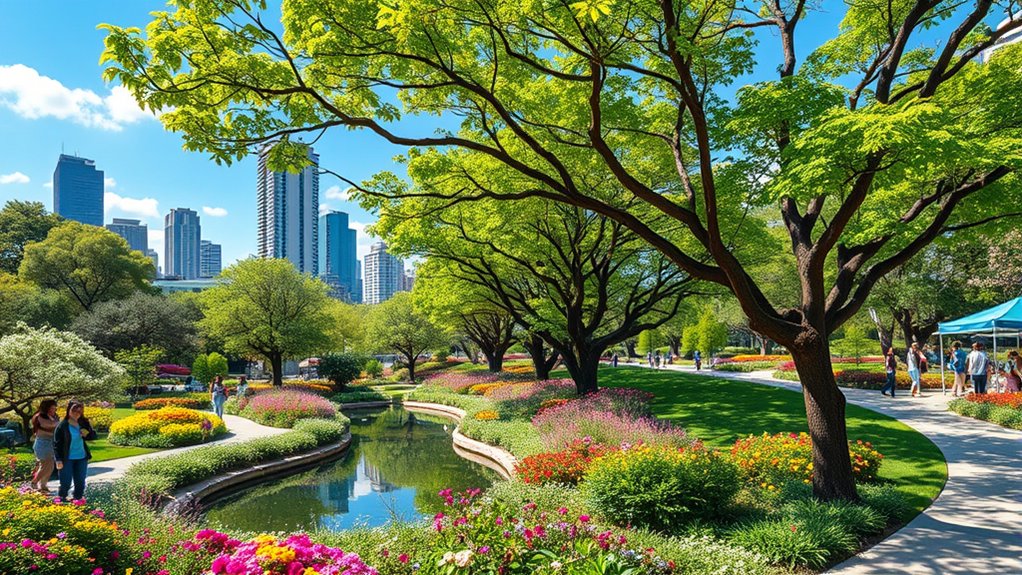

To restore biodiversity in urban spaces, you can incorporate native plantings and green roofs. Native plants are suited to local conditions, require less maintenance, and provide essential habitats for insects, birds, and other wildlife. Green roofs act as mini-ecosystems, improving air quality and reducing heat islands while creating new habitats in otherwise concrete-dominated areas. Implementing these strategies enhances urban ecology and makes your city more vibrant. Keep exploring to discover how these solutions can transform your environment.
Key Takeaways
- Implement native plantings in parks, vacant lots, and street medians to create habitats that support local wildlife.
- Design green roofs with native species to serve as miniature habitats and connect fragmented urban ecosystems.
- Reduce habitat fragmentation by establishing ecological corridors and stepping stones throughout urban areas.
- Promote habitat diversity by incorporating a variety of native plants that attract pollinators and small animals.
- Engage communities and policymakers to prioritize native landscaping and green infrastructure for long-term biodiversity benefits.
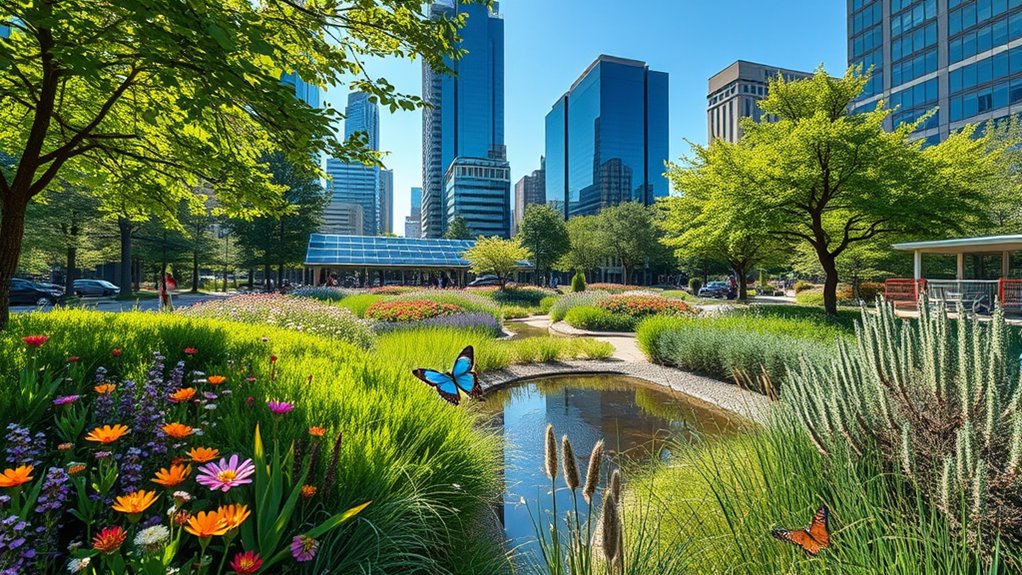
Urban spaces often seem like concrete jungles, but they hold untapped potential for restoring biodiversity. You can transform these areas into thriving ecosystems by incorporating native plantings and green roofs. Native plants are adapted to your region’s climate and soil, making them more resilient and easier to maintain than exotic species. When you choose native plantings for parks, vacant lots, or even street medians, you provide essential habitat and food sources for local insects, birds, and small mammals. This encourages a balanced ecosystem, supporting pollinators like bees and butterflies that are crucial for plant reproduction. By focusing on native species, you help preserve the unique ecological character of your city while reducing the need for excessive watering, fertilizers, and pesticides. This approach not only benefits wildlife but also lowers your maintenance efforts and costs over time. Incorporating native plantings into urban designs can also enhance the aesthetic appeal and create a sense of place for residents and visitors alike.
Green roofs offer another innovative way to boost urban biodiversity. When you install a green roof on a building, you create a miniature habitat that attracts insects, birds, and even small mammals. These roofs serve as stepping stones in the city landscape, connecting fragmented habitats and allowing wildlife to move safely across urban areas. You can design green roofs with native plantings, selecting species that are well-suited to your local environment. This combination maximizes biodiversity benefits and ensures the plants thrive without needing excessive care. Green roofs also help improve air quality, reduce the heat island effect, and manage stormwater runoff, making them a multi-benefit solution. As a city dweller or property owner, you have the power to advocate for or implement such features, contributing directly to urban ecological health.
Implementing native plantings and green roofs requires some planning, but the rewards are significant. You’ll notice increased bird song, pollinator activity, and a more vibrant, lively atmosphere. These features can even increase property value and create attractive communal spaces. By choosing native plants, you’re not just planting; you’re restoring a piece of the natural world amidst the urban environment. Green roofs turn otherwise unused rooftops into lush, biodiverse habitats that can support a surprising variety of life. Together, these strategies break down the barriers of concrete, allowing nature to flourish again in your city. Your actions create a ripple effect—improving ecosystem resilience, supporting local wildlife, and fostering a deeper connection between residents and their environment. Restoring biodiversity in urban spaces isn’t just about conservation; it’s about reimagining your city as a thriving, sustainable habitat for all forms of life.
Frequently Asked Questions
How Can Residents Participate in Urban Biodiversity Projects?
You can participate in urban biodiversity projects by actively engaging in community efforts and habitat creation. Join local groups that organize clean-ups, planting events, or habitat restoration activities. You can also create your own habitat by planting native species in your yard or balcony. Sharing knowledge and encouraging neighbors to get involved fosters community engagement, helping to restore biodiversity and create healthier, more vibrant urban spaces for everyone.
What Are the Best Native Plants for City Gardens?
You’d think choosing plants in a city garden would be simple, but it’s not. Native plants like milkweed, coneflowers, and bee balm are your best bets—they attract native pollinators and improve soil health. These plants thrive in urban conditions, requiring less water and care. By planting them, you support local ecosystems, making your garden a vibrant hub for biodiversity, even amidst concrete and car horns.
How Do Urban Animals Adapt to Increased Human Activity?
You can observe urban animals adapting through behaviors like using wildlife corridors to safely navigate busy areas and finding new food sources via urban foraging. They become more cautious, often altering their activity times to avoid humans. By creating green spaces and connecting habitats, you help support their adaptation, allowing wildlife to thrive despite increased human activity. Your efforts make urban environments more hospitable for local species.
What Funding Options Exist for Biodiversity Initiatives?
Oh, sure, funding for biodiversity initiatives is endless—if you believe in unicorns! In reality, you can tap into public funding, like government grants aimed at conservation, or chase private grants from environmental organizations enthusiastic to boost their green credentials. Both options require a compelling proposal, but with the right pitch, you might just turn those elusive funds into real urban habitats. Good luck!
How Does Urban Biodiversity Benefit Mental Health?
Urban biodiversity benefits your mental health by providing natural spaces that reduce stress and boost well-being. When you engage in urban foraging, you connect with nature, which enhances mindfulness. Green roofs create habitats that promote tranquility and improve air quality, offering a peaceful retreat within the city. These features foster a sense of community and belonging, helping you feel more relaxed and mentally resilient in busy urban environments.
Conclusion
By taking action now, you can turn urban spaces into thriving habitats for wildlife. Restoring biodiversity isn’t just a nice idea; it’s essential for a healthier city and planet. When you plant native species, create green corridors, and support conservation efforts, you’re helping nature bounce back. Remember, every little bit counts—don’t wait for a perfect moment that may never come. It’s time to roll up your sleeves and make a difference before it’s too late.