Not every room in a home gets bright, indirect light, and most popular house plants simply will not survive in a dim corner. For low-light spaces, the Costa Farms Snake Plant earns the top spot because it tolerates near-darkness, needs water only every few weeks, and arrives in a larger pot that looks substantial right away. The 4-inch Peace Lily is the pick if you want flowers and a plant that visibly signals when it’s thirsty, while the Low-Light Indoor Plants 4-Pack makes the most sense for filling several shadowy spots on a budget. The main tradeoff in this category is between ultra-tough, slow-growing foliage plants and fussier varieties like calatheas and prayer plants that offer prettier leaves but demand more attention to humidity and water quality. Keep reading for the full breakdown of all 13 options, including which ones are worth the risk and which ones I’d skip for dark rooms.

Get books, candles and calm essentials delivered free — and shop member deals
- Fast, free delivery on millions of items
- Access to Prime Big Deal Days deals on October 6–7
- Prime Video, Amazon Music and more included
Key Takeaways
- Sansevieria (snake plant) options dominated the top tier because they tolerate genuine darkness and irregular watering better than any other plant in this lineup, though the variegated Laurentii grows noticeably slower than solid-colored varieties.
- Peace lilies appeared three times in different sizes and bundles, and the size choice matters more than the variety: the 6-inch Costa Farms version looks fuller immediately, while the 4-inch version costs less but needs a season of growth to fill out.
- The most visually striking plants in this roundup — the Monstera Adansonii, Calathea Vittata, and Prayer Plant — are also the worst fits for genuinely dark rooms; they survive low light but lose their distinctive leaf patterns and stretching habits.
- Multi-packs offered the best per-plant value but the widest quality variance; assorted bundles without a listed species mean you cannot predict low-light suitability before arrival.
- The Parlor Palm and Lucky Bamboo filled a niche none of the foliage plants covered: upright, sculptural shapes for narrow corners and desks, though both need more consistent moisture than succulent-type plants.




More Details on Our Top Picks
3-Stalk Live Lucky Bamboo Plant Set – Multi-Height (2x4in & 1x6in) for Good Luck & Prosperity
I’d choose this set for a small desk or shelf where low-light tolerance and a ready-made arrangement matter more than leafy volume. Its three stalks come in two heights, so they create a little variation without needing the floor space of the Monstera Adansonii. Lucky bamboo can grow in water, which also means there’s no soil pot to fit into a tight corner. The tradeoff is that the set arrives without a decorative vase, and its care still involves maintaining the water level and changing the water every two weeks. The listing calls for distilled water and warns against cold drafts, so it is less hands-off than “easy care” alone might suggest. I’d rank it ahead of larger foliage plants for compact displays, but below them for buyers seeking a fuller green presence.
Pros:- Three stalks in two heights create a varied display in a small footprint
- Suitable for low or indirect light
- Can be displayed in water without a soil-filled pot
- Easy-care option for someone starting with indoor plants
Cons:- Decorative vase or planter is not included
- Requires water changes every two weeks and the listing specifies distilled water
- Needs protection from cold drafts
Best for: Desk and shelf decorators who want a compact, soil-free plant arrangement for indirect-light rooms
Not ideal for: Buyers who want a full leafy plant or do not want to source a vase and keep up with water changes
- Quantity:3 stalks
- Stalk heights:Two 4-inch stalks and one 6-inch stalk
- Expected plant height:6 inches
- Light:Low light or indirect light
- Growing medium:Water
- Water care:Maintain water level; change water every two weeks
- Container:Plastic stalks; decorative vase not included
- Cold care:Keep away from cold drafts
Our verdict“Choose this set for a compact, symbolic low-light display if maintaining water and finding a vase are acceptable parts of the setup.”
Peace Lily (Spathiphyllum) Live Houseplant, 4-Inch Grower Pot
This peace lily suits someone who wants a leafy plant for partial shade and likes the possibility of white flowers. The listing says it may produce fragrant blooms, but does not guarantee flowers at arrival, so I’d buy it for its green foliage first. Compared with the 3-Stalk Lucky Bamboo, it gives a more conventional potted-plant look and arrives in a grower pot with drainage holes; bamboo takes less soil space but needs regular water changes. The peace lily’s moderate watering needs are manageable, though they ask more attention than the minimally watered Variegated Snake Plant. It is also a small, roughly 8-inch plant in a 4-inch pot, and appearance can vary. I’d rank it for buyers who value foliage and possible blooms over the snake plant’s simpler watering routine.
Pros:- Tolerates low light and partial shade
- Includes green foliage with the possibility of fragrant white blooms
- Grower pot has drainage holes
- Indoor plant suited to a compact space
Cons:- Flowers at arrival are not guaranteed
- Decorative pot is not included
- Plant size and appearance can vary
Best for: Indoor plant buyers with a partial-shade spot who want leafy growth and are happy to care for a soil-grown plant
Not ideal for: Anyone choosing mainly for flowers at delivery, or seeking a decorative pot or a plant that needs very little watering
- Scientific name:Spathiphyllum
- Plant height:Approximately 8 inches
- Pot diameter:4 inches
- Container:Plastic grower pot with drainage holes
- Light:Partial shade; tolerates low light
- Watering:Moderate
- Soil:Peat soil
- Expected blooming period:Spring; blooms at arrival not guaranteed
Our verdict“Pick this peace lily for a small, leafy partial-shade plant if you value possible blooms but do not require flowers on arrival.”
Altman Plants Variegated Snake Plant (Sansevieria Laurentii), 4-Inch Pot
For a low-light room where watering is easy to forget, this rooted snake plant has a practical advantage over the peace lily: the listing calls for minimal watering rather than moderate watering. Its upright leaves, edged in yellow, also provide a stronger vertical accent than the compact 3-Stalk Lucky Bamboo. The 10-inch expected height gives it presence while the 4.25-inch grower pot keeps the starting footprint small. I would not treat the light guidance as a promise of equal performance in every location: the details list low, medium, and bright light, as well as full sun. Watering guidance is also inconsistent, mentioning both minimal watering and regular moisture. Those conflicting care notes make this a less straightforward beginner pick than its hardy reputation suggests, but it remains the lineup’s clearest choice for infrequent watering.
Pros:- Tolerates low, medium, or bright light according to the listing
- Minimal watering is specified
- Yellow-edged leaves provide a distinct upright accent
- Arrives fully rooted in a grower pot
Cons:- Product information conflicts on watering needs
- Light details also list full sun, which may leave placement guidance unclear
- Listed for USDA zones 10–12, limiting suitability for outdoor placement in colder climates
Best for: People with a low-light indoor spot who prefer upright foliage and want to water less often than a peace lily typically calls for
Not ideal for: Buyers who need precise, consistent care directions or want a fuller, shorter plant for a tabletop
- Plant type:Sansevieria Laurentii (snake plant)
- Pot size:4.25-inch grower pot
- Expected plant height:10 inches
- Leaf color:Green with yellow edges
- Light exposure:Low, medium, or bright light; listing also states full sun
- Watering:Minimal watering; product details also mention regular moisture
- Soil:Sandy soil
- USDA hardiness zones:10–12
Our verdict“Choose this snake plant for upright foliage and a minimal-watering routine if you can work around the listing’s conflicting care guidance.”
Easy to Grow Live Houseplants (6 Pack), Assorted Air Purifying Indoor Plants, 2 in Pots
This six-plant assortment is the most flexible pick here for someone who wants to build a grouped low-light display or use small plants in a project. Each plant is only about 4 to 6 inches tall and comes in a 2-inch grower pot, so the set offers more variety than the single-plant Peace Lily but starts with much less visual impact. The rotating mix may include pothos, peperomia, spider plant, croton, ficus, syngonium, begonia, and other varieties; no duplicates are promised, but exact plants are not guaranteed. That uncertainty matters in a roundup focused on low light, since the buyer cannot choose which varieties arrive. I’d place it below the named low-light plants for predictable placement, but above them for people who value a varied starter collection and can acclimate small arrivals.
Pros:- Includes six plants rather than a single specimen
- Small pots fit grouped planters and compact projects
- Assortment offers several possible foliage varieties
- No duplicate varieties are promised
Cons:- Exact plant varieties may vary and cannot be selected
- Small 4-to-6-inch plants have less immediate visual impact than the peace lily or snake plant
- Live plants may need careful unpacking and acclimation
Best for: DIY plant arrangers who want several compact plants for grouped planters, event decor, or small indoor projects
Not ideal for: Buyers who need a specific low-light-tolerant species, want larger plants, or prefer predictable care needs
- Quantity:6 live plants
- Pot size:2-inch grower pots
- Plant height:Approximately 4–6 inches
- Possible varieties:Pothos, peperomia, spider plant, croton, ficus, syngonium, begonia, and more
- Variety selection:Hand-selected rotating assortment; exact plants not guaranteed
- Duplicates:No duplicates
- Use:Indoor houseplants, grouped planters, decor, and DIY projects
Our verdict“Choose this set for variety and DIY arrangements if you can accept small plants and an assortment whose exact low-light suitability varies.”
California Tropicals Monstera Adansonii Live Plant in 4-Inch Pot
I’d choose this Monstera Adansonii when the goal is tropical-looking foliage in a spot with indirect light, rather than the most compact or lowest-maintenance option. Its leaves can grow up to 2 feet long, giving it more trailing visual presence than the 4-inch Peace Lily or the upright Variegated Snake Plant. That extra reach can help a room feel greener, but it also means this is a less discreet choice for a tight shelf. The 4-inch pot keeps the arrival compact, while the listed leaf length suggests room for a larger display as it grows. The product is described as beginner-friendly, though cold sensitivity complicates shipping in winter: the cold-damage guarantee requires an optional insurance purchase. I’d rank it for indirect-light buyers who prize leaf shape and can protect it from cold.
Pros:- Thrives in indirect light
- Heart-shaped leaves can grow up to 2 feet long
- Adds a tropical look to an indoor space
- Described as beginner-friendly
Cons:- Sensitive to cold
- Cold-damage guarantee requires optional winter insurance
- Long leaves may outgrow a small display area
Best for: Indoor plant buyers with an indirect-light spot who want a tropical, potentially trailing plant and have room for longer leaves
Not ideal for: People in cold climates who want guaranteed winter protection without an optional insurance purchase, or those seeking a compact plant as it matures
- Plant type:Monstera Adansonii
- Condition:Live plant
- Pot size:4 inches
- Light:Indirect light
- Leaf length:Up to 2 feet
- Cold sensitivity:Sensitive to cold
- Winter protection:Optional winter insurance required for cold-damage guarantee
Our verdict“Pick this Monstera for tropical foliage in indirect light if you can provide room for long leaves and protect it from cold.”
Costa Farms Peace Lily, Live Indoor Air Purifying Plant in 6-inch Pot
Among low-light houseplants, flowering options are rare, and this Peace Lily is the standout choice if blooms matter as much as foliage. Its white spathes brighten dim corners where the Costa Farms Snake Plant offers only architectural leaves. The 6-inch pot also gives it more presence than the smaller Costa Farms 2-Plant Bundle, making it a genuine tabletop centerpiece rather than a shelf accent. This pick makes the most sense for anyone who wants a plant that looks finished straight out of the box. The tradeoff: peace lilies need more consistent watering than snake plants or pothos, and they wilt dramatically when thirsty — recoverable, but demanding of attention. Flowering status at arrival varies by season, so buyers hoping for immediate blooms may need patience.
Pros:- One of the few low-light plants that produces attractive white blooms
- Air-purifying qualities help filter indoor toxins
- 6-inch pot size gives it real presence as a standalone display plant
- Ships fresh from the farm in protective, specialized packaging
Cons:- Requires more consistent watering than snake plants or pothos
- Flowering status at arrival varies seasonally, so blooms aren’t guaranteed
Best for: Buyers who want a flowering, air-purifying centerpiece for a dim living room or office tabletop
Not ideal for: Very forgetful waterers — peace lilies droop noticeably when the soil dries out, unlike snake plants
Our verdict“Choose this if you want a low-light plant that flowers — just be prepared to water it more attentively than a snake plant.”
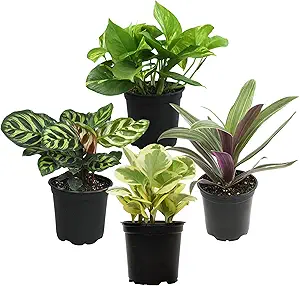
Essential Houseplant Collection (4-Pack) – Live Indoor Plants in Pots by Plants for Pets
This 4-pack solves a different problem than the single-plant options here: it builds a small collection in one purchase. Compared with the Low-Light Indoor Plants 4-Pack, it uses larger 4.25-inch pots and names recognizable easy-care varieties like Pothos, Philodendron, and Peperomia, so buyers get more established plants with better odds of thriving. Greenhouse-grown and hand-selected stock is a real quality advantage over generic grower’s-choice assortments. The tradeoff is genuine, though: you cannot choose your varieties, some selections may not be pet-safe, and mixing species means different light and water needs across the four pots. It’s less curated for deep shade than a dedicated low-light bundle, and buyers with cats or dogs should verify each plant on arrival.
Pros:- Four hand-selected, greenhouse-grown plants in one purchase
- Features popular, easy-care varieties like Pothos and Philodendron
- Larger 4.25-inch pots give plants a stronger established start
- A portion of each purchase supports shelter animal placement
Cons:- Exact plant varieties can’t be chosen and vary by availability
- Mixed species come with slightly different light and watering needs
- Some varieties in the assortment may not be pet-safe
Best for: New plant parents who want to start a varied collection at once rather than buying one plant at a time
Not ideal for: Households with pets — some included varieties may be toxic if chewed, and you can’t select around it
Our verdict“A smart single-purchase starter collection for beginners, provided you can accept the surprise assortment and check pet safety on arrival.”
Costa Farms Snake Plant Live Indoor Plant, 6-Inch Pot
If the ranking were based purely on survival odds in a dark corner, this snake plant would top the list. It tolerates low light and sparse watering better than the Peace Lily, which demands regular moisture, and better than the assorted varieties in the Essential Houseplant Collection, some of which prefer brighter indirect light. Its upright, architectural leaves suit modern and minimalist interiors in a way softer, bushier plants can’t match. This model is better suited to busy offices, rentals, and anyone whose watering schedule is unreliable. The honest tradeoff: it’s visually static — no flowers, slow growth, and little seasonal change. Listings also omit mature dimensions and detailed care guidance, so first-timers will need to look up watering frequency themselves rather than relying on included instructions.
Pros:- Exceptionally tolerant of low light and infrequent watering
- Upright, sculptural leaves suit modern and minimalist décor
- Comes in a substantial 6-inch pot with real visual presence
- Beginner-friendly with very few ways to go wrong
Cons:- No flowers and slow growth make it visually static compared with a Peace Lily
- Mature dimensions and detailed care instructions aren’t provided by the seller
Best for: Busy or forgetful plant owners, office workers, and renters who want greenery that survives neglect
Not ideal for: Buyers seeking color, flowers, or visible growth — this plant is all structure and very little drama
Our verdict“The safest low-light choice in this roundup for anyone who waters occasionally at best — just don’t expect blooms or change.”
Costa Farms Live Indoor Houseplant 2-Plant Bundle, 4-Inch Pots
This bundle occupies a useful middle ground: more intentional than the bulk 4-packs, smaller and cheaper than two individual 6-inch plants. Unlike the Essential Houseplant Collection, it’s explicitly built around low-light-resilient varieties — the listed candidates (Peace Lily, Snake Plant, Fern, Dieffenbachia, Pothos) are all proven shade performers — which matters for this roundup’s specific lens. The 4-inch decorative pots fit desks, nightstands, and narrow shelves where the full-size Costa Farms Peace Lily would overwhelm the space. Tradeoffs are real: varieties aren’t guaranteed, so you may receive two plants with different care needs, and the small pots dry out faster than larger ones, meaning slightly more frequent watering than a 6-inch snake plant requires. It’s decor-ready but not display-Statement-making.
Pros:- Two plants explicitly selected for low-light resilience
- Decorative 4-inch pots fit desks, shelves, and nightstands
- Varieties on offer (Pothos, Snake Plant, Peace Lily) are all proven easy keepers
- Air-purifying benefits with low-maintenance care
Cons:- Exact plant varieties can’t be chosen or guaranteed
- Small 4-inch pots dry out faster and need more frequent watering than 6-inch plants
Best for: Apartment dwellers and desk workers who want two small, low-light plants for shelves and bedside tables
Not ideal for: Buyers wanting a statement floor or table plant — 4-inch pots read as accents, not centerpieces
Our verdict“The right pick for small spaces needing two matching-scale accents, as long as surprise varieties won’t bother you.”
Low-Light Indoor Plants, 4-Pack
This is the value play of the lineup: four established, potted plants for less outlay per plant than the Essential Houseplant Collection, which uses bigger pots but costs more per unit. The tradeoff is size — 2.8-inch nursery pots are starter-sized, closer to plug plants than display pieces, so expect months of growing time before they match the presence of the Costa Farms Snake Plant in its 6-inch pot. On the plus side, everything arrives potted in soil mix and ready to place, and the compact footprint suits windowsills and cubby shelves that can’t fit anything larger. Compared with the Costa Farms 2-Plant Bundle, you get double the plants but less predictability — grower’s choice means no variety guarantees, and heights will vary across the four.
Pros:- Four established plants arrive potted in soil, ready to display
- Lowest cost per plant among the multi-packs in this roundup
- Explicitly selected for thriving with minimal sunlight
- Compact pots fit windowsills, desks, and narrow shelves
Cons:- Plant varieties and heights depend entirely on grower availability
- 2.8-inch pots are starter-sized and won’t fill a space for months
Best for: Budget-conscious buyers filling multiple windowsills, shelves, or cubbies with small starter plants
Not ideal for: Anyone wanting instant visual impact — 2.8-inch pots are tiny and take time to grow into their spaces
Our verdict“Pick this to green up several small spots cheaply, and skip it if you want full-grown plants that impress on day one.”
American Plant Exchange Parlor Palm in 4-Inch Pot
Most low-light plants in this roundup — like the Variegated Snake Plant or the Peace Lily — stay short and tabletop-sized. The Parlor Palm stands out because it can eventually reach up to 4 feet tall, filling an empty corner that smaller 4-inch options simply can’t. It tolerates low to moderate indirect light without complaint, and its slow growth means it won’t outgrow its space quickly. Compared with the Calathea Vittata, it asks far less of you: occasional watering and a peaty, sandy mix are all it needs, whereas the Calathea demands consistent moisture. The tradeoff is patience — this palm grows slowly, so the airy, full look takes years, and it can’t ship to California.
Pros:- Tolerates low to moderate indirect light
- Can reach 4 feet tall for vertical presence
- Pet-friendly with no known toxins
- Compact 4-inch starting size fits shelves while young
Cons:- Slow growth means years before it fills out
- Live plants may arrive stressed from shipping
- Cannot be shipped to California
Best for: Buyers with a dim corner who want a plant that will eventually grow into a floor-worthy statement piece
Not ideal for: California residents (shipping restrictions) or anyone wanting instant visual impact — this palm grows very slowly from a 4-inch pot
- Scientific name:Chamaedorea elegans
- Common names:Parlor palm; Neanthe Bella palm
- Pot size:4 inches
- Typical indoor height:Up to 4 feet
- Light:Low to moderate indirect light
- Watering:Occasional; avoid overwatering
- Growth rate:Slow-growing
- Pet-friendly:Yes
Our verdict“This pick makes the most sense for patient plant owners who want a low-light plant with real height potential rather than another tabletop accent.”
PLANTVERS Calathea Vittata Live Indoor Plant, 4-Inch Grow Pot
If your priority is decorative foliage over sheer survival, the Calathea Vittata delivers what plainer options like the Parlor Palm or the Snake Plant cannot: striking white-striped leaves that look hand-painted. It handles partial shade and indirect light, so it suits bedrooms and offices without bright windows, and it’s pet-friendly like the Lemon Lime Maranta. The honest tradeoff is that this is the neediest plant in this batch. Where the Maranta forgives a week between waterings, the Calathea wants consistent moisture and moderate humidity — skip a watering and the leaves crisp at the edges. At around 12 inches tall, it also stays small, so it’s an accent rather than a focal point.
Pros:- Bold white-striped patterned foliage
- Thrives in partial shade and indirect light
- Pet-friendly for cats and dogs
- Compact 12-inch size fits desks and nightstands
Cons:- Requires consistent watering with no room for neglect
- Prefers moderate humidity that dry homes lack
Best for: Design-focused buyers who want eye-catching patterned leaves on a desk or shelf and will keep up with a regular watering routine
Not ideal for: Frequent travelers or anyone in a dry, low-humidity home — inconsistent watering quickly shows on the foliage
- Plant type:Calathea Vittata
- Pot size:4-inch grow pot
- Expected height:12 inches
- Sunlight exposure:Partial shade
- Expected blooming period:Year-round
- Care:Low maintenance; moderate humidity, well-draining soil, consistent watering
- Pet friendly:Yes
Our verdict“This option stands out for buyers who value looks above all and will commit to a steady care routine in exchange for the showiest leaves in the lineup.”
Lemon Lime Maranta Prayer Plant – Live Indoor Houseplant in 4-Inch Pot
What separates the Lemon Lime Maranta from every other pet-safe option here — the Parlor Palm, the Calathea Vittata — is ASPCA-recognized non-toxicity, a documented safety standard rather than a seller’s claim. Its lemon-lime leaves with dark veins fold upward at night, giving it a living, animated quality that static foliage plants lack. Compared with the Calathea, it’s genuinely easier: watering every 1–2 weeks covers its needs, making it a realistic beginner plant. The tradeoffs are real, though — it wants humidity and occasional misting, which matters in dry climates, and direct sun will scorch its leaves. Unlike many competitors, Hopewind backs damaged arrivals with a no-return guarantee, removing the usual live-shipping gamble.
Pros:- ASPCA-recognized as non-toxic to cats and dogs
- Watering only every 1-2 weeks suits beginners
- Leaves fold upward at night for visual interest
- Seller guarantee with no returns required for damaged plants
Cons:- Needs humidity and misting, especially in dry climates
- Direct sunlight causes leaf burn
- Individual plants vary in color and shape from photos
Best for: Cat and dog owners who want verified pet-safe foliage with personality and only semi-regular watering duties
Not ideal for: Homes with very dry air or south-facing windows — it needs humidity and will burn in direct sun
- Plant height:12-16 inches
- Pot size:4 inches
- Color:Lemon Lime
- Sunlight exposure:Partial sun / bright indirect light
- Watering:Every 1-2 weeks
- Optimal temperature:65-75°F (18-24°C)
- Pet safe:Yes (ASPCA recognized non-toxic)
- Brand:Hopewind
Our verdict“This model is better suited to pet owners who want documented safety and forgiving care in exchange for keeping the air around it a little humid.”

How We Picked
I ranked these plants on four buyer-relevant criteria, weighted in this order: true low-light tolerance, survivability for average owners, what you actually receive (size, maturity, and shipping condition), and value relative to pot size. Low-light tolerance came first because it is the entire reason for this roundup — a beautiful calathea that slowly dies in a north-facing room is a failed purchase no matter how attractive the listing photos are. Plants that thrive on neglect, like snake plants and pothos-type foliage, scored higher than plants that merely survive in shade.
Survivability covered watering forgiveness, pest resistance, and how well each plant bounces back from shipping stress, since mail-order plants routinely arrive wilted or bruised. For bundles and multi-packs, I judged whether the assortment was actually low-light appropriate or a mixed bag better suited to bright rooms. This is why single-species listings like the Costa Farms Snake Plant rank above assorted 6-packs: predictability beats quantity when the goal is filling dim spaces with plants that live more than a few months.
Factors to Consider When Choosing House Plants For Low Light
Choosing a plant for a dim room involves more than picking a species labeled “low light.” Shipping practices, pot size, and your own watering habits all shape whether a plant thrives or slowly declines over six months.Understand What “Low Light” Actually Means
Most plant sellers use “low light” loosely, and this creates the single biggest gap between expectations and reality. True low light means a north-facing window or a corner several feet from any window — conditions under which only a handful of species hold their form, mainly snake plants, ZZ plants, pothos, and peace lilies. Many listings, including some in this roundup, use the phrase to mean “survives short of direct sun,” which covers almost every house plant. Before buying, look at the room at noon on an overcast day: if you could comfortably read a book without a lamp, most low-light labels are honest; if you’d reach for a light switch, narrow your choices to the toughest species. A common mistake is buying a variegated or colorful variety for a dark spot, since variegation and vivid color require more light to produce and maintain. In dim rooms those plants often revert to plain green or drop their patterned leaves entirely.
Pot Size Determines How Finished the Plant Looks
Mail-order plants in 2-inch and 4-inch pots are starter plants, not display pieces, and listings photograph them at maturity to set expectations high. A 4-inch snake plant will look sparse on a living room floor for a year or more before it fills out, while a 6-inch version arrives looking like a real plant. The tradeoff is price and shipping risk: larger pots cost more, weigh more, and shift in transit, which can break stems or crack pots. Smaller plants establish faster after shipping and acclimate to your home’s light from the start, which is a genuine advantage if you’re patient. My suggestion is to buy small for shelves and desks, where a 4-inch plant is proportionate, and reserve 6-inch purchases for floor-level spots or empty corners. Buyers who expect an Instagram-ready plant from a budget listing are the most common disappointed reviewers of online plants.
Watering Forgiveness Matters More in Dark Rooms
Plants in low light use water far more slowly than plants in bright windows, and overwatering is what kills most of them — not the darkness itself. Wet soil that never dries out invites root rot and fungus gnats, and a dim corner accelerates both problems. This is why succulent-type plants like snake plants and lucky bamboo consistently outperform leafier options for forgetful owners: their tissues store water, so an extra week of neglect causes no harm. Peace lilies sit at the opposite extreme; they wilt dramatically when dry, which makes them excellent communicators but poor matches for people who travel frequently or water on a rigid schedule. Match the plant to your habits honestly rather than aspirationally. If you tend to water everything weekly regardless, choose a plant that tolerates it; if you forget for weeks at a time, the thick-leaved options in this roundup will forgive you.
Shipping Condition and Seller Practices Vary Widely
Two listings of the same species can arrive in completely different states depending on how the seller packs and ships. Established brands with nursery infrastructure typically ship in insulated boxes with stakes or sleeves, while smaller sellers may drop a bare pot into a padded mailer, leaving soil spilled and stems snapped. Season matters too: plants shipped during heat waves or freezes often arrive stressed or dead regardless of species, and even a hardy snake plant can be damaged by a week in a hot delivery truck. Check whether the listing specifies a heat pack option or seasonal shipping pauses, which signals a seller who plans around weather. Also note whether plants ship in grower pots or decorative pots — grower pots drain properly and should be expected, while a plant shipped in a pot with no drainage hole sets you up for root rot in a low-light room. Building a repotting buffer into your budget, even a simple terracotta pot, prevents the most common post-purchase failure.
Bundles and Multi-Packs: Value or Gamble?
Per-plant pricing on multi-packs is usually unbeatable, but the economics only work if every plant in the box suits your space. Assorted bundles without a species list force you to accept whatever the nursery has in stock, and that mix often includes sun-loving varieties that will slowly decline in the low-light rooms you bought them for. Named-species bundles eliminate this risk and are worth a premium over assorted packs for exactly this reason. Multi-packs also concentrate shipping risk: one rough transit day can damage four or six plants at once rather than one. A smarter strategy for filling several dark spots is to buy one or two proven single-species plants first, confirm they hold up in your actual light for a month, then expand. Treat assortments as a way to experiment cheaply, not as a guaranteed low-light collection.
Toxicity and Placement Around Pets and Kids
Several of the most low-light-tolerant plants in this category carry real toxicity concerns, and this tradeoff is worth confronting before purchase rather than after. Snake plants, peace lilies, pothos, and monsteras all contain calcium oxalate crystals that cause mouth and throat irritation if chewed by cats, dogs, or toddlers. The safest performers for genuinely dark rooms are parlor palms and prayer plants, both of which are non-toxic and genuinely shade-capable, which is partly why they earn placement in this lineup despite higher care demands. Lucky bamboo is frequently kept in homes with pets, but it is toxic to cats and dogs despite its name — it is not a true bamboo. If your household includes a plant-chewing cat, either restrict your low-light choices to palm and calathea-family plants or plan for hanging placement, which dark corners rarely accommodate. Toxicity information appears inconsistently in listings, so verify independently rather than assuming a seller would flag it.
Frequently Asked Questions
Which plant in this roundup truly survives in a windowless room?
No plant survives complete darkness, but the snake plants come closest, tolerating rooms lit only by artificial light for stretches of weeks. They photosynthesize efficiently at low intensity and store water in their leaves, so they neither starve nor dry out quickly. Lucky bamboo is a second option if you can give it fluorescent or lamp light a few hours daily, since it grows hydroponically and handles office conditions well. Peace lilies hold on in windowless rooms but stop flowering and slowly shrink over months. If a space gets zero natural light, plan to rotate plants every few weeks between the dark spot and a windowed room — a practice that works better with cheap, sturdy plants than with expensive specimen plants.
Is a 4-inch pot too small to start with, or should I pay more for 6-inch?
It depends on where the plant will live. A 4-inch pot is proportionate for desks, shelves, and nightstands, and smaller plants often adapt faster to a new home’s light conditions because they establish fresh roots quickly. For floor placement, empty corners, or anywhere the plant is meant to be a visible design element, a 6-inch pot delivers immediate presence that a 4-inch plant takes a year or more to match. The compromise worth knowing: 4-inch plants grow to fill a 6-inch look within one to two growing seasons if repotted yearly, so the larger pot is partly a convenience purchase. Factor in that larger plants ship with more breakage risk and higher delivery weight. Buy 6-inch for statement spots, 4-inch for everything else.
Are the assorted multi-packs a smart way to fill several dark rooms cheaply?
Only if the listing names the species included. Assorted packs without a plant list often mix in bright-light varieties, which means a third to half of your purchase may slowly decline in the low-light rooms you bought it for. Named low-light bundles solve this and typically still beat single-plant pricing per pot. Also consider the recovery period: multi-packs arrive as six simultaneously stressed plants, and nursing half a dozen recoveries at once is more work than people expect. If you’re new to plants, start with two proven singles — a snake plant and a peace lily — and confirm they thrive in your actual light before committing to a bulk buy. The multi-pack makes the most sense for buyers who already have bright rooms to absorb any mismatched plants.
Why does my low-light plant keep getting brown tips even though I follow the care instructions?
Brown tips in low-light plants usually trace to one of three causes, and none of them relate to light. The most common is overwatering compounded by slow evaporation — dim rooms dry soil far more slowly than care guides assume, so a weekly watering schedule rots roots quietly. The second is tap water chemistry: calatheas, prayer plants, and spider plants are sensitive to fluoride and chlorine, which accumulate in leaf tips. Letting water sit overnight or using filtered water resolves this within a few weeks. The third is dry air from heating or AC vents placed near the plant. Trim existing brown tips with scissors — they won’t heal — and adjust one variable at a time so you can identify the actual culprit rather than changing everything at once.
Are any of these low-light plants safe for cats and dogs?
Yes, but the safest options overlap only partially with the most light-tolerant ones. Parlor palms and prayer plants are non-toxic to cats and dogs and both handle dim conditions, making them the best all-around picks for pet households. Lucky bamboo, despite the name, is toxic to pets, and snake plants, peace lilies, and monsteras all contain irritant crystals that cause drooling and oral discomfort if chewed. Calatheas as a family are pet-safe, though the Vittata variety’s humidity demands make it harder to keep alive than a palm. If you specifically want a snake plant’s toughness in a pet home, placement is the workaround — high shelves and rooms the pet cannot access. Toxicity labels on listings are inconsistent, so confirm any purchase against the ASPCA plant database before ordering.
Conclusion
For most buyers shopping for dim rooms, the Costa Farms Snake Plant in a 6-inch pot is the best overall choice: it genuinely tolerates low light, forgives missed waterings, and arrives large enough to matter visually on day one. The Altman Plants Variegated Snake Plant is the best value for anyone willing to wait — same toughness in a smaller, cheaper starting size with more decorative foliage. For beginners who want feedback from their plants, the peace lilies are the smartest entry point because they visibly wilt when thirsty and bounce back within hours of watering, and the Costa Farms 6-inch Peace Lily is the better of the two sizes for a first plant. The PLANTVERS Calathea Vittata and Lemon Lime Prayer Plant serve the premium, design-focused buyer who has a humid bathroom or a consistent care routine and wants striking foliage rather than durability. For specific needs: the Parlor Palm fills vertical corners and pet-safe requirements, the Lucky Bamboo set suits desks and offices, and the Low-Light Indoor Plants 4-Pack is the budget move for covering multiple shadowy spots at once — just confirm the included species. Whatever you pick, the deciding factor is honesty about your light and your watering habits; the toughest plant in this lineup will still fail in standing water, and the fussiest one can thrive in a dark corner with steady attention.
Halloween Picks
halloween
As an affiliate, we earn on qualifying purchases.