TL;DR
A Becoming Minimalist report offers 10 practices for maintaining minimalism, from setting limits on possessions to regular decluttering and reflecting on personal priorities. The advice is practical guidance, not a study showing that the habits guarantee lasting change.
Becoming Minimalist has published 10 suggestions for people who want to maintain a minimalist lifestyle after an initial decluttering effort, including setting physical limits for belongings, delaying nonessential purchases and clearing clutter regularly. The report frames minimalism as an ongoing set of choices rather than a one-time home cleanout.

Turn your quiet moments into listening time
- Thousands of audiobooks, podcasts and originals
- Listen on your phone, tablet or Echo — also offline
- Cancel anytime
The article’s author says decluttering a household of four took about nine months, and that maintaining simplicity required continued attention after donations were removed. The report uses that experience to distinguish reducing possessions from changing the habits that can bring more items back into a home. It does not give an independent measure of how often people revert to previous consumption patterns.
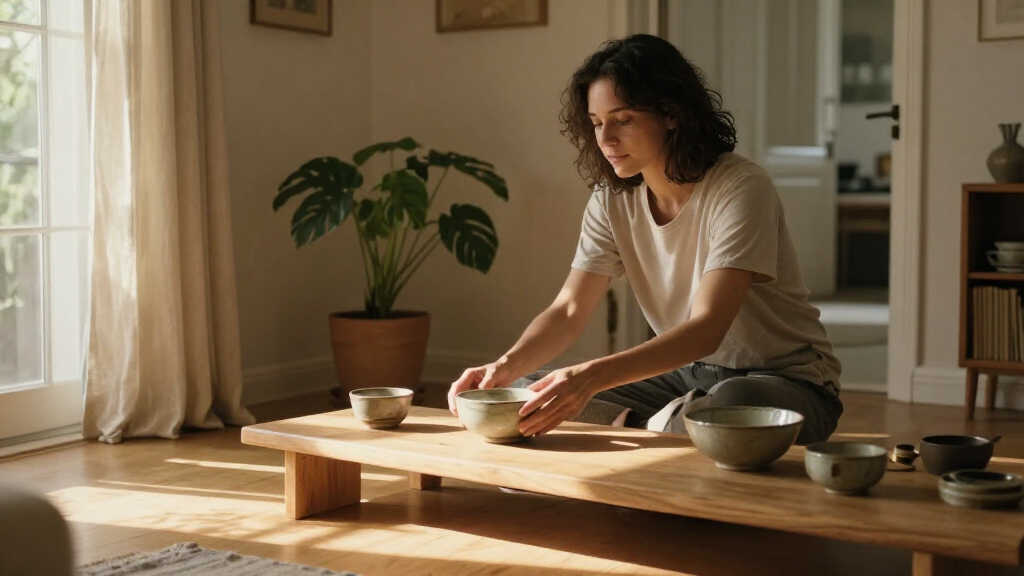
Several suggestions focus on managing what enters and stays in the home. Readers are encouraged to decide how much space particular categories may occupy—for example, keeping food containers on one shelf—or to set numerical limits, such as a cap on clothing. The author also recommends accepting empty areas rather than filling them, and removing unnecessary items as a space begins to feel full.
Other suggestions address spending and routines: wait 24 hours before making a nonessential purchase, discuss large purchases with a spouse, and remove saved credit-card details from online accounts. The report also proposes prioritizing experiences, keeping a gratitude journal, trying a 30-day break from a type of possession or activity, regularly revisiting reasons for choosing minimalism, maintaining small daily tidying habits and finding encouragement from like-minded people.
From Decluttering to Daily Habits
The advice highlights a practical distinction for readers: removing possessions does not necessarily change the routines or purchasing decisions that led to accumulation. Setting limits, pausing before purchases and tidying regularly are presented as ways to make a simpler home easier to maintain, rather than relying on another major cleanout.
The report also treats minimalism as a personal practice, not a fixed standard for how many belongings someone should own. Its examples range from a shelf for containers to a clothing count, leaving readers to choose boundaries that suit their homes and needs. The piece offers ideas, but does not establish that any one approach works for everyone or produces a particular outcome.
The Advice Behind the List
The report appears on Becoming Minimalist, a site focused on simplicity and owning fewer possessions. Its author describes first finding minimalism nearly 20 years ago and undertaking a months-long effort to reduce belongings in a family home. The source does not supply a publication date, survey, or research methodology for the 10 recommendations.
Some proposals are framed as personal practices; others refer generally to research without naming studies or giving findings. For example, the author says experiences can bring more happiness than physical possessions, but the supplied report does not identify the studies behind that statement. It is best understood as the article’s rationale for its advice, not as a specific research result established in the report.
““The challenge doesn’t end with the last box of donations out the door.””
— The author of the Becoming Minimalist report
What the Report Does Not Establish
The source offers personal experience and practical recommendations, but does not report testing the 10 practices or measuring how many readers maintain them. It does not establish that minimalism is suitable for every household, define a single standard for owning less, or show that specific practices lead to greater happiness. The article also refers to studies about spending and happiness without identifying them in the supplied material.
The author’s household experience is not presented as a universal timeline: the reported nine-month decluttering process describes one family’s effort. Readers’ needs, space, finances, health and household responsibilities can differ, and the report does not address those differences in detail.
Applying the Ideas at Home
The report sets no follow-up date or next formal milestone. Its proposed next steps are individual: readers can choose a physical boundary, try a purchase delay, or set a limited period to live without a particular category of item, then reflect on what they learned. It also suggests brief daily routines and periodic reviews of whether household limits still fit.
Whether those practices lead to lasting change is not assessed in the article. The immediate takeaway is to treat decluttering as one part of a longer effort to make decisions about possessions and spending deliberately.
Key Questions
What are the 10 suggestions for maintaining minimalism?
The report recommends setting limits for possessions, appreciating empty space, addressing consumer habits, decluttering regularly, spending on experiences, keeping a gratitude journal, trying time-limited challenges, reflecting on motivations, building daily tidying routines and seeking ongoing inspiration.
Does the report say minimalism requires owning a specific number of items?
No. It offers numerical limits as one option, but the author says physical boundaries—such as keeping a category of items within one shelf—can also help. The report does not prescribe a universal number.
What does the article mean by a time-limited challenge?
It suggests trying to live without a selected item or category for a set period, such as 30 days. Television is given as an example; the report presents the exercise as a way to question assumptions, not as a required rule.
Does the article prove these practices prevent people from returning to old habits?
No. The source presents recommendations and personal experience, but does not report a study or outcome data showing that the practices prevent people from accumulating possessions again.
Source: becomingminimalist.com
Products Worth Considering

BowFlex Results Series SelectTech Adjustable Dumbbells (Pair)

Bowflex SelectTech 840 Adjustable Kettlebell

Therabody Theragun Mini 3rd Generation Massage Gun, Black
As an affiliate, we earn on qualifying purchases.