
TL;DR

Turn your quiet moments into listening time
- Thousands of audiobooks, podcasts and originals
- Listen on your phone, tablet or Echo — also offline
- Cancel anytime
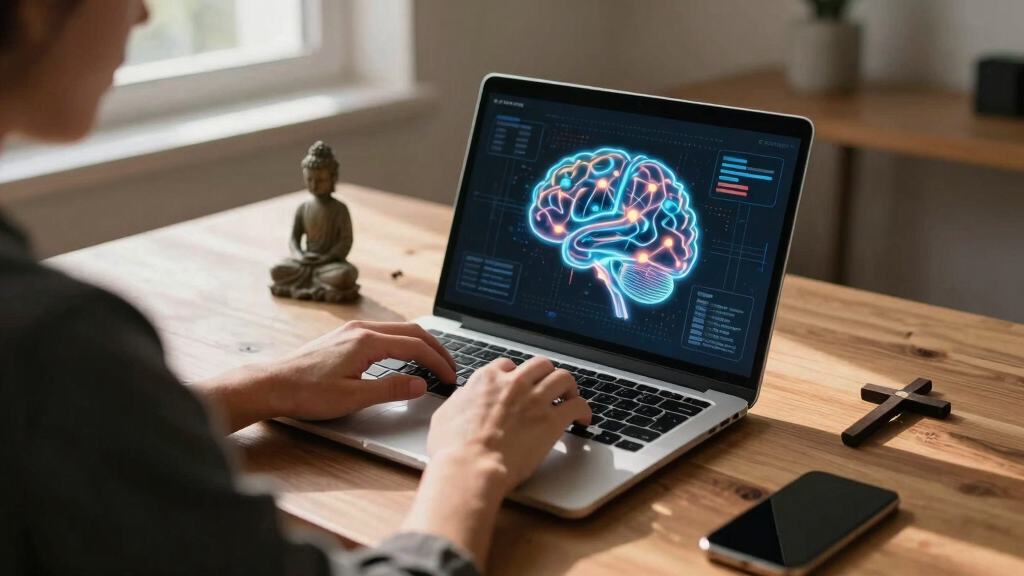
Several tech firms and religious organizations are working together to incorporate spiritual and moral precepts into AI systems. This development aims to address ethical concerns but raises questions about implementation and influence.
Major technology firms and religious organizations have announced collaborations to embed spiritual and moral principles into artificial intelligence systems, aiming to guide AI behavior ethically and culturally. This initiative highlights an emerging effort to align AI development with moral and spiritual values, which could influence future AI applications and societal norms.
In early 2024, several leading tech companies, including Google, Microsoft, and IBM, announced partnerships with religious and spiritual organizations such as the Vatican’s AI ethics council and the World Council of Churches. The goal is to develop frameworks for integrating spiritual and moral precepts into AI algorithms, addressing concerns about AI decision-making and ethical behavior.
According to statements from representatives, these collaborations aim to create AI systems that reflect human values rooted in diverse spiritual and moral traditions. The initiative includes developing guidelines for ethical AI use, training models to recognize moral dilemmas, and fostering dialogue between technologists and faith leaders.
While the efforts are in early stages, experts suggest that embedding moral precepts into AI could influence areas such as healthcare, criminal justice, and social services, where ethical decision-making is critical. However, critics warn of potential risks, including cultural bias and the challenge of defining universal moral standards.
Potential Impact on Ethical AI Development
This collaboration signifies a notable shift toward integrating moral and spiritual considerations into AI development, which could shape future policies and AI behavior. It reflects societal concerns about AI ethics and the desire to ensure technology aligns with human values. If successful, it may lead to more culturally sensitive and ethically guided AI systems, influencing sectors like healthcare, law enforcement, and education.
However, the initiative also raises questions about whose moral standards are embedded and how diverse spiritual beliefs will be balanced. The outcome could impact public trust in AI and influence regulatory approaches worldwide.
Historical Efforts to Incorporate Ethics into AI
Over the past decade, AI developers have increasingly focused on ethical considerations, including fairness, transparency, and accountability. Various organizations have issued guidelines, such as the European Union’s ethics framework and the IEEE’s standards for ethical AI. However, the integration of specific spiritual and moral precepts remains a relatively new frontier.
This recent collaboration marks a shift from abstract ethical principles toward explicitly embedding spiritual and religious values into AI systems, reflecting broader societal debates about morality and technology. Historically, religious groups have voiced concerns about AI’s potential to undermine human dignity and moral agency, prompting calls for more ethically aligned AI development.
“Integrating spiritual values into AI could help address moral dilemmas faced by autonomous systems, but it requires careful, inclusive frameworks.”
— Dr. Maria Lopez, AI Ethics Researcher
Unresolved Challenges in Moral and Spiritual AI Integration
It remains unclear how effectively diverse spiritual and moral values can be codified into AI systems without bias or misinterpretation. The process of translating complex religious and moral principles into algorithms is still in early development, and there is no consensus on universal standards.
Additionally, the long-term societal impact and potential for misuse or cultural conflict are uncertain. Experts warn that without careful oversight, such initiatives could inadvertently reinforce stereotypes or marginalize minority beliefs.
Next Steps in Developing Ethically Aligned AI
Researchers and developers plan to pilot these frameworks in specific sectors such as healthcare and social services, with ongoing evaluations of outcomes. Public forums and interfaith dialogues are expected to expand to refine the integration of spiritual values.
Regulatory bodies may begin considering new guidelines for AI that explicitly include moral and spiritual considerations, shaping future legislation. The collaboration’s success will depend on transparent, inclusive processes and ongoing assessment of societal impacts.
Key Questions
Why are religious groups involved in AI development?
Religious groups seek to ensure that AI systems reflect moral and spiritual values, promoting ethical behavior and safeguarding human dignity.
What are the main challenges in embedding spiritual values into AI?
Challenges include defining universal moral standards, avoiding cultural bias, and accurately translating complex spiritual principles into algorithms.
Could this effort influence AI regulation?
Yes, if successful, it could lead to new regulations requiring AI systems to adhere to specific ethical and spiritual guidelines, influencing global standards.
Will this impact AI in sensitive sectors like healthcare?
Potentially, as morally guided AI could improve decision-making in healthcare, making systems more empathetic and culturally sensitive.
Source: rss
Products Worth Considering
As an affiliate, we earn on qualifying purchases.