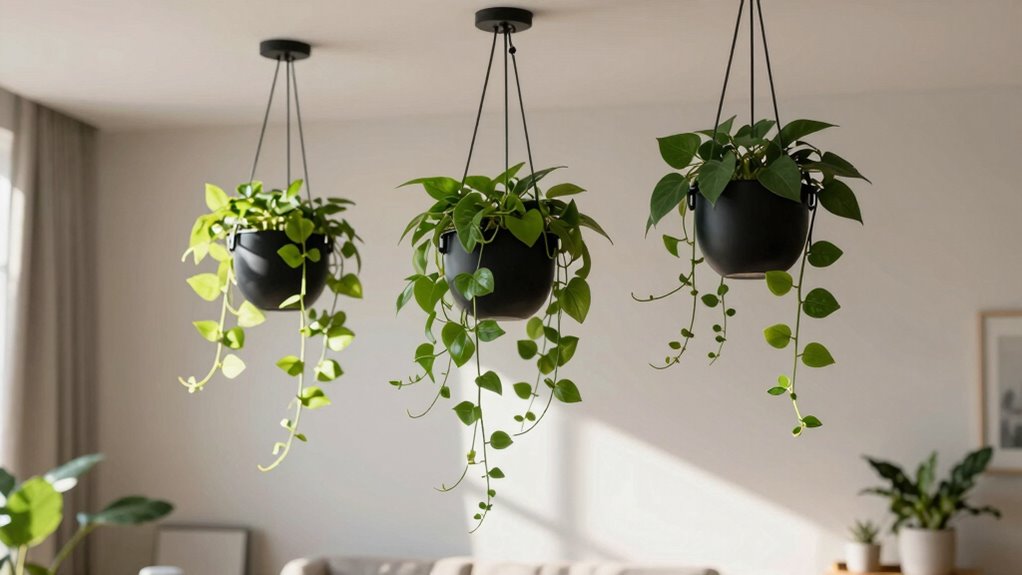
Hanging planters quickly transform your room by adding vibrant greenery without taking up floor space. They let you create a lush, layered look at different heights, making the space feel larger and more lively. With secure hooks and the right plant choices, you can enhance your decor effortlessly. If you want to discover simple tips to optimize your space and make your plants thrive, keep exploring how hanging planters can truly elevate your environment.

Turn your quiet moments into listening time
- Thousands of audiobooks, podcasts and originals
- Listen on your phone, tablet or Echo — also offline
- Cancel anytime
Key Takeaways
- Hanging planters instantly add greenery, brightening and freshening up a room’s ambiance rapidly.
- Vertical planting creates an immediate sense of depth and lushness.
- They free up surface space, making rooms appear larger and more organized.
- Installing vibrant plants as focal points quickly enhances decor style.
- Easy to change or update, hanging planters allow quick room transformations with minimal effort.
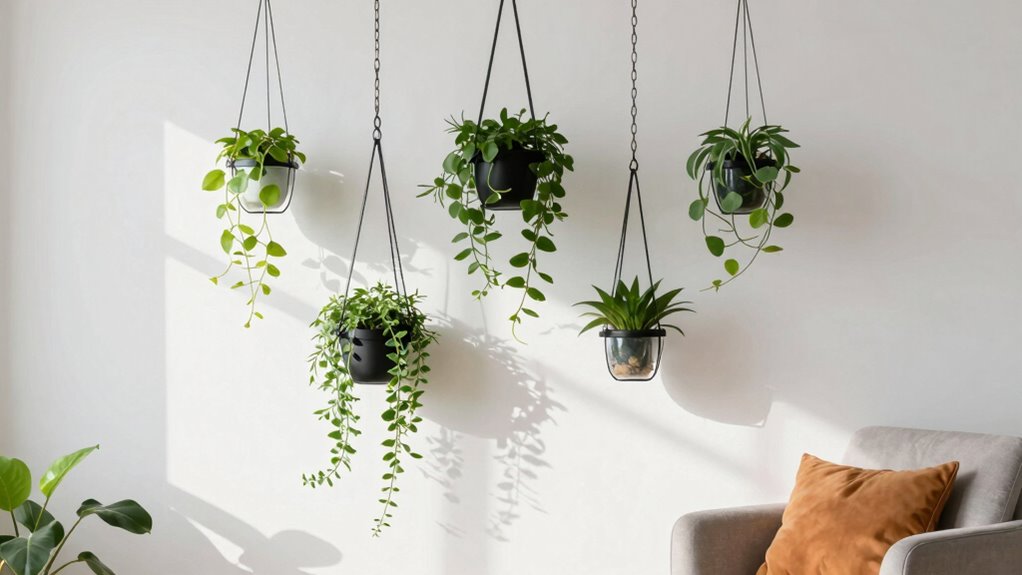
Hanging planters are an easy and stylish way to breathe new life into a room. They instantly add a touch of greenery and personality without taking up valuable floor space. When you choose to incorporate hanging planters into your decor, you’re making a smart move for both plant care and space optimization. Unlike traditional potted plants on shelves or tabletops, hanging planters allow you to elevate your greenery, freeing up surfaces for other decorative items or practical uses. This not only keeps your space tidy but also makes your room feel larger and more open.
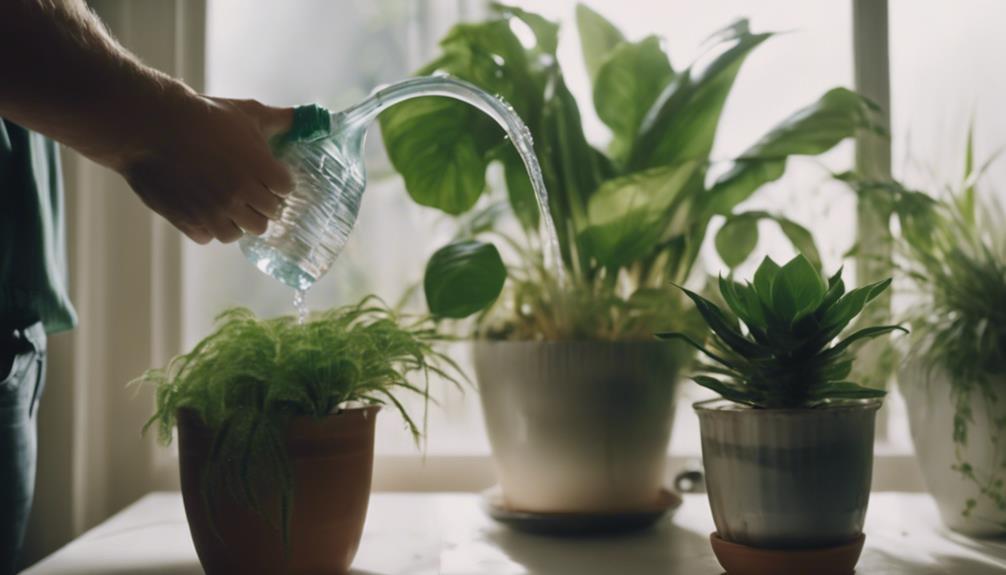
Plant care becomes simpler when you use hanging planters because you can better control watering and light exposure. By hanging your plants near windows or in spots that receive natural sunlight, you give them the best chance to thrive. You can also easily monitor moisture levels and prevent overwatering since many hanging planters have drainage options designed specifically for this purpose. Additionally, the elevated position helps reduce the risk of accidental damage—no more worries about curious pets or children knocking plants over. This makes hanging planters especially ideal if you’re busy but still want your plants to flourish. Proper installation and choosing the right plant types are crucial for ensuring safety and longevity, so you don’t have to worry about accidents. A secure hanging system is essential to ensure that your plants stay safely in place and avoid damage. Incorporating proper plant selection can also help you choose plants that are easier to maintain and suitable for hanging environments. Regular maintenance and understanding light requirements for your plants can further improve their health and growth, making your hanging garden more successful.
Hanging planters simplify plant care by improving light, drainage, and safety from pets or children.
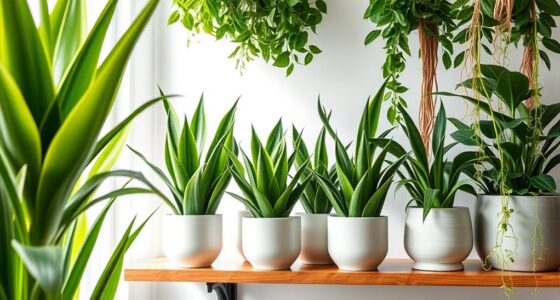
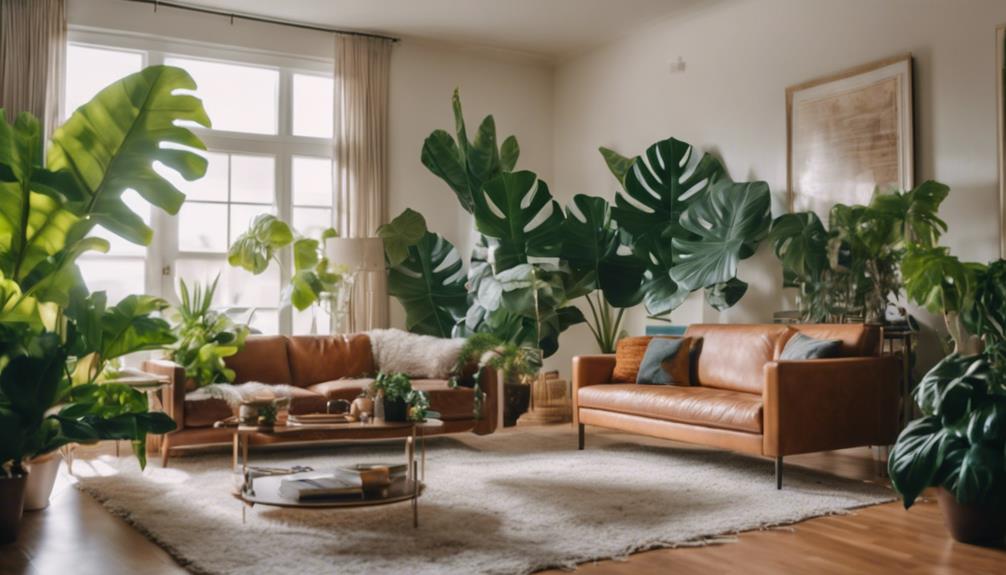
Space optimization is another significant advantage. If you’re working with a small room or apartment, hanging planters maximize your available area. They allow you to introduce lush greenery without cluttering your countertops or furniture. You can hang plants at different heights, creating a dynamic visual effect that draws the eye upward. This vertical approach not only makes your room feel more abundant but also adds depth and interest to your decor. Incorporating vertical gardening techniques can further enhance this effect, allowing you to grow more plants in a limited space. Plus, hanging planters are versatile—they work well in kitchens, bedrooms, bathrooms, or living rooms. You can cluster a few together to create a mini indoor garden or spread them out for a more subtle effect.
The key to making hanging planters work for you is choosing the right plants and placements. Opt for plants that thrive in the light conditions of your room, and consider the weight of the planters themselves when selecting hooks or hangers. Proper installation guarantees safety and longevity, so you don’t have to worry about accidents. With a little planning, your hanging planters can become a focal point that elevates your entire space. They bring a fresh, vibrant energy that transforms your room faster than you think—adding greenery, improving plant care, and maximizing every inch of your space seamlessly.
Frequently Asked Questions
What Are the Best Plants for Hanging Planters Indoors?
You should choose low-maintenance plants like pothos, spider plants, or pothos for your hanging planters indoors. These plants thrive with minimal plant care, making them perfect for busy or beginner gardeners. Their cascading growth adds to aesthetic arrangements, creating a lush, vibrant look that brightens your space quickly. Plus, their air-purifying qualities boost your indoor environment, making your room more inviting and lively with little effort.
How Do I Hang Planters Securely on Different Wall Types?
To hang planters securely on different wall types, start by choosing the right hardware. For drywall or plaster, use wall anchors to guarantee stability. For ceilings or wooden beams, ceiling hooks work best. Make sure to select anchors and hooks rated for the weight of your planter. Drill carefully, follow manufacturer instructions, and double-check that everything is securely fastened before hanging your planter. This keeps your greenery safe and your space stylish.
Can Hanging Planters Help Improve Indoor Air Quality?
Hanging planters act like living air purifiers, filtering out toxins and invigorating your space. By adding lush greenery, you boost air purification and help remove toxic pollutants, making your home healthier. Their vibrant leaves absorb carbon dioxide and release oxygen, creating a natural barrier against indoor pollutants. With each plant hanging in your room, you invite cleaner, crisper air—turning your space into a gust of fresh air you can truly enjoy.
What Materials Are Best for Durable Hanging Planters?
You should choose hanging planters made from durable materials like ceramic, metal, or high-quality resin, as they offer excellent material longevity. These materials resist weathering and cracking, ensuring your planters last. Also, look for planters with built-in drainage solutions or consider adding drainage inserts, which help prevent overwatering and root rot. By selecting sturdy materials with proper drainage, you’ll enjoy vibrant greenery for years to come.
How Often Should I Water Plants in Hanging Planters?
Your plants’ hydration needs are urgent—miss a watering, and they’ll wilt faster than you can blink! Typically, you should water your hanging planters once or twice a week, depending on the plant type, weather, and pot size. Keep a consistent watering schedule to maintain healthy roots. Check soil moisture regularly; if the top inch feels dry, it’s time to water again to guarantee proper plant hydration.
Conclusion
So, don’t let worries about installation hold you back. Hanging planters are a quick, affordable way to add life and personality to any room. Even if you’re not a DIY pro, simple hooks and lightweight pots make it easy to upgrade your space in no time. Before you know it, your room will feel fresher, more inviting, and bursting with greenery—proving that a little plant magic goes a long way!
Products Worth Considering
hanging plant planters with drainage
As an affiliate, we earn on qualifying purchases.
As an affiliate, we earn on qualifying purchases.