

To create a self-care routine you’ll stick with, start small by adding one or two personalized activities each week that energize or relax you. Focus on choices that fit your lifestyle, and don’t forget to stay flexible—adjust activities as your needs change. Incorporate simple mindfulness practices or outdoor walks, and enhance your environment with natural elements for calm. Building consistent habits is key, and if you keep exploring, you’ll find even more ways to make self-care sustainable.
Key Takeaways
- Start small by adding one or two personalized activities weekly to build consistency gradually.
- Incorporate mindfulness practices and simple routines like stretching or breathing exercises daily.
- Tailor your activities to what energizes and relaxes you, making routines more enjoyable and sustainable.
- Create a calming environment with natural elements and appropriate lighting to enhance relaxation.
- Practice self-compassion by allowing flexibility and skipping routines without guilt when needed.
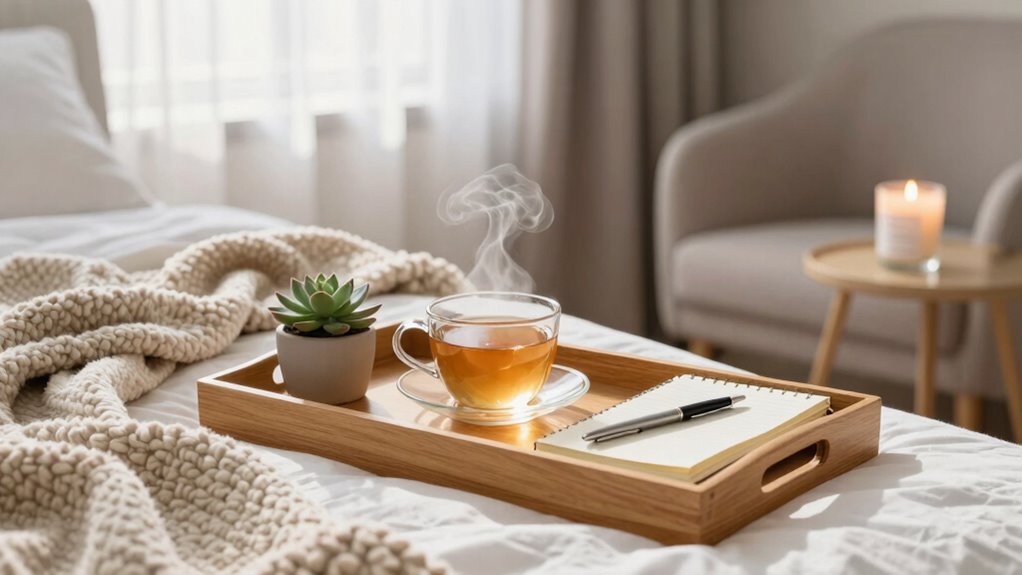
Taking care of yourself isn’t just a luxury—it’s crucial for maintaining your overall well-being. Creating a self-care routine that sticks requires more than just setting aside time; it’s about making intentional choices that fit seamlessly into your daily life. To start, identify what truly energizes and relaxes you. Incorporate mindfulness practices into your routine—these are simple yet powerful tools for staying present and reducing anxiety. Whether it’s a few minutes of deep breathing, meditation, or mindful walking, these practices help you reconnect with yourself and clear your mind. When you regularly practice mindfulness, you build resilience against daily stressors, making it easier to stay calm and focused.
Prioritize self-care by making intentional, personalized choices that help you stay present, relaxed, and resilient daily.
Stress management techniques are equally essential. Instead of overwhelming yourself with complicated routines, pick methods that are easy to implement and sustainable. For example, taking short breaks during your workday to stretch or do breathing exercises can substantially lower your stress levels. Journaling your thoughts or practicing gratitude can also shift your focus from worries to positive aspects of your life. The key is consistency—by integrating these techniques into your day, they become natural habits rather than chores. Over time, you’ll notice a boost in your mood and energy levels, making self-care feel less like a task and more like a necessary part of your routine.
Another important tip is to start small. Don’t feel pressured to overhaul your entire schedule overnight. Instead, add one or two self-care activities each week until they become second nature. For instance, set aside five minutes in the morning for mindfulness or a quick walk outside. As these small habits build, you’ll find it easier to expand your routine gradually. Remember, self-care isn’t about perfection; it’s about consistency and making space for yourself. Be compassionate when days are hectic and skip your routines—what matters is that you return to them without guilt. Incorporating natural elements like plants or natural lighting can also enhance your environment and contribute to a calming atmosphere at home. Recognizing the importance of visual comfort in your surroundings can further support your efforts to create a peaceful space.
Additionally, understanding the importance of contrast ratio in visual content can help you better appreciate the effects of lighting and color choices, which can be applied in creating a calming environment at home. Paying attention to lighting quality and how it impacts mood can make a significant difference in your self-care space. Using weather resistance materials in your environment or outdoor spaces can also help create a more durable and inviting setting that encourages relaxation. Finally, tailor your self-care routine to your preferences. If you despise running but love reading or listening to music, incorporate those activities instead. The more personalized your routine, the more likely you are to keep it. Keep in mind that your needs evolve, so periodically reassess and tweak your activities. By making mindful choices and employing stress management techniques that resonate with you, you’ll develop a self-care routine that’s not only effective but also sustainable in the long run.
Frequently Asked Questions
How Long Should Each Self-Care Activity Last?
You should spend about 5-10 minutes on mindful breathing to help center yourself and reduce stress. Skincare rituals can vary, but generally, 10-15 minutes is ideal for cleansing, applying treatments, and moisturizing without feeling rushed. Keep each activity manageable, focusing on quality rather than quantity. This way, you stay consistent and make self-care a sustainable part of your daily routine.
Can I Customize My Routine for Different Days?
Absolutely, you can customize your self-care routine for different days. Embrace flexible scheduling to accommodate your varying needs and energy levels. Routine personalization allows you to focus on activities that feel most beneficial on specific days, whether it’s more relaxation or physical activity. This adaptable approach keeps your self-care practices fresh and engaging, making it easier to stick with them long-term and truly prioritize your well-being.
What if I Lose Motivation to Stick to My Routine?
If you lose motivation and feel your motivation fluctuation, remind yourself why you started and celebrate small victories. Keep your routine flexible by adjusting activities based on how you feel, so it stays enjoyable and relevant. Remember, motivation ebbs and flows; don’t be hard on yourself. Revisit your goals, add variety, and set realistic expectations. This way, you’ll rebuild your motivation and keep your self-care routine sustainable.
How Do I Track My Self-Care Progress Effectively?
You can track your self-care progress effectively by journaling insights daily, which helps you reflect on what works and what doesn’t. Use habit stacking to link new self-care activities with existing routines, making them easier to remember and maintain. Regular journaling and habit stacking keep you aware of your growth, boost motivation, and guarantee your self-care routine stays consistent and meaningful over time.
Is It Okay to Skip Days or Adjust My Routine?
Imagine your self-care routine as a gentle river, flowing smoothly but occasionally shifting course. Yes, it’s okay to skip days or adjust your routine. Embrace flexible scheduling and routine flexibility, knowing that perfection isn’t the goal. Life’s currents change, and so should your approach. By being adaptable, you’ll sustain your self-care practices longer, making them a natural part of your life rather than a rigid obligation.
Conclusion
Creating a self-care routine that sticks is all about consistency and personalization. Remember, over 60% of people who prioritize self-care report improved mental health and overall happiness. So, don’t be afraid to start small and tailor your routine to fit your lifestyle. Keep it fun, flexible, and realistic. When you invest in yourself regularly, you’ll notice the positive changes ripple into every part of your life. You’ve got this—your well-being is worth it!
Products Worth Considering

Meditation Starter Kit: Unlock Calm and Clarity
As an affiliate, we earn on qualifying purchases.
As an affiliate, we earn on qualifying purchases.