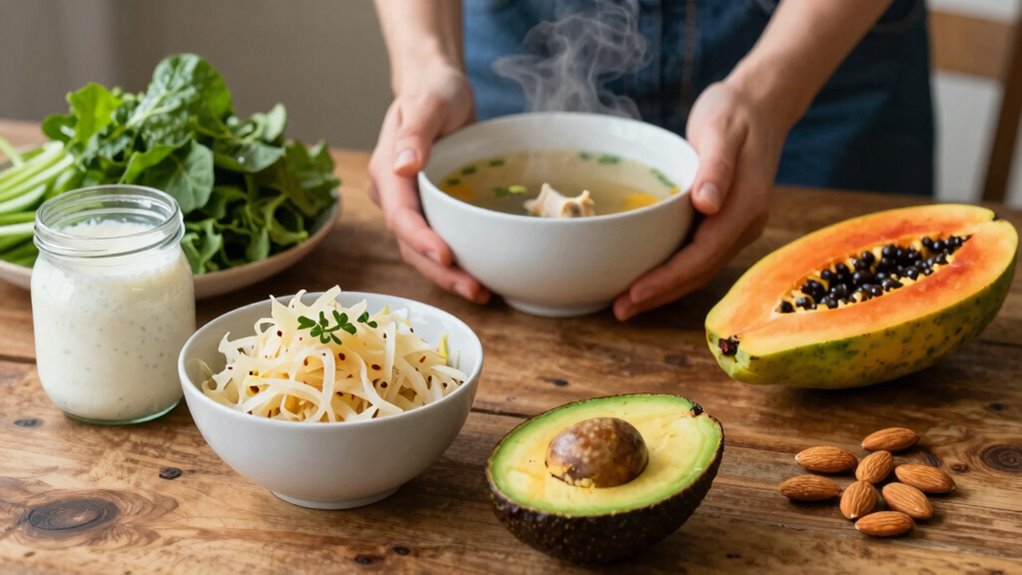

To eat for a healthy gut without chasing trends, focus on consistent, science-backed choices. Incorporate fermented foods like yogurt, sauerkraut, or kefir with live cultures, and prioritize a balanced diet rich in fiber, fruits, vegetables, lean proteins, and healthy fats. Stay hydrated, chew slowly, and listen to your body’s signals. Avoid quick fixes or restrictive diets, and instead, foster mindful habits. If you want practical tips, there’s more to discover that can help your gut thrive long-term.
Prime for Young Adults — start your free trial
Fast free delivery, streaming and member deals for eligible 18–24 year olds.
As an affiliate, we earn on qualifying purchases.
Key Takeaways
- Prioritize whole, minimally processed foods rich in fiber, fruits, vegetables, and lean proteins for steady gut support.
- Incorporate natural fermented foods with live cultures, like yogurt and sauerkraut, while reading labels for authenticity.
- Practice mindful eating—chew thoroughly, eat slowly, and listen to hunger cues to improve digestion.
- Maintain consistent habits, including hydration, regular physical activity, and stress management, for long-term gut health.
- Avoid fad supplements and restrictive diets; focus on science-based, sustainable routines that support diverse gut microbiota.
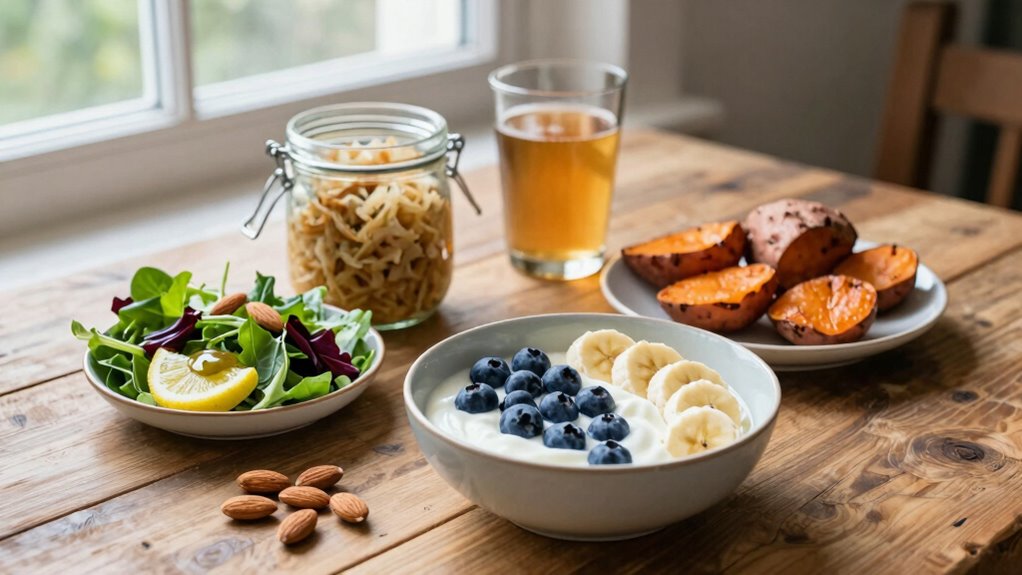
In an age where new diet trends flood social media, it’s easy to get caught up in the latest gut health fads. But instead of jumping from one detox to the next, focusing on genuine, sustainable habits rooted in solid science can serve you better. Understanding fermentation science can help demystify some of the hype around probiotic foods, showing you how beneficial bacteria develop through natural processes. Fermentation isn’t just a trendy buzzword; it’s a proven way to enhance your digestive health by increasing the diversity of good bacteria in your gut. Incorporating fermented foods like yogurt, sauerkraut, kimchi, and kefir into your diet can be straightforward and effective, provided you choose options with live cultures. Remember, not all fermented foods are created equal—reading labels and understanding the fermentation process ensures you’re getting the real deal.
Building digestive health strategies that aren’t driven by hype involves paying attention to your body’s signals and making consistent choices. Instead of obsessing over “superfoods” or “detoxes,” prioritize a balanced diet rich in fiber, lean proteins, healthy fats, and a variety of fruits and vegetables. Fiber acts as fuel for the beneficial bacteria in your gut, supporting digestion and regularity. Whole grains, legumes, and vegetables are excellent sources that contribute to a resilient digestive system. Hydration is another key piece; drinking enough water helps keep your gut moving smoothly, reducing bloating and discomfort. Recognizing how fermentation enhances gut bacteria diversity can help you make better-informed dietary choices that support your microbiome.
Avoid falling into the trap of fad supplements or restrictive diets that promise rapid results. Instead, focus on developing a sustainable routine that emphasizes whole, minimally processed foods. Mindful eating also plays a role—chewing thoroughly, eating slowly, and listening to hunger cues can improve digestion and prevent overeating. Incorporate stress-reducing activities, since chronic stress can impair your gut’s function and alter its microbiome. Regular physical activity supports gut motility and overall health, complementing your dietary choices.
Ultimately, maintaining a healthy gut isn’t about chasing every new trend but about understanding the science behind how your digestive system works. By integrating fermentation science knowledge into your eating habits and adopting steady digestive health strategies, you set yourself up for long-term wellness. These approaches empower you to make informed choices that prioritize your comfort and health, rather than fleeting fads. Staying consistent and attentive to your body’s needs makes your gut health journey sustainable and genuinely beneficial, free from the noise of trendy diets that often come and go.
Frequently Asked Questions
How Do I Start Incorporating Gut-Friendly Foods Into My Daily Diet?
You can start incorporating gut-friendly foods by adding fermented vegetables like sauerkraut or kimchi to your meals, which boost probiotics naturally. Also, enjoy probiotic drinks such as kefir or kombucha regularly. Gradually include these into your diet, replacing less healthy options, and pay attention to how your digestion responds. Over time, these simple swaps can improve your gut health without chasing fleeting trends.
Are There Specific Foods to Avoid for Gut Health?
Think of your gut as a garden needing careful tending. Avoid artificial sweeteners, which are like weeds that choke beneficial microbes. Steer clear of processed foods and limit foods that upset your balance, such as overly spicy or greasy options. Instead, embrace fermented vegetables to nurture healthy bacteria. By weeding out harmful substances, you create a thriving environment, paving the way for better digestion and overall well-being.
How Long Does It Take to See Gut Health Improvements?
You might start noticing gut health improvements within a few weeks of consistently eating probiotic sources like yogurt and fermented foods, along with fiber-rich foods such as fruits, vegetables, and whole grains. These promote beneficial bacteria growth and improve digestion. Be patient, as it can take one to three months for significant changes. Staying consistent and avoiding processed foods also helps your gut adapt and heal effectively.
Can Gut Health Affect Mental Well-Being?
Did you know that over 90% of serotonin, the mood-regulating neurotransmitter, is produced in your gut? Yes, your gut health directly impacts your mental well-being via the gut-brain axis. A diverse microbiome fosters better communication between your gut and brain, reducing anxiety and depression. By nourishing your gut with fiber-rich foods and probiotics, you support microbiome diversity, which can notably improve your mood and overall mental health.
Is It Necessary to Take Supplements for Gut Health?
You don’t necessarily need supplements for gut health, but they can help if your diet lacks diversity. Probiotic strains like Lactobacillus and Bifidobacterium support beneficial bacteria, while digestive enzymes aid in breaking down food. Incorporating natural sources like yogurt, fermented foods, and fiber-rich fruits and vegetables can boost your gut. However, if you’re considering supplements, consult a healthcare professional to guarantee they’re suitable for your specific needs.
Conclusion
By focusing on simple, nourishing foods and listening to your body, you can truly transform your gut health without getting caught up in fleeting trends. Remember, your gut is like the command center of your well-being, and treating it with kindness and consistency beats chasing every new fad. Stick to what works for you, and you’ll reveal a level of vitality that’s nothing short of extraordinary. Trust your journey—your gut will thank you with a resilience that’s unstoppable.
Products Worth Considering
fermented foods with live cultures
As an affiliate, we earn on qualifying purchases.
As an affiliate, we earn on qualifying purchases.