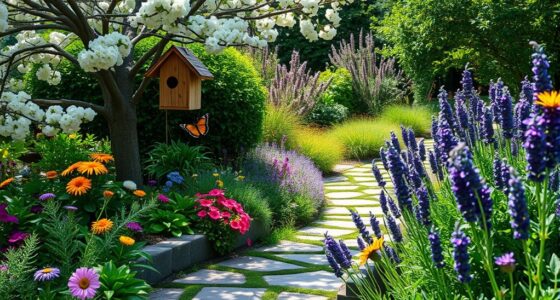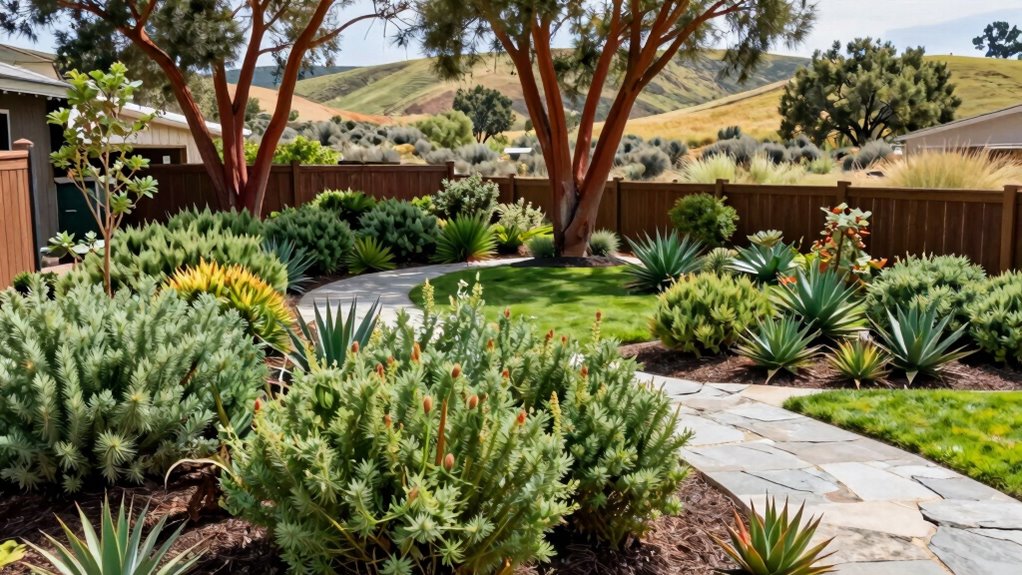

Fire-resilient landscaping benefits everyone, not just high-risk areas. By choosing native plants adapted to your climate, you reduce flammability and create natural barriers that help prevent wildfire spread. It also conserves water and reduces maintenance costs, making your landscape more sustainable. These practices enhance your property’s resilience, support biodiversity, and boost curb appeal. If you keep exploring, you’ll discover more ways to make your outdoor space safer and more eco-friendly.

Turn your quiet moments into listening time
- Thousands of audiobooks, podcasts and originals
- Listen on your phone, tablet or Echo — also offline
- Cancel anytime
Key Takeaways
- Fire-resilient landscaping reduces overall fuel load, decreasing wildfire risk even in low or moderate hazard areas.
- Native, fire-smart plants enhance landscape resilience and safety across all regions, not just high-risk zones.
- Implementing fire-resistant practices promotes environmental sustainability and biodiversity everywhere.
- Fire-resilient landscapes require less maintenance and water, benefiting communities regardless of wildfire risk levels.
- Proactive fire-safe landscaping supports climate adaptation and property value preservation across diverse environments.

When wildfires threaten your property, adopting fire-resilient landscaping can make a crucial difference. It’s not just about protecting your home but also about creating a sustainable environment that benefits your entire property. One of the most effective strategies is to incorporate native plants into your landscape. Native plants are naturally adapted to your region’s climate and soil, making them less flammable and easier to maintain. They tend to have lower water requirements, which supports water conservation efforts and reduces your overall water bill. Plus, native plants often attract local wildlife, enriching your yard’s ecosystem without requiring additional resources.
Using native plants in your landscaping creates a natural barrier that’s less likely to ignite during a wildfire. These plants typically have less flammable oils and resins compared to invasive species or non-native ornamentals. Their deep root systems also help stabilize the soil, preventing erosion during heavy rains or fires, which can further protect your property. Additionally, native plants can improve the resilience of your landscape against other environmental stresses, making it more adaptable over time. Incorporating fire-smart plants not only enhances safety but also encourages biodiversity, contributing to a healthier ecosystem overall. By choosing these resilient, fire-smart plants, you’re effectively reducing the fuel load around your home, minimizing the risk of flames spreading rapidly. This approach doesn’t just serve high-risk zones but benefits properties in all areas by promoting a fire-wise landscape that’s both beautiful and functional.
Native plants create fire-resistant barriers, stabilize soil, and reduce fuel loads for safer, more resilient landscapes.
Water conservation is another key element of fire-resilient landscaping. When you select drought-tolerant native plants, you’re aligning your garden with the natural water cycle of your region. These plants require less watering, which not only saves you money but also ensures your landscape remains healthy during drought conditions. Conserving water is increasingly critical in regions prone to dryness, and native plants help you achieve that without sacrificing aesthetics. Additionally, reducing the need for supplemental irrigation means less runoff and water waste, supporting local water systems and conserving this precious resource for the community. Incorporating native plants further enhances the landscape’s durability and sustainability. Moreover, understanding the importance of cultural celebrations can inspire community engagement in sustainable landscaping practices, fostering a shared commitment to resilience and environmental responsibility.
Beyond fire safety and water efficiency, fire-resilient landscaping can enhance your property’s overall value and curb appeal. A well-designed yard with native, drought-tolerant plants looks attractive year-round and requires less maintenance. It’s a practical way to demonstrate environmental responsibility while safeguarding your home and surroundings. Whether you live in a high-risk zone or not, adopting fire-smart landscaping practices creates a resilient, sustainable landscape that’s better prepared for whatever nature throws your way. It’s a proactive, smart approach that combines safety, conservation, and beauty into one integrated solution.
Frequently Asked Questions
How Does Fire-Resilient Landscaping Affect Property Values?
Fire-resilient landscaping can boost your property value by creating a safer and more attractive environment. It enhances urban biodiversity, attracting beneficial wildlife and adding aesthetic appeal. Plus, it promotes water conservation, reducing ongoing maintenance costs. When you invest in fire-resistant plants and sustainable practices, you demonstrate environmental responsibility, which appeals to eco-conscious buyers. Overall, this landscaping not only safeguards your property but also makes it more desirable in the real estate market.
Can Fire-Resistant Plants Improve Overall Garden Health?
Yes, fire-resistant plants can improve your overall garden health. Proper plant selection guarantees you’re choosing species that thrive in your local soil conditions, promoting soil health and reducing the need for chemical interventions. These plants are often less susceptible to pests and disease, which keeps your garden more resilient. By focusing on fire-resistant options, you create a healthier, more sustainable landscape that benefits both your garden and your safety.
What Are Common Misconceptions About Fire-Resistant Landscaping?
Many believe fire-resistant landscaping myths, like thinking only certain plants are safe or that it completely prevents fires, which isn’t true. You might assume landscaping misconceptions, such as ignoring regular maintenance, won’t impact fire safety. In reality, fire-resistant plants reduce risk but don’t eliminate it. Proper spacing, cleaning up debris, and maintaining healthy plants are essential. Don’t fall for myths; understand that fire-resilient landscaping is part of a broader fire safety strategy.
How Often Should Fire-Resilient Landscapes Be Maintained?
You should maintain fire-resilient landscapes at least twice a year, focusing on plant pruning to remove dead or overgrown material that could fuel fires. Regular irrigation management is essential, ensuring plants stay healthy but don’t become overly lush or dry, which can increase fire risk. Consistent upkeep helps maintain the landscape’s resilience, reduces fire hazards, and keeps your property safer, especially during peak fire season.
Are There Cost-Effective Options for Fire-Resistant Yard Upgrades?
Yes, there are cost-effective options for fire-resistant yard upgrades. You can explore affordable solutions like replacing high-risk plants with native plant options, which are typically drought-tolerant and less flammable. Mulching with non-flammable materials and maintaining a defensible space by removing debris also help. These simple, budget-friendly measures enhance fire resistance without breaking the bank, offering effective protection and natural beauty for your landscape.
Conclusion
By embracing fire-resilient landscaping everywhere, you’re not just planting shrubs—you’re building an impenetrable fortress against wildfires. Imagine your yard transforming into a blazing battleground, with flames licking at every leaf and branch. Now, picture it instead as a safe haven, a lush oasis untouched by fire’s fury. Don’t wait for the wildfire to come knocking; make your landscape a mighty shield that defies flames and safeguards your home for generations to come.
Products Worth Considering
fire-resistant native plants for landscaping
As an affiliate, we earn on qualifying purchases.
As an affiliate, we earn on qualifying purchases.