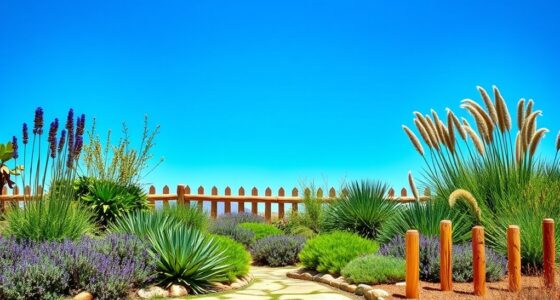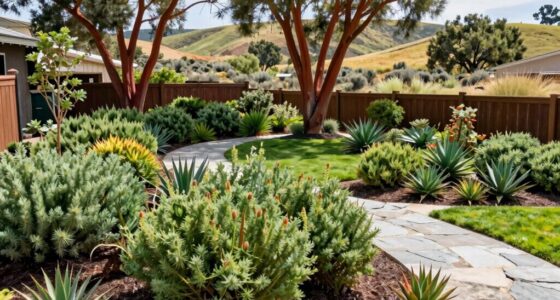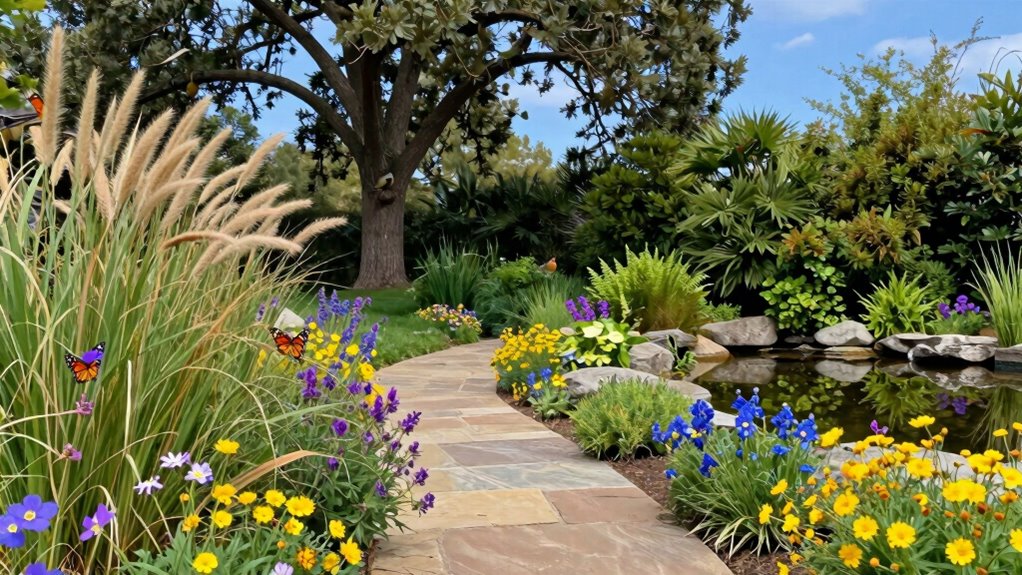

A wildlife-friendly yard features native plants that support local ecosystems, attracting pollinators and providing food year-round. It includes natural elements like fallen logs, brush piles, and small water features to create safe habitats and nesting spots. You’ll see diverse layering of vegetation, with some areas left wild to encourage biodiversity. With these features, your yard becomes a lively sanctuary for birds, butterflies, and other creatures—keeping ecosystems healthy. Explore more ways to turn your yard into a thriving habitat.

Turn your quiet moments into listening time
- Thousands of audiobooks, podcasts and originals
- Listen on your phone, tablet or Echo — also offline
- Cancel anytime
Key Takeaways
- A diverse mix of native plants, shrubs, and trees providing food, shelter, and nesting sites for wildlife.
- Natural features like logs, brush piles, and water sources creating safe habitats and resting spots.
- Bird feeders filled with native seeds and suet, placed near cover for easy access and safety.
- Minimal lawn maintenance with some areas left wild to promote ecosystem diversity.
- Connected habitats and wildlife corridors supporting animal movement and ecosystem health.
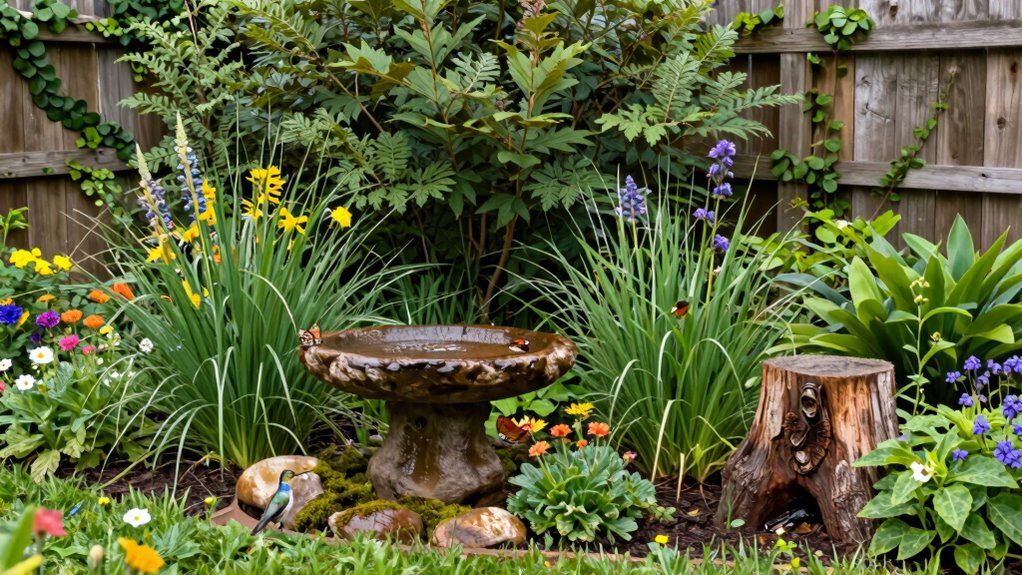
Creating a wildlife-friendly yard is a rewarding way to support local ecosystems while enhancing your outdoor space. When you start designing such a yard, you’ll notice that it looks quite different from a traditional, manicured lawn. Instead of perfectly trimmed grass and ornamental flowers, your yard will feature a variety of native plants that provide food, shelter, and nesting sites for local wildlife. Native plants are essential because they’re adapted to your region’s climate and soil, making them more resilient and beneficial for the creatures that live nearby. They attract pollinators like bees and butterflies, and they produce seeds and berries that feed birds and small mammals throughout the year.
Creating a wildlife-friendly yard with native plants supports local ecosystems and attracts pollinators and wildlife.
A wildlife-friendly yard also includes thoughtful additions like bird feeders, which serve as reliable food sources during times when natural resources are scarce. You might hang feeders filled with sunflower seeds for finches and cardinals or suet blocks for woodpeckers. Placing bird feeders in strategic locations, such as near dense shrubs or trees, offers birds a safe spot to feed and rest. Over time, you’ll see a variety of species visit your yard, turning it into a lively, dynamic space. It’s important to keep feeders clean and stocked regularly to prevent the spread of disease and to keep the birds coming back.
Beyond plants and feeders, your yard will feature natural elements that encourage wildlife activity. Fallen logs, brush piles, and dense shrubbery create hiding spots and nesting areas for animals like rabbits, frogs, and insects. A small pond or water feature can attract amphibians and provide water for birds and mammals. Incorporating native plants is crucial because they’re better suited to support local wildlife and require less maintenance, making your yard more sustainable. Using water features also plays a vital role in attracting a diverse range of species, supporting a balanced ecosystem. Additionally, creating shelter areas with natural materials can further provide safe spaces for young and vulnerable animals. The goal is to create a layered habitat that offers diverse resources, so wildlife feels safe and supported.
Your yard will also be less about perfect aesthetics and more about creating a balanced ecosystem. Instead of removing all weeds or trimming every shrub, you’ll allow certain plants to grow wild and provide habitat. This natural approach not only benefits wildlife but also reduces your yard’s maintenance. Additionally, understanding how to create wildlife corridors can help connect different habitats and promote movement for various species within your yard. Over time, you’ll notice the increased presence of birds, butterflies, and other creatures, making your outdoor space a true sanctuary. A wildlife-friendly yard isn’t just beautiful; it’s a crucial refuge for the local species that share your environment. By incorporating native plants, bird feeders, and natural habitats, you actively participate in sustaining the health and diversity of your local ecosystem.
Frequently Asked Questions
How Do I Start Creating a Wildlife-Friendly Yard?
To start creating a wildlife-friendly yard, first, remove any invasive plants and reduce chemical use through natural garden maintenance. Plant native trees, shrubs, and wildflowers to attract pollinators and provide shelter. Leave some leaf litter and create water sources like birdbaths. Practice wildlife observation tips by quietly watching from a distance and avoiding loud noises. Gradually, your yard becomes a thriving habitat where nature can flourish.
What Native Plants Attract the Most Wildlife?
Ever wondered which native plants attract the most wildlife? You should choose native plant selection that provide essential wildlife attractants like berries, seeds, or nectar. Plants such as coneflowers, milkweed, and goldenrod draw pollinators, butterflies, and birds. Incorporate a diverse range of these native species to create a vibrant, inviting habitat. This not only supports local ecosystems but transforms your yard into a lively, wildlife-friendly sanctuary.
Are There Specific Water Features for Wildlife?
Yes, there are specific water features for wildlife, like bird baths and pond habitats. Bird baths provide essential water sources for birds, especially during hot or dry periods, while pond habitats attract frogs, insects, and other aquatic creatures. You can design these features to suit your yard’s space and climate, ensuring they stay clean and filled. These water sources help support local ecosystems and make your yard a welcoming refuge for wildlife.
How Do I Balance Aesthetics With Wildlife Needs?
You balance aesthetics with wildlife needs through thoughtful garden design that blends natural elements with visual appeal. Incorporate native plants to attract pollinators while maintaining beauty. Use natural pest control methods, like encouraging beneficial insects, to reduce chemicals and protect wildlife. Incorporate water features subtly into the landscape, ensuring they serve both aesthetic and ecological purposes. This approach creates a harmonious yard that’s both attractive and supportive of local wildlife.
What Common Yard Pests Can Harm Wildlife?
You should watch out for invasive species like certain plants or animals that threaten native wildlife, as they can outcompete local species. Pest control methods, such as chemical pesticides, can harm beneficial insects or birds, so opt for natural alternatives like encouraging ladybugs or using barrier methods. Regularly monitor your yard for invasive species and choose wildlife-safe pest control methods to keep your yard healthy for local wildlife.
Conclusion
A wildlife-friendly yard isn’t just about wildflowers and birdbaths; it’s a vibrant sanctuary where nature thrives amidst your everyday life. While some see a yard as a neat, manicured space, you see a bustling haven for bees, butterflies, and birds. It’s a delicate balance—chaotic yet harmonious—that invites life to flourish. Transforming your yard isn’t about perfection; it’s about creating a lively, imperfect paradise where nature and your home coexist beautifully.
Products Worth Considering
native plant seeds for wildlife garden
As an affiliate, we earn on qualifying purchases.
As an affiliate, we earn on qualifying purchases.