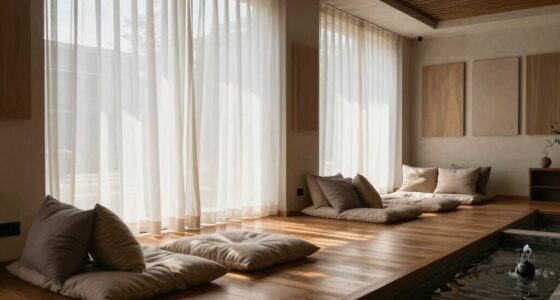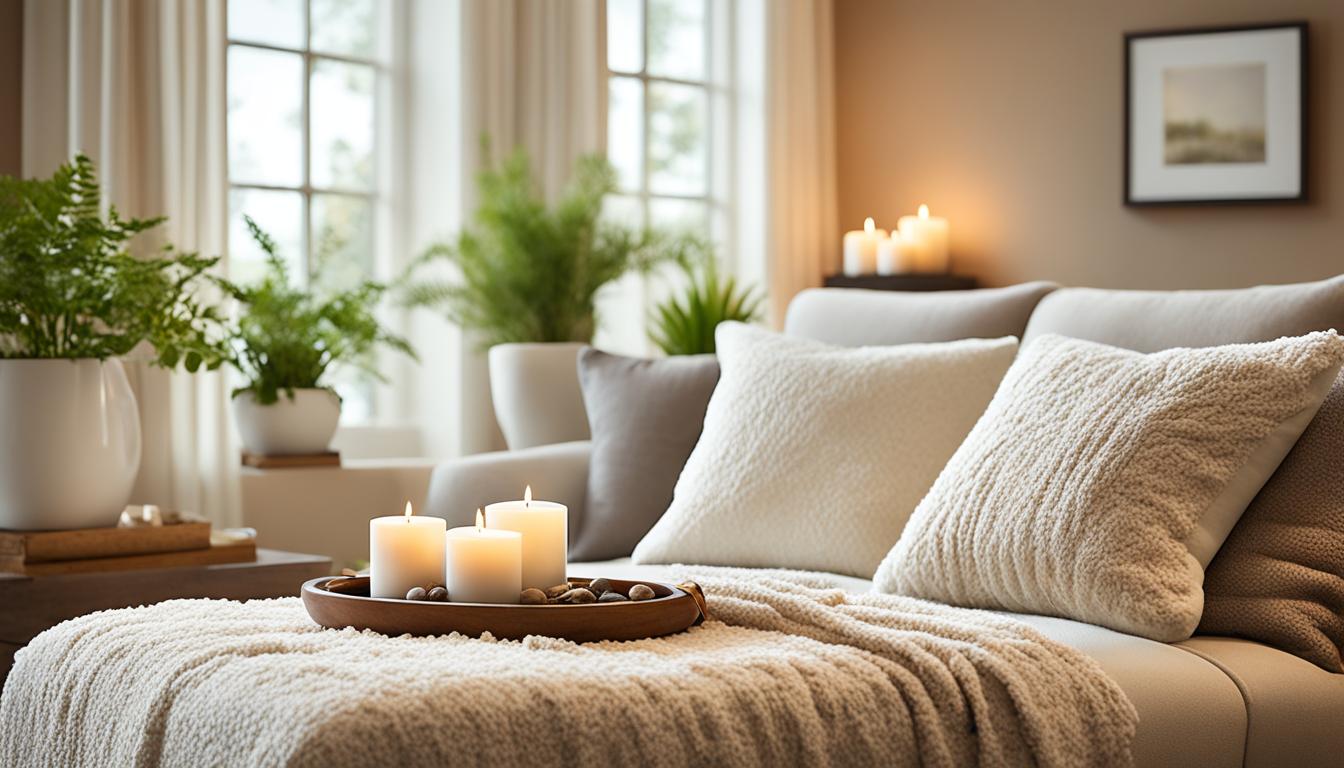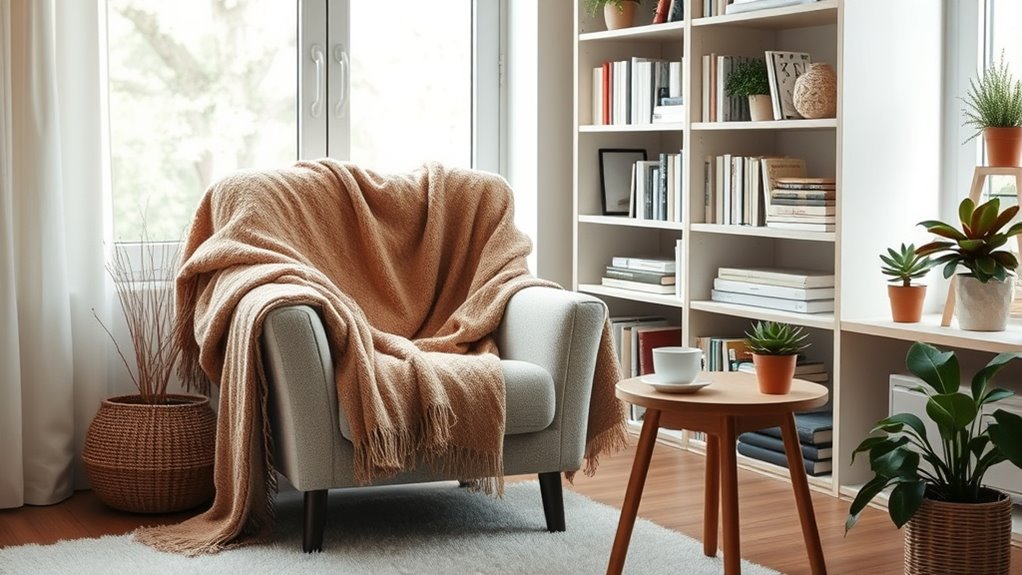

To design a personal retreat at home, choose a calm, clutter-free space that feels inviting, like a cozy corner or outdoor nook, and add soft lighting and comfortable seating. Incorporate mindfulness practices such as deep breathing or guided meditations, aiming for at least 10 minutes daily to build routine. Engage in creative activities like journaling or drawing to foster emotional expression. Keep exploring ways to personalize your retreat, and you’ll discover how small changes can create a meaningful sanctuary.
Key Takeaways
- Choose a dedicated, clutter-free space with calming colors, soft lighting, and comfortable seating to create an inviting retreat area.
- Incorporate mindfulness practices like breathing exercises or guided meditations to foster presence and relaxation.
- Establish a consistent routine by setting aside daily time for meditation and creative activities to build a calming habit.
- Include creative outlets such as journaling, drawing, or playing music to facilitate emotional expression and inner exploration.
- Enhance your retreat with playful, joyful elements and mental clarity techniques to support holistic well-being and sustained practice.
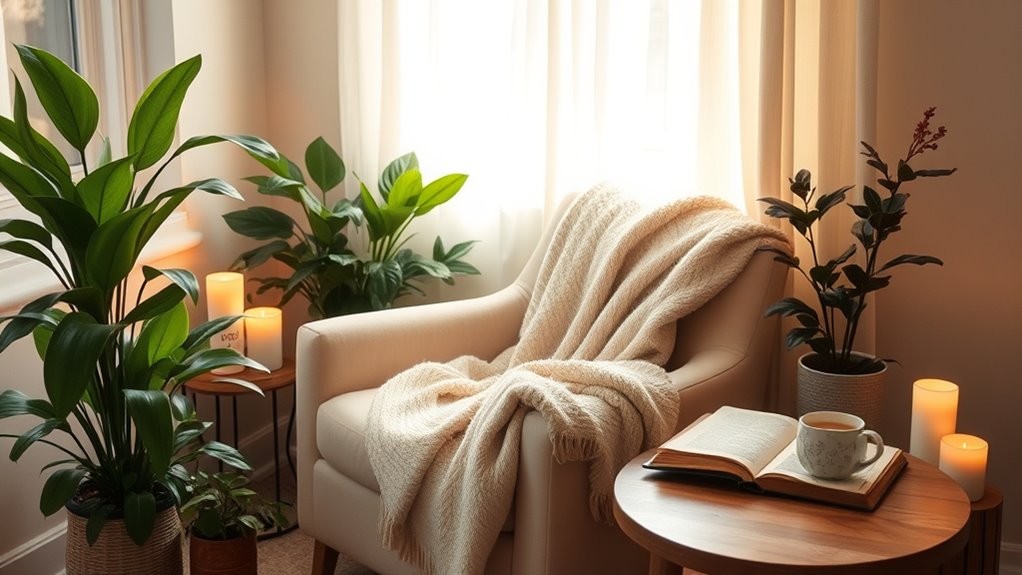
Creating a personal retreat at home offers a simple way to recharge and find peace without the need for travel. When you design this space intentionally, you create a sanctuary where you can focus on your well-being and reconnect with yourself. The first step is to carve out a dedicated area that feels inviting and calm. Whether it’s a cozy corner in your living room, a spare room, or even a small outdoor nook, make sure it’s free from distractions and clutter. Once you have your space, fill it with elements that inspire relaxation and focus, like soft lighting, calming colors, and comfortable seating.
To truly benefit from your retreat, incorporate mindfulness practices into your routine. These practices help you stay present and centered, reducing stress and increasing your overall sense of peace. You might start with simple breathing exercises, such as inhaling deeply through your nose, holding for a few seconds, then exhaling slowly through your mouth. As you settle into your space, consider adding guided meditation recordings or mindfulness apps to guide your practice. Over time, you can deepen your mindfulness meditation, gradually increasing the duration as you become more comfortable. Consistency is key—setting aside even 10 minutes daily can make a significant difference in your mental clarity and emotional resilience.
Another powerful way to enrich your personal retreat is through creative expression. Engaging in activities like drawing, journaling, painting, or playing music allows you to process emotions and explore your inner thoughts. You don’t need to be an artist; just allow yourself to create freely without judgment. Keep supplies nearby—sketchbooks, colored pencils, a musical instrument, or even a camera—so you can easily access them when inspiration strikes. Creative expression acts as both a form of mindfulness and a release, helping you disconnect from daily worries and reconnect with your authentic self. It also adds a joyful, playful element to your retreat, making it more sustainable and enjoyable over time. Incorporating mental clarity techniques can further enhance your sense of calm and focus during your retreat.
Frequently Asked Questions
How Do I Choose the Best Location in My Home for a Retreat?
Choose a quiet spot with ample natural lighting that makes you feel relaxed and energized. Look for an area that can be a privacy zone, away from distractions and noise. Consider a corner, spare room, or even a cozy nook with good sunlight and minimal interruptions. Make sure it’s a space where you can focus, breathe, and unwind, transforming it into your perfect personal retreat sanctuary.
What Budget Considerations Should I Keep in Mind?
Think of your retreat as a peaceful island—cost-effective options and budget-friendly decor help keep it serene without sinking your finances. Set a clear budget beforehand, prioritize essential elements, and look for versatile items you can reuse. Use DIY projects and natural decor like plants or candles to create a calming atmosphere. Keep track of expenses to stay within your means, ensuring your retreat remains both relaxing and affordable.
How Can I Personalize My Retreat Space Effectively?
To personalize your retreat space, focus on mindful decor that resonates with you, like calming colors or meaningful artwork. Incorporate sensory elements such as soft lighting, gentle scents, or textured textiles to create a soothing atmosphere. Think about adding personal touches like favorite books, photos, or spiritual symbols. By curating these thoughtful details, you’ll craft a retreat that feels uniquely yours, fostering relaxation and mindfulness every time you enter.
What Are Quick Tips for Creating a Calming Atmosphere?
Imagine your space as a gentle stream, flowing with calm. To create a calming atmosphere quickly, focus on mindful lighting—soft, warm lights that mimic sunrise—and add soothing scents like lavender or chamomile. Keep clutter at bay; let tranquility flow freely. Use plush cushions and soft fabrics to invite relaxation. These small touches transform your space into a peaceful sanctuary, where every breath feels like a soothing wave.
How Often Should I Schedule Personal Retreats?
You should plan your personal retreats every few months, balancing frequency planning with your needs and schedule. Typically, a retreat lasting one to three days works well for deep reflection and relaxation. Adjust the retreat duration based on how much time you can dedicate without feeling overwhelmed. Regular retreats refresh your mind and spirit, so listen to your intuition and make adjustments to maintain a consistent, restorative routine.
Conclusion
Creating a personal retreat at home transforms everyday life into an oasis of calm and clarity. By intentionally carving out space and infusing it with what nurtures your soul, you open a sanctuary that feels as expansive as the universe itself. Remember, this retreat isn’t just a fleeting escape—it’s a profound haven where you can reconnect, recharge, and rediscover your inner peace. Embrace this sacred space, and watch your well-being flourish beyond what you ever imagined possible.
Products Worth Considering
guided meditation recordings for relaxation
As an affiliate, we earn on qualifying purchases.
As an affiliate, we earn on qualifying purchases.