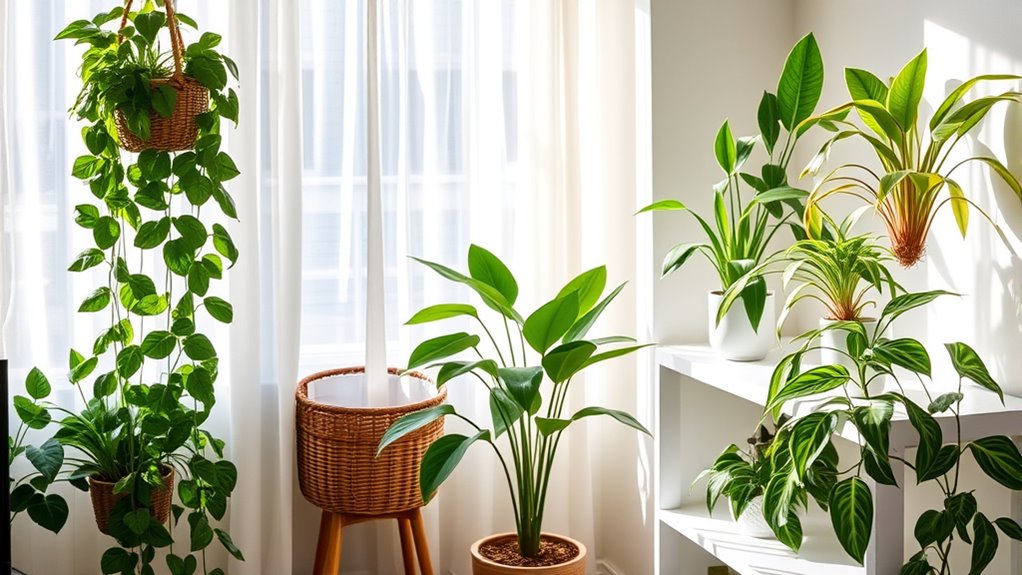

When choosing pet-friendly indoor plants, prioritize safe options like spider plants, Boston ferns, or succulents, which are non-toxic for your pets. Place them out of reach using hanging planters or high shelves to prevent curious paws from munching or digging. Keep an eye on your pets’ behavior and watch for any signs of poisoning, such as drooling or vomiting. Continuing your exploration will help you create a safer, more harmonious indoor space for both you and your pets.
Key Takeaways
- Opt for plants labeled as non-toxic or safe for pets, such as spider plants, Boston ferns, and certain succulents.
- Research specific plant species to confirm their toxicity levels before bringing them indoors.
- Choose plants with less appealing tastes or smells to discourage pets from chewing or ingesting.
- Place plants in hanging planters or high shelves out of pets’ reach to prevent accidental ingestion.
- Regularly observe pet behavior around plants and replace any toxic varieties with pet-safe alternatives.
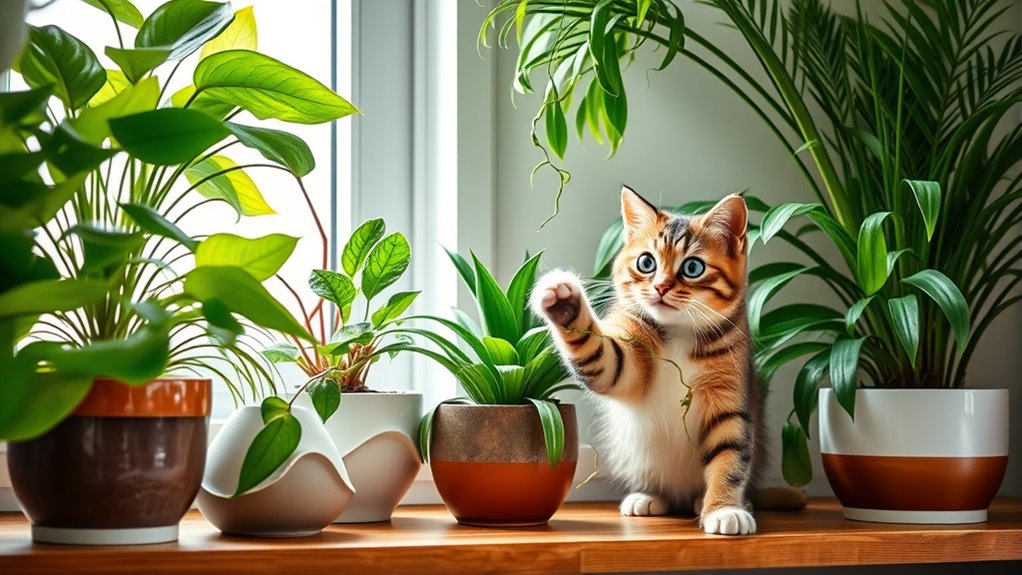
If you have pets, selecting the right indoor plants is vital to keep your furry friends safe while still enjoying greenery indoors. Many common houseplants can pose a risk because of plant toxicity, which can cause a range of health issues if your pets nibble on them. Knowing which plants are safe and which to avoid is essential for maintaining a pet-friendly home environment. You want to create a space that’s beautiful and calming without putting your pets’ health at unnecessary risk.
When considering plant toxicity, always research each plant before bringing it into your home. Some popular indoor plants, like peace lilies or philodendrons, may look appealing but are highly toxic to cats and dogs. Ingesting even small amounts can lead to symptoms such as vomiting, diarrhea, or more severe reactions. To prioritize pet safety, opt for plants that are known to be non-toxic. For example, spider plants, Boston ferns, and certain succulents tend to be safe choices for households with pets. These plants not only offer a lush appearance but also minimize the risk of accidental poisoning.
It’s also helpful to keep your plants out of reach of your pets whenever possible. Use hanging planters or place them on high shelves to prevent curious paws and mouths from getting involved. Some pets are more inclined to chew on plants than others, so observing their behavior can guide your choices. If you notice your pet attempting to chew or dig at your plants, it’s best to move those plants to an inaccessible location or replace them with pet-safe alternatives.
In addition, educate yourself about symptoms of plant poisoning so you can act quickly if needed. If you notice your pet vomiting, drooling, or showing signs of discomfort after interacting with a plant, contact your veterinarian immediately. Being aware of plant toxicity and how it affects pet safety can prevent emergencies and keep your furry friends healthy.
Choosing pet-safe indoor plants isn’t just about avoiding danger; it’s about creating a harmonious space where both you and your pets can thrive. By prioritizing plant toxicity knowledge and selecting non-toxic varieties, you ensure a safer environment. Remember, the best indoor plant for your home is one that beautifies your space without compromising your pet’s well-being. With a little research and thoughtful placement, you can enjoy a lush, pet-safe indoor garden that brings joy without risk.
Frequently Asked Questions
Are All Pet-Friendly Indoor Plants Safe for Dogs and Cats?
Not all pet-friendly indoor plants are completely safe for dogs and cats, as some may have mild plant toxicity if ingested. You should always follow pet safety guidelines and research each plant’s toxicity level before bringing it home. Even safe plants can cause stomach upset or allergic reactions, so monitor your pets and keep potentially harmful plants out of their reach. When in doubt, consult a veterinarian for advice.
How Often Should I Water Pet-Friendly Indoor Plants?
Think of your pet-friendly indoor plants as thirsty children; they need just the right amount of water to thrive. You should water them when their soil feels dry about an inch down, typically once a week. Stick to a consistent watering schedule to maintain proper plant moisture. Overwatering can lead to root rot, so always check soil moisture before watering. Your plants will thank you with lush, healthy growth.
Can Pet-Friendly Plants Tolerate Low Light Conditions?
Pet-friendly plants can tolerate low light conditions, but their low light tolerance varies. When caring for these plants, you should adjust your plant care routine to make sure they get enough indirect light to thrive. For example, snake plants and pothos handle low light well, but they still need some exposure to bright, indirect light. Keep an eye on your plants’ health and move them closer to light sources if needed.
Are There Any Toxic Effects of Pet-Friendly Plants if Ingested?
You won’t believe how tiny a bite can cause a storm of plant toxicity symptoms in your pet. While pet-friendly plants are generally safe, ingestion risks still exist, and some can cause mild to severe reactions. Always monitor your furry friends around your plants and know which ones are safe. If your pet ingests a plant, contact your vet immediately to prevent any dangerous effects from potential ingestion risks.
How Do I Prevent My Pets From Damaging Indoor Plants?
To prevent your pets from damaging indoor plants, use effective pet-proofing strategies like placing plants out of their reach or hanging them from ceilings. Incorporate plant placement tips by choosing high shelves or wall-mounted planters. You can also use deterrents such as citrus peels or sprays around plants. Consistently supervise your pets and provide them with alternative toys or plants to minimize their interest in your indoor greenery.
Conclusion
By selecting pet-friendly indoor plants, you create a lush oasis where your furry friends can thrive without worry. Think of your space as a safe garden sanctuary, a vibrant jungle where both you and your pets flourish side by side. With careful choices, you turn your home into a harmonious haven—where greenery and companionship grow hand in hand, creating a beautiful symphony of life that’s safe, lively, and full of love.