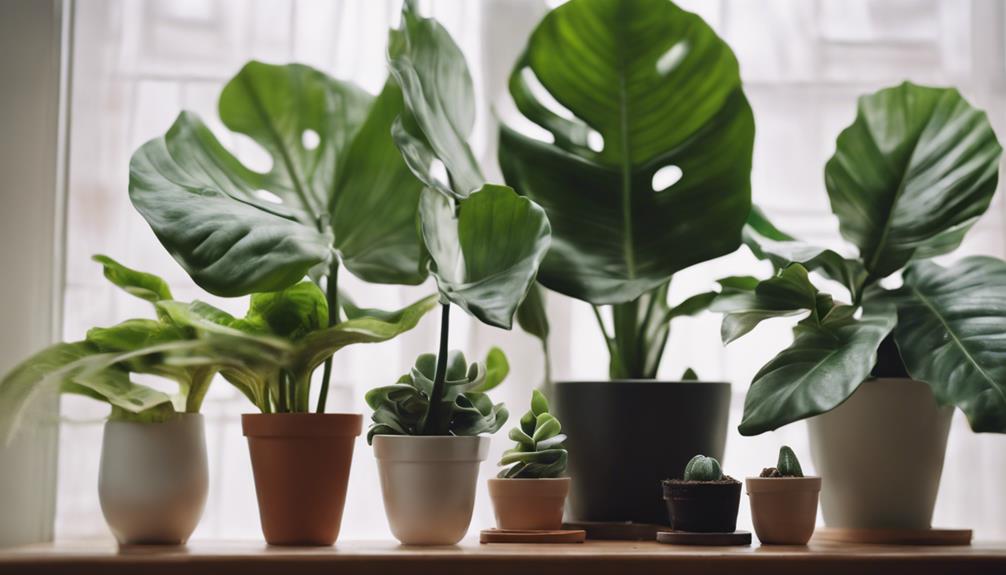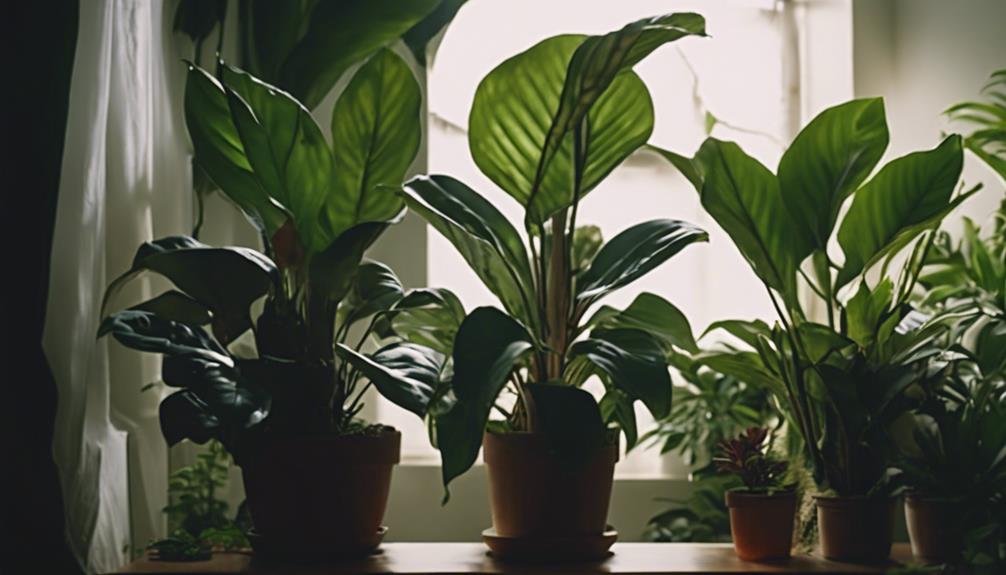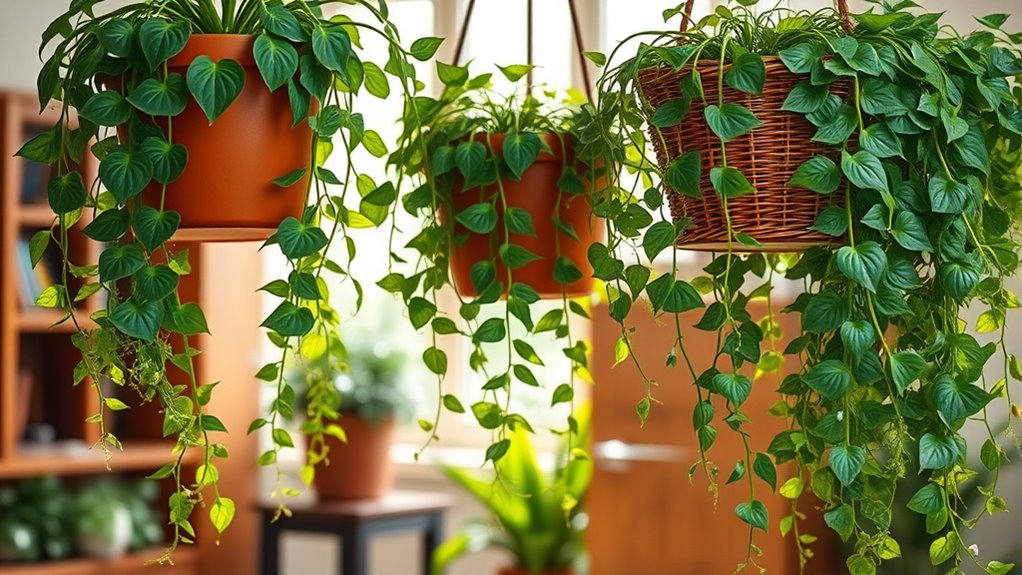

Wild trailing houseplants like pothos, philodendrons, and string of hearts add vibrant, cascading greenery that instantly brightens your indoor space. These hardy plants thrive in various light conditions and are easy to care for, making them perfect for creating a lush, natural atmosphere at home. Play with different hanging planters and placement options to maximize their beauty. Keep exploring to discover more tips and ideas to turn your space into a lively indoor jungle.
Key Takeaways
- Popular wild trailing houseplants include pothos, philodendrons, and string-of-pearls for lush cascading effects.
- These plants thrive in bright, indirect light and require proper drainage to prevent root rot.
- Regular pruning and propagation encourage healthy growth and fuller, more vibrant cascades.
- Use hanging planters like macramé, woven baskets, or ceramic pots near windows or high ceilings.
- They add a natural, vibrant touch to indoor spaces, creating a mini jungle and enhancing interior ambiance.
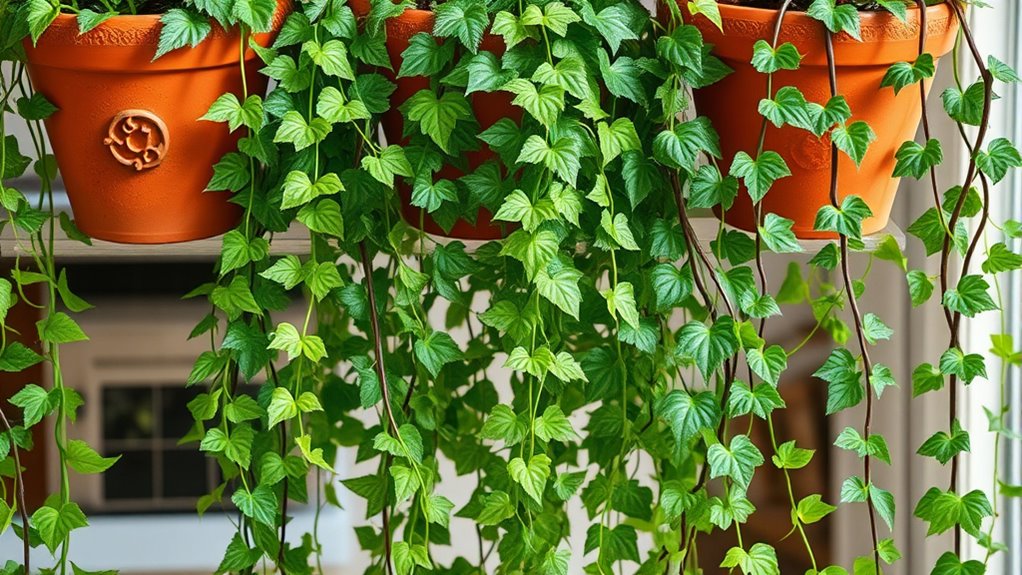
Trailing houseplants add a lush, vibrant touch to any space, effortlessly cascading over shelves, planters, or furniture. If you’re looking to create a stunning green display, exploring wild trailing houseplants is a perfect choice. These plants, with their flowing vines and abundant foliage, bring a sense of natural elegance and freshness to your home. When selecting hanging planter ideas, think about how much space you want your plants to fill and the visual impact you’re aiming for. Macramé hangers, ceramic pots, or woven baskets all work beautifully for showcasing cascading greenery. You can hang them near windows to catch the light or from high ceilings to make the vines drape down gracefully, adding dimension and movement to your interior.
Trailing houseplants cascade beautifully, adding natural elegance and vibrant greenery to any space.
To keep your trailing houseplants thriving, it’s essential to understand care tips for vines. Most wild trailing plants, like pothos, philodendrons, and creeping fig, prefer bright, indirect light but can tolerate lower-light conditions. When watering, check the top inch of soil; if it feels dry, it’s time to hydrate. Overwatering can lead to root rot, so ensure your containers have proper drainage. Regular pruning encourages healthy growth and prevents the vines from becoming unruly. As you prune, consider propagating the cuttings to grow new plants and fill out your display.
Understanding the specific needs of your vines helps them flourish. For example, pothos and philodendrons thrive in higher humidity, so mist them occasionally or place a tray of pebbles with water underneath. These plants are hardy and forgiving, making them ideal for beginners. As they grow, you might find yourself guiding their vines around trellises or along walls, creating a natural, sprawling effect. Providing them with balanced liquid fertilizer monthly supports steady growth, especially during the active growing season.
Incorporate these ideas into your space, and your wild trailing houseplants will become a mesmerizing focal point. The key is to regularly monitor their needs and adjust your care routine accordingly. With a bit of attention and the right hanging planter ideas, your vines will cascade beautifully, filling your home with lively greenery. Whether you choose a simple fern or a more exotic trailing species, these plants offer a dynamic way to bring nature indoors. Their cascading forms and lush leaves turn any corner into a mini jungle, inviting you to enjoy the calming presence of nature every day.
Frequently Asked Questions
How Do I Encourage My Trailing Plants to Grow Longer?
To encourage your trailing plants to grow longer, you should prune them regularly using proper pruning techniques, like trimming just above leaf nodes. This stimulates new growth and helps them cascade further. Additionally, follow fertilization tips by using a balanced, water-soluble fertilizer every few weeks during the growing season. Consistent pruning and fertilization will promote healthy, longer trailing growth, making your plants look lush and vibrant.
Which Trailing Houseplants Are Best for Low-Light Conditions?
Imagine lush greenery thriving in your shady corner—perfect for low-light spaces. You’ll love pothos and philodendrons, known for their shade tolerance and vibrant leaf variegation. These trailing houseplants adapt well to dim conditions, making your home feel alive without extra sunlight. Their cascading leaves add depth and texture, transforming even the darkest spots into a lush, inviting oasis. With a little care, they’ll flourish in your low-light environment.
How Often Should I Prune My Cascading Greenery?
You should prune your cascading greenery every 4 to 6 weeks to maintain its shape and health. Incorporate seasonal trimming during spring and summer to encourage new growth and prevent overgrowth. Regular pruning also helps control size, remove dead or yellowing leaves, and promote fuller, lush foliage. Keep an eye on your plant’s growth rate, and adjust pruning frequency as needed to keep your trailing houseplant looking vibrant and well-maintained.
Can Trailing Houseplants Improve Indoor Air Quality?
Your trailing houseplants can actually transform your space into an air-purifying oasis. They actively improve indoor air quality by filtering toxins and increasing oxygen levels. Plus, when you care for their plant health, they thrive and work harder to clean the air. With consistent watering and pruning, you’ll enjoy cleaner, healthier indoor air, making your home feel like a revitalizing rainforest—truly a gust of fresh air!
What Are Common Pests That Affect Trailing Houseplants?
You should watch out for common pests like spider mites, aphids, and mealybugs that can affect your trailing houseplants. These pests can damage leaves and stunt growth if not caught early. To prevent them, regularly inspect your plants and keep their environment clean. Pest prevention includes avoiding overwatering and ensuring good airflow around your plants. If pests appear, treat them promptly with natural or chemical solutions to keep your greenery healthy.
Conclusion
Ready to let your home’s greenery spill over like a gentle waterfall? With these wild trailing houseplants, your space will transform into a lush rainforest, bursting with vibrant cascades of foliage. As you nurture each tendril and leaf, you’ll create a living tapestry that dances with life and color. Embrace the wild side of indoor gardening, and watch your home become a jungle of beauty and tranquility, where every corner whispers nature’s secrets.
Products Worth Considering

Live Peace Lily Plant, Spathiphyllum, Low Light, Easy to Grow, 4" Pot
- Plant Type: Live Peace Lily (Spathiphyllum)
- Plant Size: 4-inch pot
- Low Maintenance: Easy to care for
As an affiliate, we earn on qualifying purchases.