
To design drought-resistant plantings, choose native or drought-tolerant plants like succulents, aromatic shrubs, and native grasses that thrive with less water. Group plants with similar needs and use mulch to reduce evaporation. Improve your soil with organic matter and incorporate permeable surfaces to enhance water retention. Installing drip irrigation and reducing lawn areas further conserves water. Continue exploring these strategies to create a sustainable, low-water landscape that stays vibrant and healthy.

Get books, candles and calm essentials delivered free — and shop member deals
- Fast, free delivery on millions of items
- Access to Prime Big Deal Days deals on October 6–7
- Prime Video, Amazon Music and more included
Key Takeaways
- Select native, drought-tolerant plants like succulents, aromatic shrubs, and native grasses for resilience.
- Group plants with similar water needs to optimize irrigation efficiency.
- Incorporate mulch and improve soil with organic matter to retain moisture and reduce evaporation.
- Use permeable surfaces and reduce lawn areas to enhance water conservation.
- Install drip irrigation and monitor plant health regularly for effective water management.
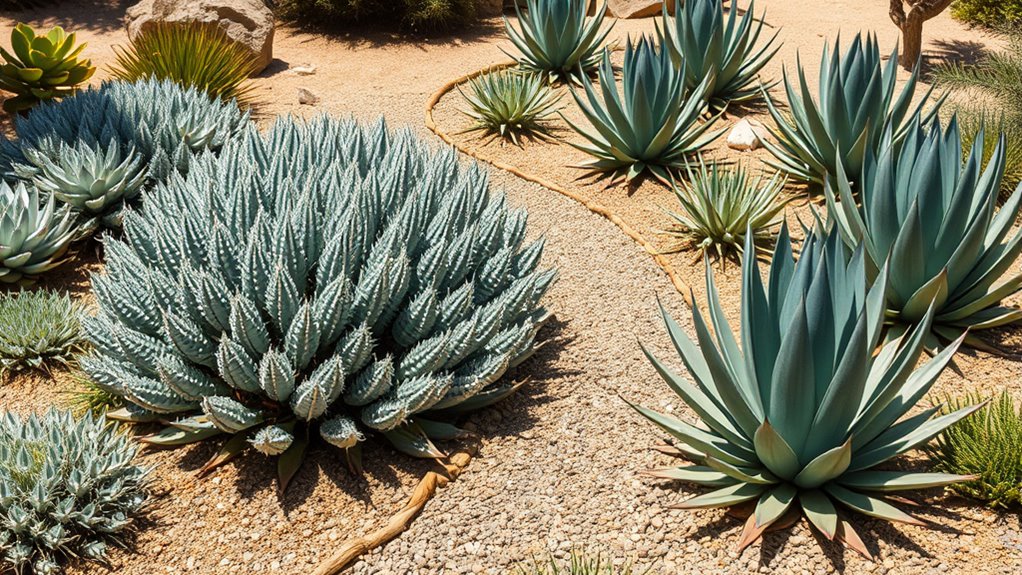
As drought conditions become more frequent, designing plantings that thrive with minimal water is vital for sustainable landscapes. Embracing xeriscaping principles allows you to create gardens that require less irrigation while maintaining beauty and functionality. These principles focus on reducing water use through thoughtful planning, efficient plant selection, and proper maintenance. When starting your drought-resistant planting project, you’ll want to prioritize drought tolerant plant selection. This means choosing plants adapted to dry conditions, capable of thriving with minimal watering, and resistant to drought stress.
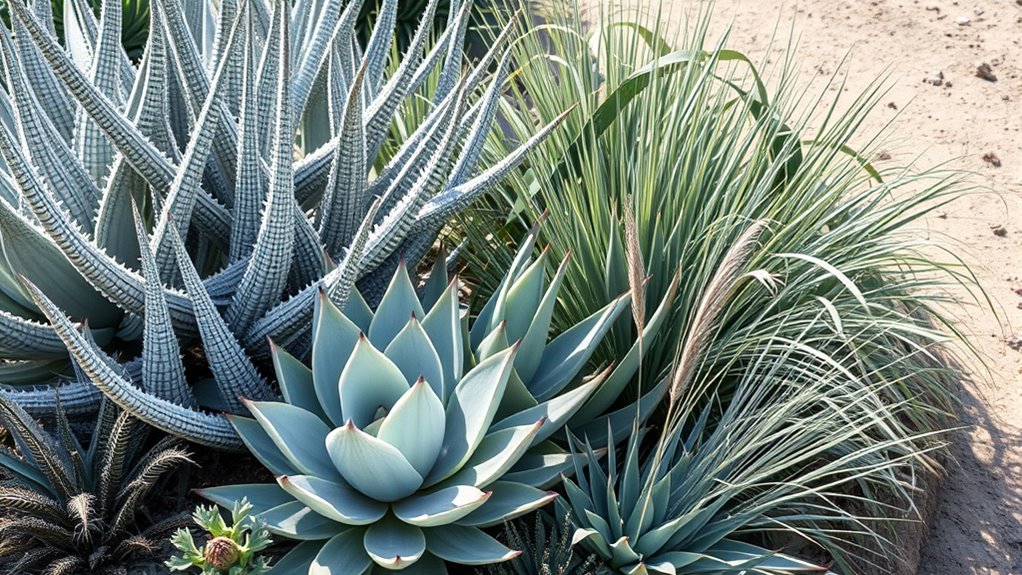
Choosing the right drought tolerant plants is essential. Look for native species or those specifically labeled as drought-tolerant, as they’re naturally adapted to your local climate and soil conditions. Succulents like agave, aloe, and sedum are excellent options because they store water in their leaves. Native grasses such as buffalo grass and blue grama not only require little water but also add texture and movement to your landscape. Shrubs like rosemary, juniper, and lavender are both drought-tolerant and aromatic, providing visual interest and fragrance. Incorporate a variety of these plants to create a diverse, resilient garden that can withstand dry spells.
Select native and drought-tolerant plants like succulents, grasses, and aromatic shrubs for a resilient, water-wise garden.
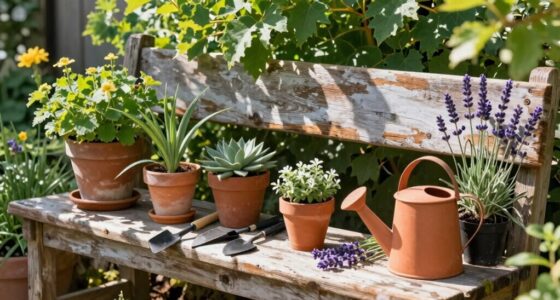
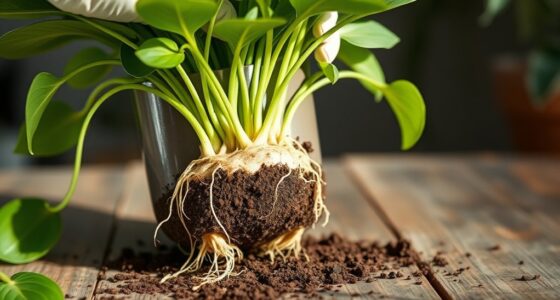
In addition to plant selection, xeriscaping principles emphasize efficient use of water through strategic design. Group plants with similar water needs together, creating zones that can be irrigated differently or left to rely on natural rainfall. This approach minimizes waste and guarantees each plant gets the amount of water it requires. Incorporate mulch generously around your plants to reduce evaporation, regulate soil temperature, and suppress weeds. Proper soil preparation is also key; improving soil with organic matter enhances its water-holding capacity, giving your drought-tolerant plants a better chance to thrive. Additionally, understanding the importance of water conservation can significantly improve the sustainability of your drought-resistant landscape.
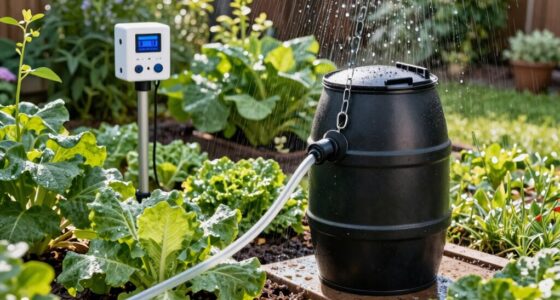
Design your landscape to maximize water conservation by choosing permeable surfaces and reducing lawn areas, which typically demand more water. Instead of traditional grass lawns, consider ground covers or rock features that need little to no watering. Installing drip irrigation systems ensures water goes directly to the roots, reducing runoff and evaporation. Regularly monitoring your plants helps you identify signs of drought stress early, so you can adjust watering schedules accordingly.
Frequently Asked Questions
Which Native Plants Are Best for Drought Resistance in My Region?
You should choose native plants that are well-adapted to your region’s droughts. Look for species with deep root systems and low water needs, like lavender, yarrow, or succulents. Native plant selection guarantees these plants thrive with less water and maintenance. By selecting the right native plants, you’ll create a resilient landscape that withstands regional droughts, saves water, and supports local ecosystems.
How Can Soil Amendments Improve Drought Tolerance in Plantings?
Think of soil as a sponge that holds water and nutrients; soil amendments are your secret recipe for making it more absorbent. By improving soil health with organic matter, compost, or mulch, you enhance its ability to retain moisture. Amendment techniques like aeration and adding slow-release fertilizers boost drought tolerance, giving your plants a better chance to survive dry spells and thrive even when water is scarce.
What Are the Best Watering Practices for Drought-Resistant Landscapes?
You should adopt efficient watering practices by establishing deep, infrequent watering schedules to encourage strong root growth. Use mulching techniques to retain soil moisture and reduce evaporation. Water early in the morning or late in the evening to minimize water loss. Regularly monitor soil moisture levels to avoid overwatering. These practices help your drought-resistant landscape stay healthy while conserving water, ensuring plants thrive during dry periods.
How Do I Maintain Drought-Resistant Plants During Extreme Heat?
Ironically, during extreme heat, you don’t need to overwater your drought-resistant plants. Instead, you should focus on mulching techniques to retain soil moisture and shade cloths to protect them from scorching sun. These methods help keep roots cool and reduce stress. Regularly check for signs of dehydration, and avoid unnecessary watering. With proper shade and mulch, your resilient plants will thrive even in the hottest days.
What Are Common Mistakes to Avoid When Designing Drought-Tolerant Gardens?
You should avoid overwatering issues and inappropriate plant selection when designing drought-tolerant gardens. Overwatering can lead to root rot and waste water, while choosing plants that aren’t suited for your climate defeats the purpose of drought resistance. Research native or drought-tolerant species, group plants with similar water needs, and use well-draining soil. This way, you create a sustainable, low-maintenance garden that thrives in dry conditions.
Conclusion
So, after all this talk about drought-resistant plants, you might think you’re set for a water-wise garden. But don’t be fooled—these plants still need some care. Ironically, just because they resist drought doesn’t mean they’re completely carefree. With a little effort and smart choices, you’ll enjoy a lush garden that survives dry spells. Who knew that resisting drought actually requires a bit of work? Turns out, even tough plants need a little attention.
Products Worth Considering
drought-tolerant succulent plants
As an affiliate, we earn on qualifying purchases.
As an affiliate, we earn on qualifying purchases.