Creating a pollinator-friendly garden involves choosing native plants with staggered bloom times, grouping similar plants together for better foraging, and providing shelter through native shrubs and ground cover. Avoid or reduce pesticide use and opt for organic pest control methods to safeguard beneficial insects. By gradually expanding native plantings, you support pollinators year-round while naturally managing pests and maintaining a healthy, resilient garden. Keep exploring for more tips to ensure your garden thrives for both pollinators and plants.
Key Takeaways
- Select a diverse mix of native plants with staggered bloom times to ensure continuous food sources for pollinators.
- Group similar native plants together to improve foraging efficiency and habitat connectivity.
- Incorporate native shrubs and ground cover to provide shelter, nesting sites, and resting areas for pollinators.
- Minimize or avoid pesticide use; choose organic pest control methods to protect pollinator health.
- Gradually expand native plantings over time to create a resilient, habitat-rich garden supporting local pollinator populations.
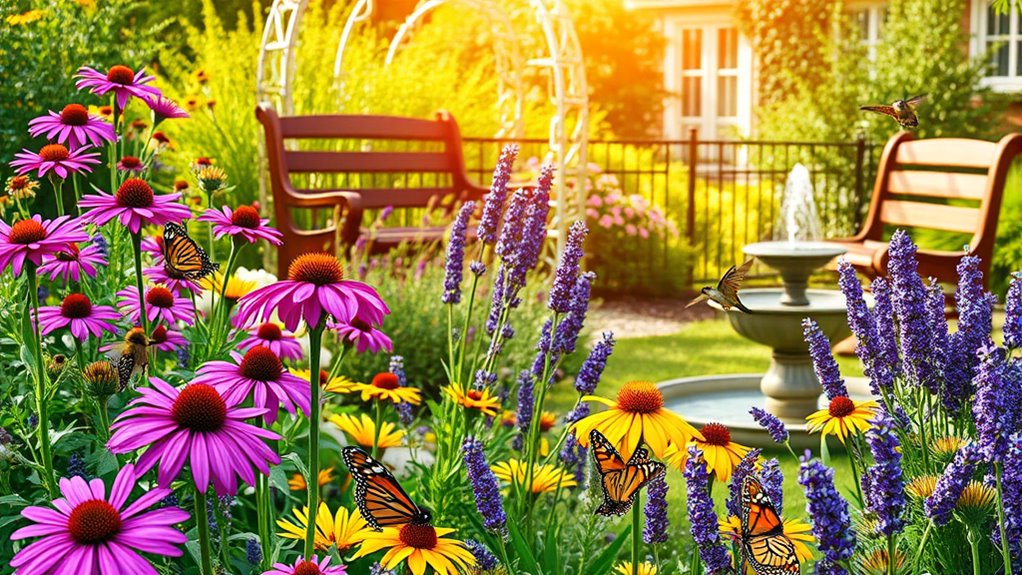
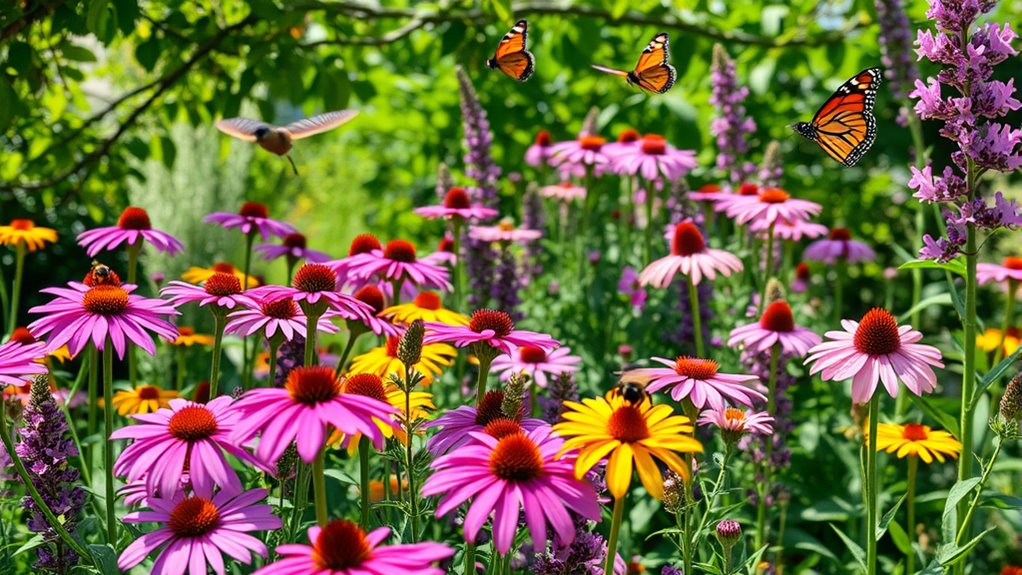
Creating a pollinator-friendly garden is one of the best ways to support the health of your local ecosystem. By planting native plants, you provide essential nectar and pollen sources that attract bees, butterflies, and other beneficial insects. Native plants are especially effective because they’ve evolved alongside local pollinators, making them more accessible and easier for these insects to recognize and utilize. When you choose the right plants, you create a vibrant, resilient habitat that sustains pollinator populations, which are indispensable for the pollination of many crops and wild plants. This, in turn, helps maintain biodiversity and ecological balance in your area.
Plant native species to attract pollinators and support local biodiversity.
Incorporating native plants into your garden is a smart move for pest control as well. Many native plants naturally attract beneficial insects that prey on common garden pests. For example, certain native flowering plants draw in ladybugs, lacewings, and predatory beetles that target aphids, scale insects, and other troublesome pests. By supporting these natural pest controllers, you reduce the need for chemical pesticides, which can harm pollinators and disrupt the local ecosystem. A diverse mix of native plants can create a balanced environment where pests are kept in check without the harmful side effects of pesticides, making your garden healthier and more sustainable.
To maximize the benefits, choose a variety of native plants with different bloom times, so your garden provides a continuous food source for pollinators throughout the growing season. Grouping similar plants together can also make it easier for pollinators to forage efficiently, increasing pollination success. Keep in mind that providing shelter, such as native shrubs and ground cover, gives pollinators a safe place to rest and reproduce, further supporting their populations. Avoid using pesticides altogether, or opt for organic pest control methods if necessary, to protect these indispensable insects.
Creating a pollinator-friendly garden doesn’t demand a complete overhaul of your landscape. Start small by planting native flowering plants in bare spots or containers. Over time, expand your garden with more native species, paying attention to the needs of local pollinators and pests alike. The effort you put into selecting native plants and promoting natural pest control will pay off through a more vibrant, resilient garden. The presence of native plants can also help conserve local pollinator species that have evolved alongside these plants, ensuring their survival and ecological role. Not only will you enjoy the beauty and activity of pollinators, but you’ll also contribute immensely to the health of your local ecosystem by supporting these essential creatures and maintaining a balanced, pest-resistant garden environment.
Frequently Asked Questions
Which Native Plants Attract the Most Pollinators?
You should choose native plants like milkweed, coneflowers, and bee balm, as they attract the most pollinators. When selecting native plants, consider pollinator preferences, focusing on those that produce nectar and pollen throughout the growing season. By prioritizing native plant selection, you’ll create a vibrant garden that supports bees, butterflies, and other pollinators, ensuring a thriving ecosystem right in your backyard.
How Do I Prevent Pests in My Pollinator Garden?
An ounce of prevention is worth a pound of cure, so start with natural pest control methods. Use companion planting with herbs like basil or marigolds to deter pests naturally. Encourage beneficial insects that prey on pests, and avoid chemical pesticides that harm pollinators. Regularly inspect your garden, remove pests by hand, and maintain healthy, diverse plants to keep pests in check. These steps help protect your pollinator garden effectively.
What Seasonal Plants Are Best for Year-Round Pollination?
To guarantee year-round pollination, focus on seasonal planting with a variety of plants that offer continuous blooms. Incorporate spring bulbs, summer flowering plants, fall asters, and winter-friendly options like hellebores. This strategy guarantees your garden will have year-round blooms, attracting pollinators throughout all seasons. By selecting plants suited to each season, you create a thriving environment that supports pollinators year-round.
How Can I Make My Garden More Inviting to Butterflies?
Think of your garden as a welcoming stage for butterflies. To invite them in, design with vibrant, nectar-rich plants and include butterfly host plants like milkweed and parsley. Use diverse garden design elements—shady spots, sunny patches, and plenty of blooms—to create a cozy habitat. Keep it pesticide-free, so these delicate guests feel safe. With these touches, your garden becomes a butterfly haven, inviting fluttering visitors all season long.
Are There Specific Water Sources Recommended for Pollinators?
You should provide shallow water sources with good water quality, like birdbaths or shallow dishes filled with fresh water. Place them in shaded, undisturbed areas to prevent evaporation and discourage mosquito breeding. Regularly change the water to keep it clean and avoid stagnation. Proper water placement and quality attract pollinators like bees and butterflies, offering them a safe place to hydrate and thrive in your garden.
Conclusion
By creating a pollinator-friendly garden, you invite vibrant life into your space, supporting bees, butterflies, and hummingbirds. It’s a simple act that fosters biodiversity and natural beauty. Yet, amidst the colorful blooms and busy pollinators, remember that your small effort can have a mighty impact. Just as a single flower attracts a swarm, your garden becomes a haven—proving that even tiny actions can create a thriving, resilient ecosystem.
Products Worth Considering
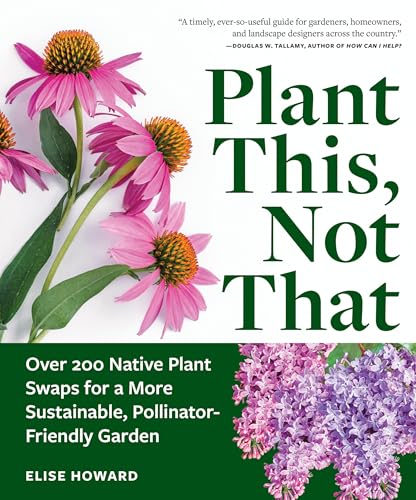
Plant This, Not That: Over 200 Native Plant Swaps for a More Sustainable, Pollinator-Friendly Garden
As an affiliate, we earn on qualifying purchases.
As an affiliate, we earn on qualifying purchases.