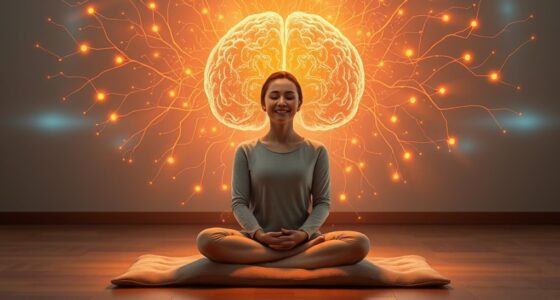
Blending meditation with Yoga Nidra and sound healing creates a powerful practice that deepens relaxation and supports overall well-being. By combining mindfulness techniques, guided body awareness, and calming sound vibrations, you can access deeper states of consciousness, reduce stress, and improve mental clarity. This layered approach enhances emotional balance and physical relaxation, offering holistic health benefits. Keep exploring to discover how integrating these techniques can transform your wellness journey in unexpected ways.

Get books, candles and calm essentials delivered free — and shop member deals
- Fast, free delivery on millions of items
- Access to Prime Big Deal Days deals on October 6–7
- Prime Video, Amazon Music and more included
Key Takeaways
- Combining meditation, Yoga Nidra, and sound healing deepens relaxation and enhances holistic well-being across mental, emotional, and physical domains.
- Mindfulness techniques complement Yoga Nidra and sound therapy by fostering present-moment awareness and reducing stress.
- Sound vibrations entrain brainwaves and dissolve residual tension, amplifying the calming effects of meditation and Yoga Nidra.
- Integrating these practices involves starting with mindfulness, progressing into guided Yoga Nidra, and incorporating sound for deeper relaxation.
- Regular blending of these techniques improves sleep, reduces anxiety, and nurtures overall mental, emotional, and physical health.

Many people are discovering that combining meditation with Yoga Nidra and sound healing can deepen relaxation and enhance overall well-being. This powerful trio offers a unique approach to achieving mental clarity, emotional balance, and physical calmness. When you blend these practices, you create a thorough relaxation experience that goes beyond traditional meditation, tapping into multiple layers of your consciousness.
Combining meditation, Yoga Nidra, and sound healing deepens relaxation and promotes holistic well-being.
To get started, it’s helpful to understand how mindfulness techniques fit into this approach. Mindfulness is about paying close attention to your present moment experiences—your breath, sensations, thoughts, and emotions—without judgment. When you incorporate mindfulness into your meditation practice, you develop a heightened awareness of your internal state, which allows you to relax more deeply. Yoga Nidra complements this by guiding you into a state of conscious awareness between waking and sleeping, often referred to as the “yogic sleep.” It systematically relaxes every part of your body, helping you access a state where your mind is calm but alert. Sound healing then enhances this process by using vibrations and frequencies—such as singing bowls, tuning forks, or chimes—to entrain your brainwaves into a state of deep relaxation.
By intentionally integrating these elements, you establish effective relaxation strategies that work on multiple levels. Mindfulness techniques help you stay present and focused, reducing stress and mental chatter. As you shift into Yoga Nidra, you allow your body and mind to sink into profound rest, releasing tension and emotional blockages. The sound vibrations act as a catalyst, dissolving residual stress and fostering a sense of tranquility that’s difficult to achieve through solitary meditation. Additionally, understanding the benefits of sleep can further enhance your practice, as quality rest plays a crucial role in emotional and physical health.
In practice, you might start with a simple seated mindfulness exercise, focusing on your breath or bodily sensations. Then, guide yourself into Yoga Nidra, following a recorded script or an instructor’s voice, progressively relaxing each part of your body and visualizing calming imagery. As you reach a state of deep relaxation, introduce sound healing by playing gentle singing bowls or listening to calming soundscapes. The vibrations help anchor your awareness, making it easier to stay in a relaxed, receptive state.
This integration creates a layered experience that not only calms your mind but also nurtures your physical body and emotional health. Over time, practicing this blend regularly can lead to improved sleep, reduced anxiety, and a greater sense of inner peace. It’s a holistic approach that invites you to cultivate mindfulness and relaxation strategies that serve your overall well-being.
Frequently Asked Questions
Can Beginners Easily Combine Meditation, Yoga Nidra, and Sound Healing?
Yes, beginners can easily combine meditation, yoga nidra, and sound healing because these practices are designed with beginner accessibility in mind. Start with simple sessions and gradually integrate techniques to enhance your practice. Consistent practice helps with seamless integration, allowing you to experience the combined benefits of relaxation and mindfulness. Over time, you’ll find it easier to blend these practices naturally, deepening your overall well-being and self-awareness.
What Equipment or Space Is Needed for Effective Sessions?
For effective sessions, you need minimal equipment essentials like a comfortable mat, cushions, and perhaps sound healing tools such as singing bowls or chimes. Make sure your space considers quietness, a calming atmosphere, and enough room for movement or lying down comfortably. Natural light or soft lighting enhances relaxation, and decluttering your environment helps maintain focus. You don’t need much—just a peaceful space and a few key items to create a soothing experience.
How Long Should Each Blended Session Last for Optimal Benefits?
You should aim for a session duration of 60 to 90 minutes for ideal timing. This allows enough time to seamlessly blend meditation, Yoga Nidra, and sound healing without rushing the process. Too short, and you might not experience deep relaxation; too long, and focus could wane. Listen to your body and adjust the timing as needed, knowing that consistency and a comfortable pace make all the difference.
Are There Any Health Risks Associated With Sound Healing During Meditation?
Sound healing during meditation generally poses minimal health risks if you prioritize audio safety, such as avoiding extremely loud volumes. However, some people might experience emotional impacts like heightened anxiety or emotional release. If you have physical or mental health concerns, consult a healthcare professional beforehand. Always listen to your body, and stop if you feel discomfort or adverse reactions, ensuring a safe, positive experience.
How Often Should One Practice This Blended Approach for Best Results?
Think of your practice as planting seeds in a garden—you’ll see growth with consistent care. To reap the best benefits, aim for 3-5 sessions per week, each lasting 20-30 minutes. Practice consistency is key; regular sessions nurture deep relaxation and mental clarity. Over time, these gentle ripples of effort will transform your mind and body, turning your practice into a flourishing oasis of calm and well-being.
Conclusion
So, here you are, balancing meditation, Yoga Nidra, and sound healing—thinking you’ve found the ultimate escape. Ironically, in trying to find calm, you might just discover your mind’s busiest marketplace. Instead of silence, you get a symphony of sensations. But hey, isn’t that the point? Embrace the chaos, because sometimes, the deepest relaxation comes when your mind’s too busy to notice it’s relaxing at all.