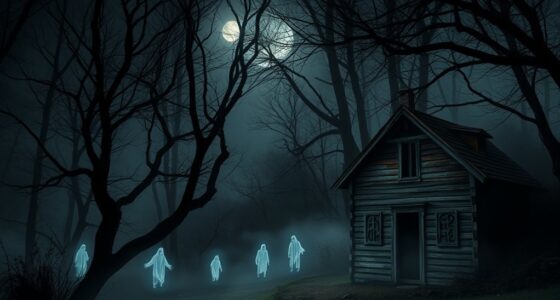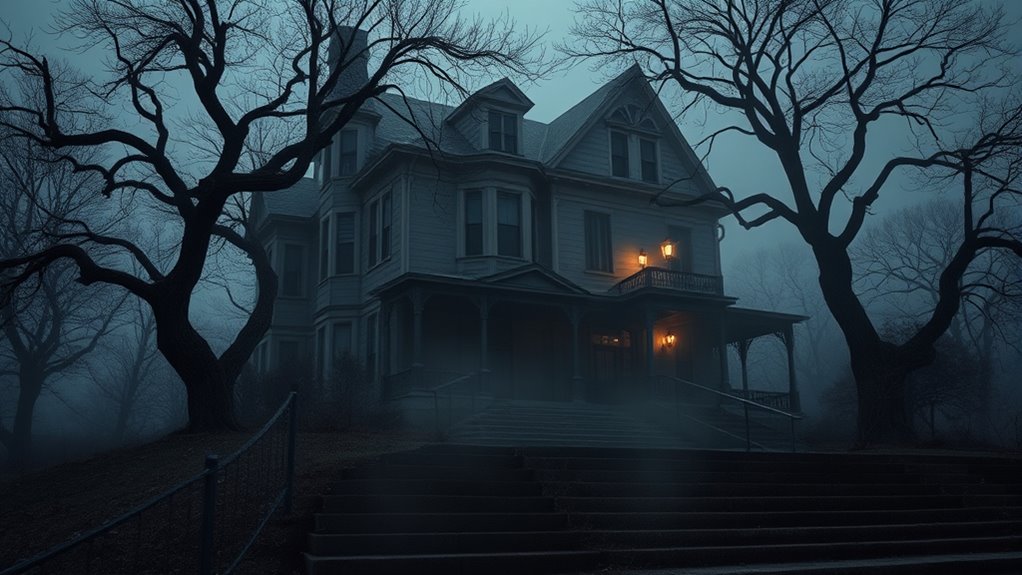

Haunted places serve as powerful symbols of your society’s fears, morals, and collective history. They reflect cultural beliefs through ghost stories and legends that reinforce shared values and reveal societal anxieties. These sites often act as cultural touchstones, shaping local identity and attracting visitors enthusiastic to connect with past traditions. If you explore further, you’ll uncover how these haunted locations continue to embody and preserve the rich stories that define communities.
Listen free for 30 days with Audible
Thousands of audiobooks and originals — cancel anytime.
As an affiliate, we earn on qualifying purchases.
Key Takeaways
- Haunted places serve as symbols reflecting cultural beliefs, societal values, and collective anxieties across different societies.
- Legends associated with haunted sites often convey moral lessons, societal fears, or historical narratives.
- Stories of spirits and hauntings reinforce cultural identity, social norms, and community values through generations.
- Many haunted locations are used to preserve local history and foster cultural tourism, enhancing community pride.
- These sites embody cultural attitudes towards life, death, and the supernatural, maintaining traditions and collective memory.
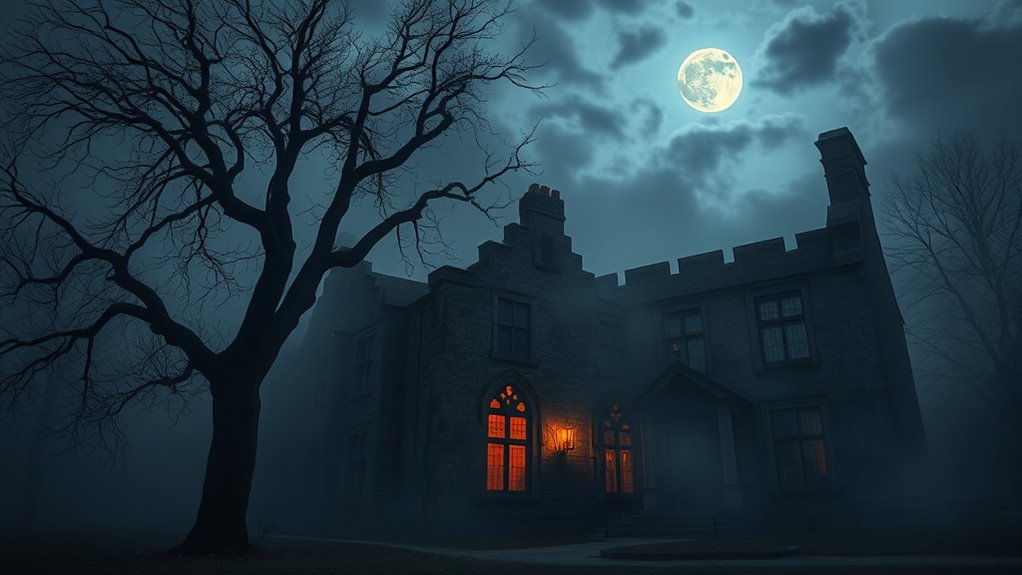
Haunted places have long captivated our imagination, serving as mysterious symbols that reflect cultural beliefs and societal values. These sites are often shrouded in ghost stories and paranormal legends, which fuel our curiosity and deepen our connection to history and tradition. When you hear about a haunted mansion or an abandoned asylum, it’s not just the eerie atmosphere that draws you in; it’s the stories spun around these locations that reveal what a society fears, honors, or remembers. Ghost stories, passed down through generations, serve as cautionary tales or moral lessons, while paranormal legends often embody collective anxieties or hopes.
Haunted sites reveal society’s fears, hopes, and morals through stories passed down generations.
You might find yourself intrigued by how different cultures interpret these spirits. In some societies, ghost stories emphasize family loyalty or justice, portraying spirits seeking closure or retribution. In others, they symbolize unresolved trauma or societal injustice, acting as reminders of the past’s darker chapters. These legends shape cultural identity, influencing art, literature, and even local folklore. For instance, in Western traditions, haunted houses often symbolize haunted memories or guilt, while in Eastern cultures, spirits may represent ancestors’ ongoing presence, emphasizing respect and remembrance. The role of cultural symbolism in these stories highlights how societies process collective experiences.
When exploring haunted places, you’re also participating in a form of cultural storytelling that reinforces shared values. Paranormal legends often carry underlying messages about morality, community, or history. They act as a bridge connecting generations, ensuring that stories continue to serve a purpose beyond mere entertainment. The tales of vengeful spirits or benevolent ghosts reflect societal attitudes toward life, death, and the afterlife. These stories are not just about fright—they’re about understanding human experiences and societal norms through supernatural narratives.
Furthermore, haunted sites and their stories influence local identity and tourism. Many towns leverage their ghost stories to attract visitors, turning legends into cultural assets. You may visit a haunted inn, listening to tales of spectral sightings that have become part of the community’s identity. These stories often serve to preserve local history, giving voice to past residents and events that might otherwise fade away. They remind you that these places are more than just abandoned buildings; they are living repositories of collective memory.
In essence, haunted places and their ghost stories or paranormal legends embody the cultural fabric of societies. They reflect fears, morals, and values in a way that’s both compelling and instructive. When you engage with these stories, you’re not just seeking thrills—you’re participating in a tradition that keeps cultural narratives alive, revealing how societies view life, death, and everything in between.
Frequently Asked Questions
How Do Local Legends Influence Haunted Site Folklore?
Local legends shape haunted site folklore by fueling ghost stories that pass down through generations. You’ll find that these stories often reflect community beliefs, fears, and values, strengthening folklore traditions. As you hear or share these tales, they become more vivid and personal, reinforcing the site’s haunted reputation. These legends create a sense of mystery and connection, making the stories more impactful and ensuring they’re preserved within local culture.
Are There Specific Rituals to Ward off Spirits at Haunted Locations?
You’ll find that many haunted locations use protective charms and ritual ceremonies to ward off spirits. Fascinatingly, over 60% of cultures worldwide have some form of rituals to keep spirits at bay. You can perform simple protective charms like amulets, or participate in ritual ceremonies such as lighting candles or chanting. These practices help create a barrier, offering comfort and peace of mind when you visit or stay at haunted sites.
What Psychological Effects Do Haunted Places Have on Visitors?
When you visit haunted places, you might experience phantom fears that trigger your stress responses, making you feel anxious or uneasy. These psychological effects often stem from adrenaline surges, heightened senses, or the mind’s tendency to interpret ambiguous stimuli as threatening. As a result, your heart races, your palms sweat, and you may feel a lingering sense of dread, even if you know there’s no real danger.
How Do Haunted Sites Impact Local Tourism Economies?
You might think haunted sites scare visitors away, but they actually boost local tourism economies. The eerie allure attracts thrill-seekers and curious tourists who spend on tours, accommodations, and souvenirs. This increased visitor behavior generates significant economic impact for nearby businesses. Ironically, what’s supposed to repel people often ends up drawing them in, turning ghostly legends into thriving economic opportunities. So, haunted places prove that fear can be surprisingly profitable.
Can Haunted Locations Inspire Modern Art and Literature?
Haunted locations can inspire modern art and literature through supernatural symbolism that captures the imagination. You might find yourself drawn to reinterpret these eerie stories creatively, blending folklore with personal expression. Artists and writers often use haunted sites as a backdrop for exploring themes of mystery, loss, and the unknown, transforming supernatural symbolism into compelling artistic reinterpretations that resonate deeply with audiences and evoke emotional responses.
Conclusion
As you explore haunted places, remember they’re more than just stories or legends; they’re echoes of our past, whispering truths we might prefer to forget. These sites remind us that history lingers, shaping our culture in subtle ways. Embrace the mystery with an open heart, for sometimes what we find in the shadows can lead us to a deeper understanding of ourselves and the world around us. After all, every ghostly whisper holds a lesson.
Products Worth Considering
As an affiliate, we earn on qualifying purchases.