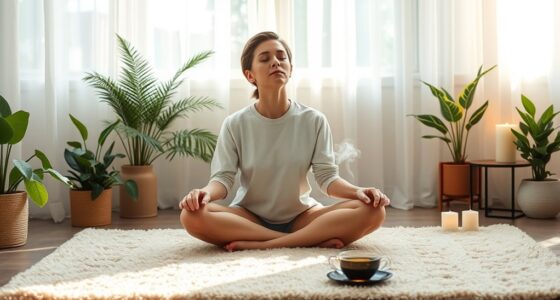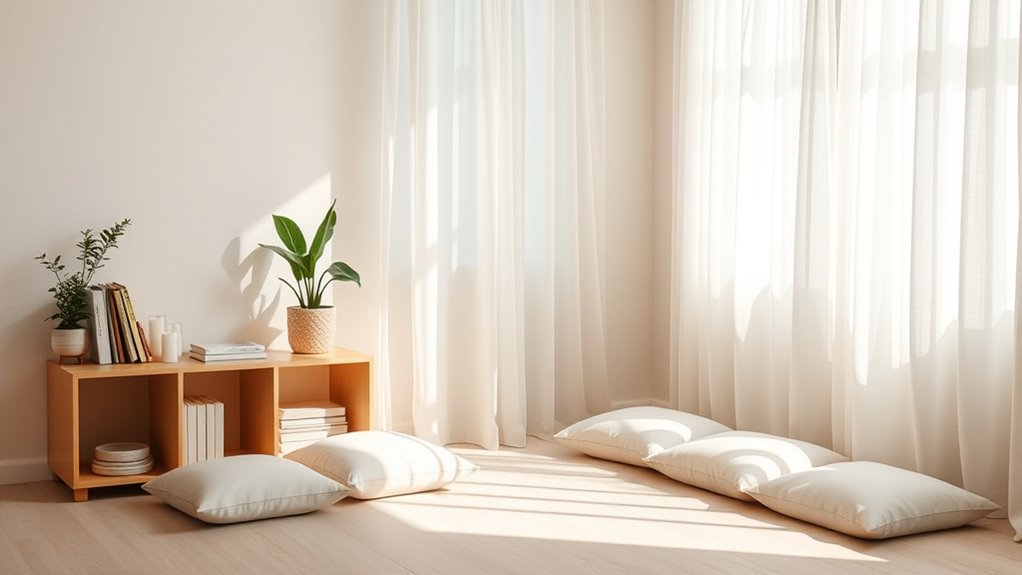

Decluttering your space for self-care involves creating an organized environment that reduces stress and promotes mental clarity. Start by establishing simple routines, like always returning items to their spots, and designate calming areas for relaxation. When your space is tidy, you’ll feel more in control, which enhances your emotional well-being. Incorporating thoughtful space design supports mindfulness and self-love. Keep exploring ways to transform your environment—it’s a powerful step toward better self-care.

Turn your quiet moments into listening time
- Thousands of audiobooks, podcasts and originals
- Listen on your phone, tablet or Echo — also offline
- Cancel anytime
Key Takeaways
- Establish daily routines like returning items to designated spots to prevent clutter buildup.
- Create calming zones with soothing colors and minimal distractions for relaxation and self-care.
- Regularly declutter to reduce mental barriers and promote a sense of calm and control.
- Use portable gear, such as camping equipment, to support outdoor self-care activities.
- Organize spaces thoughtfully to foster mindfulness, relaxation, and emotional well-being.
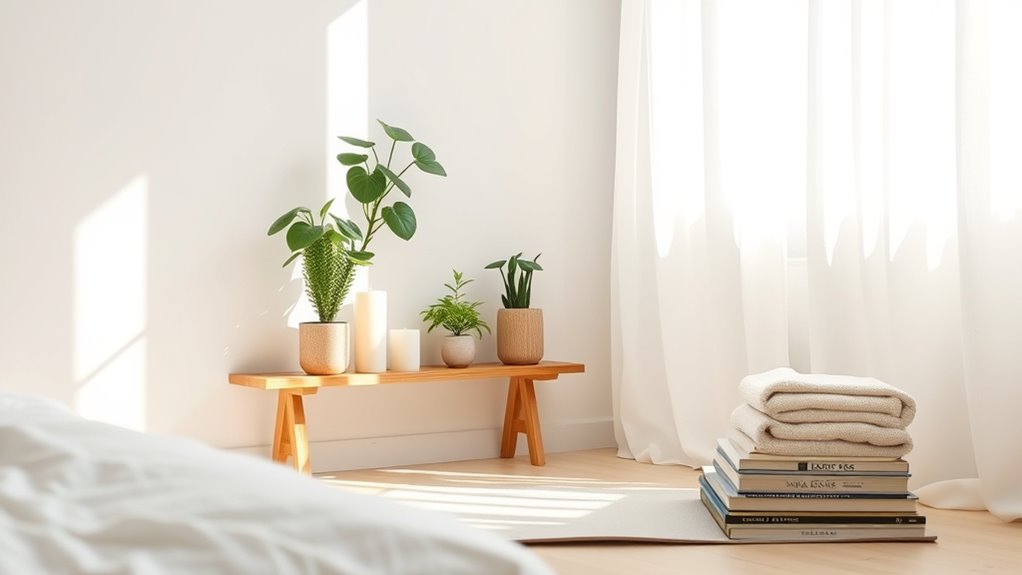
Have you ever noticed how a cluttered space can make you feel overwhelmed and stressed? When your environment is chaotic, it’s harder to focus, relax, or even find what you need. That’s why decluttering isn’t just about tidiness—it’s a crucial step toward creating a space that nurtures your well-being. One effective approach is establishing organizing routines. By developing simple daily habits, like putting things back in their designated spots or dedicating five minutes each evening to tidy up, you gradually prevent clutter from piling up. These routines become second nature, making maintaining a clean space feel effortless rather than overwhelming. Over time, they help you reclaim control over your environment, giving you a mental buffer against stress.
Creating daily organizing habits helps prevent clutter and promotes mental clarity.
Alongside routines, creating calming zones within your space can profoundly enhance your self-care. Think of these zones as sanctuaries where you can unwind and reconnect with yourself. It could be a cozy corner with soft pillows, a small table for journaling, or a dedicated area for meditation or stretching. The key is to design these zones with calming elements: soothing colors, soft lighting, and minimal distractions. When you define specific areas for relaxation, you’re more likely to use them intentionally, making your space serve your mental and emotional needs. Creating calming zones also helps you establish boundaries within your environment, signaling to your mind that these areas are for rest and self-care.
Implementing organizing routines makes it easier to keep your space clean and functional, which in turn supports your mental clarity. When everything has its place, you spend less time searching for items and more time enjoying your environment. This consistency reduces chaos and promotes a sense of order that’s soothing rather than chaotic. Additionally, incorporating portable camping gear into your routines can make outdoor self-care practices more accessible and enjoyable. Simultaneously, creating calming zones enhances your physical environment by providing dedicated spaces for self-care practices. These zones become your personal retreats, helping you detach from daily stressors and focus on self-nurturing activities. The combination of routine and intentional space design transforms your environment into a supportive backdrop for your self-care journey.
Ultimately, these strategies work together to foster a sense of peace and control. When your surroundings are organized and thoughtfully arranged, it’s easier to prioritize your mental health and well-being. You’ll find that decluttering isn’t just about cleaning—it’s about creating a space that encourages relaxation, mindfulness, and self-love. Small, consistent changes can make a big difference, turning your environment into a sanctuary where you feel safe, centered, and ready to care for yourself.
Frequently Asked Questions
How Often Should I Declutter My Space for Optimal Self-Care?
You should declutter your space at least every few months to maintain ideal self-care. Incorporate organizational habits like regular tidying and seasonal cleaning to keep your environment calming and clutter-free. This helps prevent buildup and ensures your space remains a sanctuary for relaxation. By setting a consistent schedule, you make decluttering a routine, making it easier to enjoy a peaceful, organized environment that supports your well-being and self-care goals.
Can Decluttering Help Reduce Anxiety and Improve Mental Health?
Yes, decluttering can help reduce anxiety and improve mental health. When you organize your space, you create a calming environment that promotes mindfulness practices. This act of emotional healing clears mental clutter, making it easier to focus and relax. As a result, you’ll feel more in control and less overwhelmed, supporting your overall well-being. Regular decluttering allows you to maintain a peaceful space conducive to self-care and mental clarity.
What Are the Best Storage Solutions for Small Spaces?
Imagine transforming a tiny closet into a palace of organization! For small spaces, creative storage is your best friend—think vertical shelves, under-bed containers, and multi-functional furniture. Use space optimization tricks like hanging organizers and stackable bins to maximize every inch. These solutions keep clutter at bay, making your space feel larger and more inviting. With clever storage, you’ll turn even the smallest area into a functional, calming retreat.
How Do I Stay Motivated to Maintain a Clutter-Free Environment?
To stay motivated, incorporate mindfulness practices to stay present and appreciate your clutter-free space. Set small, achievable goals and celebrate each success to maintain momentum. Find accountability partners who can encourage you and keep you on track. Remember, maintaining a clutter-free environment is a continuous journey, so be gentle with yourself and focus on progress, not perfection. This mindset makes it easier to stay committed long-term.
Does Decluttering Impact Sleep Quality and Relaxation?
Yes, decluttering can improve your sleep quality and relaxation. When your space is tidy, it promotes better sleep hygiene by reducing stress and creating a calming environment. Less clutter allows you to practice relaxation techniques more effectively, helping your mind unwind before bed. A clean, organized space signals to your brain that it’s time to relax, making it easier to fall asleep and enjoy restorative rest.
Conclusion
Remember, a tidy space is a tidy mind. When you declutter your environment, you create room for self-care and positive energy to flow. It’s not just about cleaning; it’s about making space for what truly matters. So, take that first step today—clear out what no longer serves you. As the saying goes, “A cluttered space equals a cluttered mind.” Embrace simplicity, and watch your well-being flourish.
Products Worth Considering
calming space organizer for bedroom
As an affiliate, we earn on qualifying purchases.
As an affiliate, we earn on qualifying purchases.