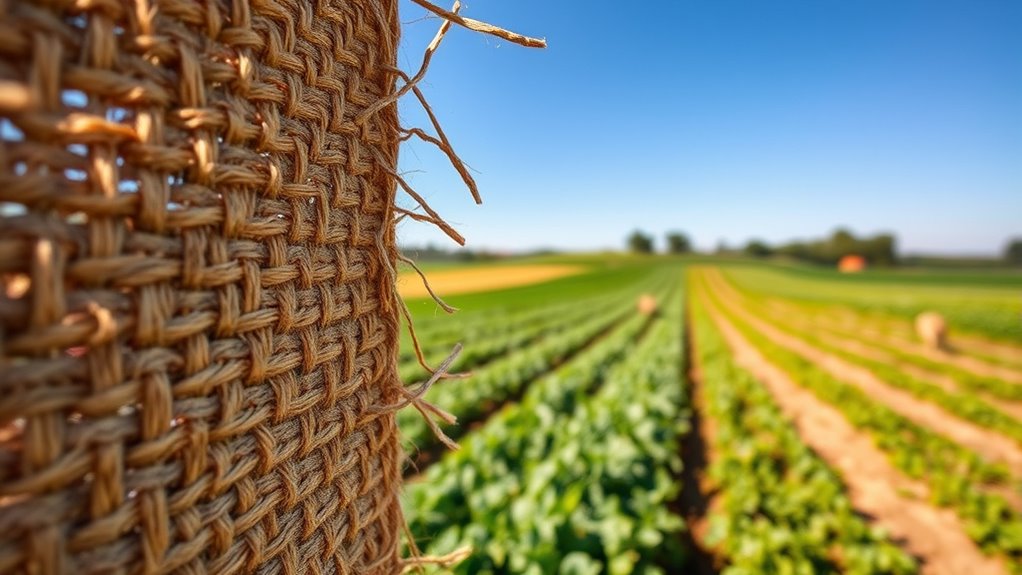

Choosing clothing made from natural fabrics like organic cotton, hemp, or linen supports regenerative agriculture, which restores soil health, increases biodiversity, and sequesters carbon. These eco-friendly fibers require less energy to produce and decompose naturally, reducing environmental impact. Supporting brands committed to transparent supply chains encourages sustainable farming practices that maintain soil vitality and promote ecological balance. By making mindful choices, you contribute to long-term environmental stability — explore further to see how your wardrobe can make a difference.
Key Takeaways
- Natural fabrics like organic cotton, hemp, and linen are biodegradable and require less energy to produce, reducing environmental impact.
- Supporting regenerative agriculture promotes soil health, biodiversity, and carbon sequestration, enhancing the sustainability of fiber sources.
- Using organic dyes from natural sources minimizes chemical use, supporting eco-friendly coloring processes that align with regenerative farming.
- Transparency in supply chains encourages practices such as crop diversity and minimal tillage, fostering healthier soils and ecosystems.
- Choosing clothing made from natural fabrics supports ecological balance, reduces pollution, and promotes long-term environmental stability.
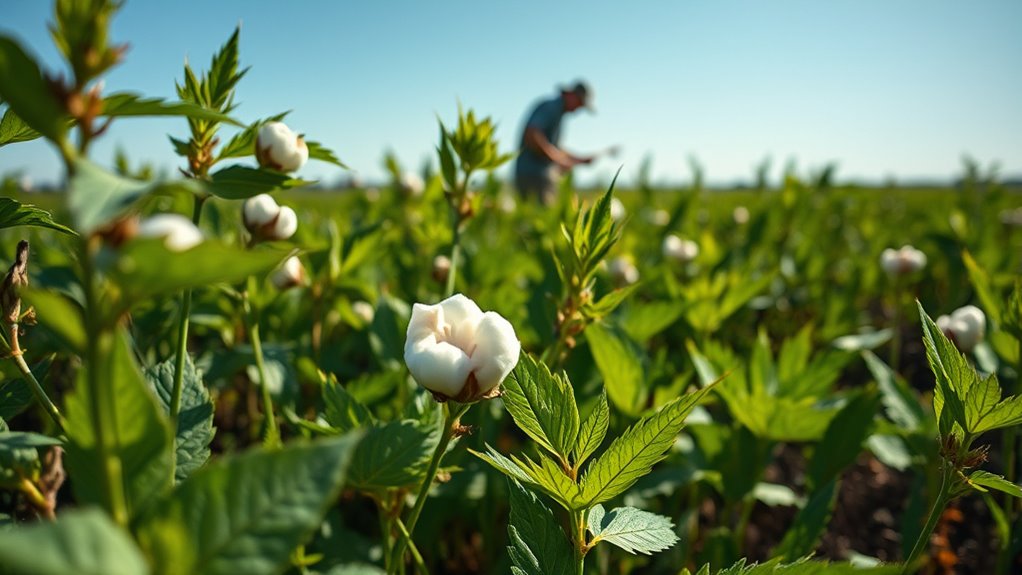
Choosing clothing made from natural fabrics and supporting regenerative agriculture can considerably reduce your environmental footprint. When you opt for natural fabrics like organic cotton, hemp, or linen, you’re making a conscious decision to favor materials that are grown without synthetic chemicals, pesticides, or fertilizers. These fabrics are not only biodegradable but also tend to require less energy to produce compared to conventional ones. By supporting regenerative farming practices, you’re encouraging farmers to adopt methods that restore soil health, increase biodiversity, and sequester carbon, ultimately leading to healthier ecosystems. This approach helps break the cycle of soil degradation caused by conventional agriculture, ensuring that the land remains productive and resilient for future generations.
One impactful way you can support this movement is by choosing clothing dyed with organic dyes. These dyes are derived from natural sources like plants, minerals, or insects, and they avoid the toxic chemicals often found in synthetic dyes. Organic dyes are gentler on the environment, and their use promotes the preservation of soil health. When farmers grow dye plants, they often incorporate crop rotations and cover cropping, which helps maintain healthy soils and reduces erosion. This sustainable approach to coloring textiles aligns perfectly with the principles of regenerative agriculture, fostering a cycle where soil vitality is prioritized over short-term profits. As a consumer, selecting products made with organic dyes signals your support for farming methods that nurture the land rather than deplete it.
Supporting regenerative agriculture also means encouraging transparency and accountability in the supply chain. When you purchase clothing from brands committed to regenerative practices, you’re advocating for change in an industry that heavily relies on chemical-intensive farming. These brands often partner directly with farmers who implement practices like composting, minimal tillage, and diverse crop planting, all of which bolster soil health. Healthy soil, rich in organic matter and microbial life, holds more carbon, improves water retention, and reduces the need for chemical inputs. Your choices can help accelerate the shift toward sustainable farming systems that work in harmony with nature rather than against it.
Furthermore, understanding the importance of soil health and its role in sustainable agriculture underscores why supporting regenerative practices is vital for long-term environmental stability. In essence, your clothing choices have the power to foster a more sustainable future. By selecting natural fabrics, organic dyes, and supporting farmers who prioritize soil health through regenerative practices, you’re actively participating in a movement that values ecological balance and long-term resilience. Every garment you choose can be a statement of your commitment to reducing environmental harm, preserving biodiversity, and ensuring that the land continues to thrive for generations to come.
Frequently Asked Questions
How Do Natural Fabrics Compare in Durability to Synthetic Materials?
Natural fabrics generally have good fabric longevity, but they may not match the high material resilience of synthetic materials. You might notice that natural fibers like cotton or wool can wear out faster with frequent washing or heavy use. However, proper care can enhance their durability. While synthetic fabrics often resist stretching and shrinking better, natural fabrics offer eco-friendliness and comfort, making them a worthwhile choice despite differences in durability.
What Are the Economic Impacts of Transitioning to Regenerative Agriculture?
Shifting to regenerative agriculture offers you significant economic benefits, including healthier soil, increased crop yields, and reduced input costs over time. However, you’ll face market challenges like higher initial investment and consumer awareness hurdles. Embracing this change can boost your sustainability credentials and appeal to eco-conscious consumers, ultimately fostering long-term profitability. By balancing these benefits and challenges, you position yourself for a more resilient, environmentally friendly, and economically sustainable future.
Can Natural Fabrics Be Produced at Scale Without Environmental Trade-Offs?
Yes, natural fabrics can be produced at scale, but you’ll face scaling challenges that may lead to environmental trade-offs. As demand grows, you might encounter limitations in sustainable farming practices, water use, and land management. To minimize these trade-offs, you need innovative solutions, efficient resource use, and supportive policies. With careful planning, you can balance scaling natural fabrics while protecting the environment, making sustainable fashion more accessible.
How Do Regenerative Farming Practices Influence Soil Health Long-Term?
While it’s a gentle way to describe a thriving ecosystem, regenerative farming practices considerably boost soil health over time. You’ll see increased soil carbon storage and enhanced microbial diversity, which create a resilient, fertile foundation. This approach not only sustains crops but also nurtures the land, ensuring long-term productivity and environmental harmony. By fostering these natural processes, you help maintain healthy soils that support vibrant ecosystems for generations to come.
Are There Certifications to Verify Sustainable Clothing Claims Accurately?
Yes, there are certifications to verify sustainable clothing claims accurately. You should look for certification standards like GOTS, Fair Trade, or OEKO-TEX, which set strict criteria for environmental and social practices. Additionally, traceability systems guarantee the supply chain is transparent, so you can confirm that the fabrics come from sustainable sources. By choosing certified clothing, you support genuine sustainability and hold brands accountable for their claims.
Conclusion
By choosing natural fabrics and supporting regenerative agriculture, you’re making meaningful moves toward a more sustainable, stylish future. Your decisions drive demand, diminish waste, and demonstrate dedication to the planet. Together, you can champion change, champion conservation, and create a clothing culture that’s conscientious and cool. So, step confidently into this conscious, caring cycle—because every choice counts in cultivating a cleaner, greener world.
Products Worth Considering

Allmade Unisex Long Sleeve Organic Cotton Tee Deep Black
- Eco-Friendly Material: Made from 100% organic cotton
- Durable and Soft: Lightweight with enhanced durability
- Comfortable Fit: Set-in sleeves and side seams for breathability
As an affiliate, we earn on qualifying purchases.
As an affiliate, we earn on qualifying purchases.