

Guided meditation journals differ mainly in time commitment, prompt depth, and how much structure they impose — and those differences decide whether a journal actually gets used past week two. My top pick overall is The Mindfulness Journal: Daily Practices, Writing Prompts, and Reflections, because it balances short daily entries with enough variety to stay engaging for months. For beginners, Inner Peace: A Guided Meditation Journal for Beginners stands out for its gentle onboarding, while 5 Minutes a Day Self-Care Journal makes the most sense for anyone with almost no spare time. The main tradeoff in this category: longer 52-week programs offer deeper transformation but higher abandonment risk, while short-format journals are easier to sustain but shallower. Keep reading for the full breakdown of all twelve.

Turn your quiet moments into listening time
- Thousands of audiobooks, podcasts and originals
- Listen on your phone, tablet or Echo — also offline
- Cancel anytime
Key Takeaways
- The Mindfulness Journal earned the top spot because it is the only entry that scales difficulty gradually without demanding a fixed daily time slot, fitting both irregular and disciplined users.
- Two products in this lineup are near-duplicates — Finding Balance appears in both a 6-month spiral-bound and a 100-day format — so choosing between them is purely a question of duration and binding preference, not content.
- The 52-week options (A Year of Zen and A Year of Mindfulness) have the richest content but the highest drop-off risk; they suit readers with an established habit, not people starting from zero.
- Time-stamped formats were the clearest differentiator: the 5 Minutes a Day and 8-week Mindful in Minutes journals trade depth for realism about how much people will actually write.
- Spiral binding (Finding Balance 6-Month) mattered more than expected for daily use — journals that lie flat get used at desks and in bed, while glued hardcovers often stay shut.



More Details on Our Top Picks
No Worries: A Guided Journal to Help You Calm Anxiety, Relieve Stress, and Practice Positive Thinking Each Day
Among guided meditation journals, most take a broad mindfulness angle — No Worries narrows its lens to anxiety and stress management, and that focus shows in the prompt design. Rather than the open-ended daily entries you get in The Mindfulness Journal, this one steers each page toward reframing anxious thoughts and building a positive-thinking habit, which makes it far easier to actually start writing on stressful days. Compared with the Mindfulness & Meditation Guided Journal‘s 30-day arc, it suits an ongoing, low-pressure routine better. The tradeoff: it’s lighter on formal meditation instruction, so buyers wanting seated-practice guidance alongside journaling may need a companion resource. There’s also no tracking apparatus — no mood grids or habit charts like the Finding Balance journal offers — just prompts and space to think.
Pros:- Prompts specifically target anxious thinking and stress relief rather than generic mindfulness
- Daily reflection format lowers the barrier to entry on difficult days
- Positive-thinking exercises give journaling a constructive direction
- Suits a flexible, open-ended routine without a rigid day count
Cons:- No meditation instruction, so it works better as journaling support than a practice builder
- Lacks tracking tools like mood and habit grids found in more analytical journals
Best for: People whose primary goal is managing daily anxiety and negative thought patterns rather than building a formal meditation practice
Not ideal for: Buyers who want structured meditation instruction, mood tracking, or a defined program length — this is prompt-driven, not curriculum-driven
- Format:Guided journal
- Focus:Anxiety relief, stress relief, and positive thinking
- Structure:Daily guided prompts
- Meditation Instruction:Not included
- Tracking Tools:None
- Program Length:Open-ended daily use
Our verdict“This pick makes the most sense for anyone who wants a journal that speaks directly to anxiety, not general wellness.”
Mindfulness & Meditation Guided Journal
What separates this journal from the rest of the lineup is that it teaches while it prompts. Instead of assuming you already know what mindfulness is — as A Year of Zen tends to do — it pairs meditation guidance with daily journaling prompts across a defined 30-day span. That built-in curriculum is why it lands here as the beginner pick: a first-timer gets instruction, structure, and an endpoint, all in one place. Compared with Inner Peace: A Guided Meditation Journal for Beginners, the 30-day framing feels more like a course and less like an open notebook. The drawback is commitment in the other direction — finish the 30 days and the journal is essentially done, unlike the longer-haul Finding Balance six-month format. Prompt depth also varies, so experienced practitioners may find the guidance too introductory.
Pros:- Combines actual meditation guidance with journaling, not just prompts
- 30-day structure creates a clear, finishable program for habit-building
- Daily prompts remove the blank-page problem beginners face
- Compact commitment compared with 52-week or six-month alternatives
Cons:- Program ends at 30 days, requiring a follow-up journal to sustain the habit
- Guidance skews introductory, so it won’t grow with an advancing practice
Best for: Complete newcomers who want meditation instruction and journaling bundled into one short, structured 30-day program
Not ideal for: Experienced meditators or anyone wanting a long-term journal — the guidance is introductory and the 30-day arc runs out
- Format:Guided journal with meditation instruction
- Content:Daily mindfulness journal prompts
- Duration:30 days
- Guidance Level:Beginner-oriented
- Tracking Tools:None specified
- Extras:Meditation guidance included
Our verdict“The right entry point if you want to learn meditation and journaling together in one short, guided month.”
Finding Balance Mental Health Journal, 6-Month Guided Daily Journal, Beige Spiral-Bound Hardcover
This is the most ambitious program in the batch: six months of daily check-ins, layered with weekly reflections, monthly mood and habit tracking, and a progress review section. Where the 100-Day Guided Mental Health Journal offers a similar toolkit over roughly three months, Finding Balance doubles the runway and adds the audio meditation via QR code — a genuinely useful bridge between journaling and actual practice. The 26 structured prompts keep guidance consistent without overwhelming the page, and the spiral binding is a quiet advantage: it lies flat while writing, unlike traditional bound journals. The tradeoffs are real, though. Six months is a serious commitment that beginners may abandon, the sand-colored faux leather shows wear over time, and the listing omits dimensions and page count, so sizing expectations are a guess before it arrives.
Pros:- Six-month duration with daily, weekly, and monthly layers of structure
- Mood and habit tracking plus progress reviews reveal patterns over time
- QR-linked guided audio meditation adds a practice element
- Spiral binding lies flat; elastic closure keeps it discreet and portable
Cons:- Long commitment risks abandonment for anyone without an established habit
- Dimensions and page count aren’t disclosed, making it hard to judge portability before buying
Best for: Committed journalers who want a full six-month system with tracking, reviews, and audio meditation built in
Not ideal for: Beginners or intermittent journalers — the six-month scope can feel punishing if momentum fades by week three
- Duration:6 months
- Prompts:26 structured prompts
- Tracking:Daily, weekly, and monthly mood and habit tracking
- Extras:Progress review section; guided audio meditation via QR code
- Cover:Sand-colored faux leather hardcover
- Binding:Spiral-bound
- Closure:Elastic closure
Our verdict“The strongest choice for someone ready to commit half a year to tracked, audio-supported mental health journaling.”
A Year of Zen: A 52-Week Guided Journal
Where most journals in this roundup measure progress in days or months, A Year of Zen stretches across 52 weeks, making it the slowest-burn option here. That weekly cadence is the real differentiator: compared with the Mindfulness & Meditation Guided Journal‘s daily prompts, this format suits people who reflect deeply rather than often — one thoughtful session per week instead of a nightly checkbox. It also aligns with A Year of Mindfulness in scope, but the Zen framing leans toward contemplative, philosophy-flavored reflection rather than clinical mood tracking, so it feels closer to a practice companion than a mental-health tool. The honest tradeoff is transparency: the listing reveals little about the prompt content or structure, so buyers are trusting the format sight-unseen. And daily journalists will find the weekly rhythm too sparse for building a tight habit loop.
Pros:- Full 52-week structure supports a full year of sustained practice
- Weekly cadence fits people with limited time for journaling
- Zen framing adds a contemplative dimension beyond mood tracking
- Low daily pressure reduces burnout compared with day-by-day formats
Cons:- Minimal product detail on prompt content makes it a bit of a leap of faith
- Weekly rhythm is too infrequent to anchor a strong daily journaling habit
Best for: Reflective types who prefer one meaningful weekly session over daily entries and want a full year of guided structure
Not ideal for: Daily-habit builders and anyone who wants clear upfront detail on prompts — the weekly pace is sparse and the contents are thinly documented
- Format:Guided journal
- Duration:52 weeks
- Cadence:Weekly
- Focus:Zen and contemplative reflection
- Tracking Tools:None specified
- Prompt Details:Not disclosed in listing
Our verdict“Pick this if a year of unhurried weekly reflection fits your temperament better than a demanding daily streak.”
100-Day Guided Mental Health Journal for Self-Care and Mindfulness
This journal hits a middle ground that much of the lineup skips: longer than the Mindfulness & Meditation Guided Journal‘s 30 days, shorter and less intimidating than Finding Balance‘s six-month commitment. The 100-day span is long enough to build a real habit yet has a visible finish line. Its toolkit mirrors the premium options — mood and habit tracking, daily and weekly check-ins, a progress review section, and the same QR-code guided audio meditation — packaged in a discreet black hardcover that reads as a plain notebook in public. The audio component is what makes it feel like more than a prompt book; compared with No Worries, which is pure reflection, this option actually nudges you into meditation practice. The catch: prompts arrive weekly rather than daily, which structure-seekers will love and free-writers will find confining, and the plain cover comes at the cost of any aesthetic personality.
Pros:- 100-day length balances habit-building with a reachable goal
- Mood and habit tracking plus progress reviews mirror pricier long-format journals
- QR-linked guided audio meditation adds genuine practice value
- Discreet black hardcover works for private use in shared or public spaces
Cons:- Weekly structured prompts constrain users who prefer open-ended journaling
- Utilitarian design with no visual or aesthetic appeal on the shelf
Best for: Buyers who want tracking tools, audio meditation, and a defined 100-day program without committing to a six-month journal
Not ideal for: Free-form journalers who dislike structured prompts — the weekly guided format leaves little room for open-ended writing
- Duration:100 days
- Format:Guided journal
- Prompts:Weekly structured prompts with lined writing space
- Tracking:Daily, weekly, and monthly mood and habit tracking
- Extras:Progress review section; guided audio meditation via QR code
- Cover:Black hardcover
Our verdict“The smart middle path for anyone wanting a complete tracked program in a finishable, no-frills package.”
A Year of Mindfulness: A 52-Week Guided Journal to Cultivate Peace and Presence
This option stands out for sheer scope: a full 52 weeks of structured reflection, which makes it the strongest pick for anyone who wants a year-long mindfulness practice rather than a short sprint. Compared with the Mindful in Minutes 8-week journal, it demands far more patience but rewards it with slower, more gradual habit formation — the weekly cadence feels sustainable where daily prompts can become a chore. Compared with A Year of Zen, which shares the same 52-week structure, this one leans toward general peace and presence rather than a specific philosophical tradition. The tradeoff is real: a year is a long runway, and momentum can stall around week eight if the prompts begin to feel repetitive. There’s also little built-in tracking, unlike the 5 Minutes a Day journal’s mood and habit tools.
Pros:- Year-long structure builds a durable, sustainable habit
- Weekly cadence is low-pressure compared with daily-prompt journals
- Broad focus on peace and presence suits any belief system
- Clear progression from week to week gives a sense of momentum
Cons:- 52-week commitment is easy to abandon without daily accountability
- No mood, habit, or health trackers unlike shorter guided notebooks
Best for: Buyers who want a slow-burn, year-long mindfulness practice and prefer weekly reflection over daily pressure
Not ideal for: Anyone seeking quick results or built-in mood and habit tracking — the structure is minimal and the commitment is long
Our verdict“Choose this if you’re committing to a full year of gentle weekly reflection and don’t need tracking tools.”
5 Minutes a Day Self-Care Journal, 91-Day Guided Reflection Notebook, A5, Green
Where most journals in this roundup are simple softcovers, this one earns its place on physical quality: a linen hardcover, 100gsm FSC-certified paper that resists ink bleed, three ribbon bookmarks, a pen loop, an elastic closure, and a back pocket. Compared with the Finding Balance 100-day journal, it offers a similar daily check-in structure but adds the mood, health symptom, and habit tracking that a plain guided journal like A Year of Mindfulness lacks entirely. The five-minute daily format is the real selling point for busy people — the 91-day window is long enough to build a habit but far less intimidating than a 52-week commitment. The catch: it’s undated, so you’re responsible for writing in dates and keeping yourself honest, and the reflection depth is shallower than program-based options like Mindful in Minutes.
Pros:- Five-minute daily format fits easily into a packed schedule
- Combines gratitude, goals, mood, health, and habit tracking in one place
- Premium build: linen hardcover, thick FSC paper, ribbon bookmarks, elastic closure
- A5 size is genuinely portable for commuting or travel
Cons:- Undated format requires self-managed scheduling and accountability
- Prompts stay fairly surface-level compared with themed multi-week programs
Best for: Busy adults who want a low-effort daily practice and appreciate premium, portable stationery details
Not ideal for: Anyone who wants a dated program with structured progression — the undated format puts all scheduling discipline on you
Our verdict“This pick makes the most sense for someone who wants a beautiful, trackable daily ritual without a heavy time investment.”
Mindful in Minutes: You Are Not Your Thoughts: An 8-Week Guided Meditation Journal
This option stands out for thematic depth in a compact timeframe. Rather than scattering prompts across months like A Year of Mindfulness, it concentrates eight weeks on a single, powerful idea: separating yourself from your thoughts. That narrow focus makes it better suited to someone working through rumination or anxiety-driven thinking than a general gratitude journal like the 5 Minutes a Day notebook, whose broad prompts touch many topics without going deep on any. Compared with No Worries, which targets anxiety through positive-thinking exercises, this one takes a more meditative, observational approach rooted in mindfulness practice. The tradeoff is straightforward: eight weeks goes fast, and once finished there’s no built-in continuation plan. It also lacks the trackers and premium physical extras of hardcover alternatives, so it reads more like a workbook than a keepsake.
Pros:- Single focused theme (thought observation) gives real depth
- Eight weeks is a manageable, finishable commitment
- Meditation-based approach suits a formal practice better than scattered prompts
- Clear beginning and end provide a sense of completion
Cons:- Program ends after eight weeks with no continuation structure
- Minimal tracking features and plain build compared with hardcover alternatives
Best for: People struggling with overthinking who want a focused, meditative eight-week program rather than open-ended journaling
Not ideal for: Buyers wanting a long-term daily companion with habit tracking — this is a short, workbook-style program with a defined end date
Our verdict“Pick this if you want an intensive, thematically focused eight-week meditation course in journal form.”
Finding Balance: A 100-Day Mental Health Journal
This model is better suited to data-driven self-reflection than anything else in this lineup. Daily check-ins, weekly reflections, and daily, weekly, and monthly mood and habit trackers create a layered record you can actually review — something neither A Year of Mindfulness nor Mindful in Minutes offers. The standout differentiator is the QR-coded guided audio meditation, which bridges journaling and actual meditation practice in a way pure prompt journals don’t attempt. Compared with the 91-day 5 Minutes a Day notebook, it trades the linen hardcover and undated flexibility for a fixed 100-day program with a progress review section — better for accountability, worse for irregular schedules. The lavender spiral binding lies flat, which matters if you write at a desk, but spirals are also more fragile in a bag than a sewn hardcover.
Pros:- Three-tier tracking (daily, weekly, monthly) reveals long-term patterns
- Guided audio meditation via QR code adds a practice dimension beyond writing
- Spiral binding lies completely flat for comfortable desk writing
- Progress review section turns entries into actionable insight
Cons:- Fixed 100-day format doesn’t accommodate gaps or irregular routines
- Spiral binding is less durable in a bag than a sewn hardcover
Best for: Adults who want to actively monitor mood and habits alongside journaling and like seeing patterns over time
Not ideal for: Anyone with an unpredictable schedule — the dated 100-day structure punishes missed days rather than flexing around them
Our verdict“This pick makes the most sense for a buyer who treats journaling as a tracking tool and wants audio guidance built in.”
Inner Peace: A Guided Meditation Journal for Beginners
Positioning is everything here: this journal exists to remove intimidation from meditation journaling, which is why it earns the beginner slot over more ambitious options. Where Mindful in Minutes assumes some comfort with observing thoughts, and A Year of Mindfulness asks for a 52-week commitment, this one keeps the entry barrier low with an approachable, guided structure. Compared with Morning Meditations, which anchors practice to a specific time of day, it stays flexible about when and how you write — a better fit for someone still figuring out their routine. The honest tradeoff: what makes it friendly to newcomers also makes it easy to outgrow. Experienced journalers will likely find the prompts too gentle and the framework too light, and it lacks the trackers of Finding Balance or the physical polish of the 5 Minutes a Day hardcover.
Pros:- Explicitly designed for people with no prior meditation journaling experience
- Gentle, unintimidating prompts reduce the blank-page problem
- Flexible structure doesn’t lock you into a time of day or strict program
Cons:- Content depth is limited and most users will outgrow it quickly
- Minimal tracking features and no advanced progression once basics are mastered
Best for: Complete newcomers to meditation journaling who want gentle guidance and low commitment while building a first habit
Not ideal for: Experienced practitioners — the beginner-level prompts and light framework will feel restrictive within weeks
Our verdict“Start here if meditation journaling is brand new to you, then graduate to a deeper program like Mindful in Minutes.”
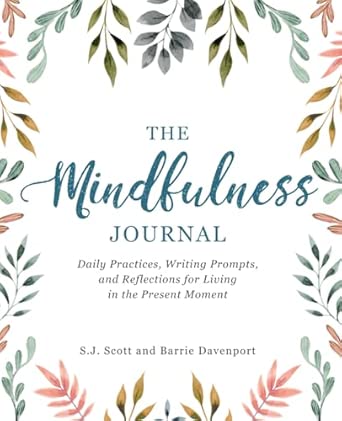
The Mindfulness Journal: Daily Practices, Writing Prompts, and Reflections for Living in the Present Moment
Where several journals in this roundup anchor themselves to a fixed timeline — A Year of Mindfulness runs a full 52 weeks, and Mindful in Minutes caps at eight — this option takes an open-ended, daily-practice approach. That structure makes it the strongest choice for buyers who want to build a durable habit rather than race toward a finish line. Each day pairs a short mindfulness practice with a writing prompt, so the journaling never feels like a blank-page exercise. Compared with Inner Peace, which leans heavily on meditation instruction for newcomers, this one spreads its attention across practices, prompts, and reflections, giving more variety page to page. The tradeoff is focus: it is a generalist. Readers dealing with specific anxiety or stress issues will likely connect more with No Worries, which targets those states directly.
Pros:- Open-ended daily format with no fixed deadline, reducing pressure to ‘catch up’
- Combines mindfulness practices with writing prompts for varied daily engagement
- Emphasizes present-moment awareness rather than symptom-focused checklists
- Simple entry structure works for both newcomers and experienced journalers
Cons:- Generalist scope means it lacks the therapeutic depth of anxiety- or mental-health-focused journals
- No guided timeline or week-by-week progression for readers who need external structure
Best for: Habit-builders who want a repeatable daily mindfulness routine without a countdown or expiration date
Not ideal for: Buyers seeking targeted anxiety or stress relief — this journal stays broad where No Worries goes specific
- Type:Guided mindfulness journal
- Structure:Daily practices and writing prompts
- Focus:Present-moment awareness and daily reflection
- Timeline:Open-ended daily format
- Prompt Style:Mixed — practices, prompts, and reflections
- Experience Level:Beginner to intermediate
Our verdict“Pick this if you want a flexible, habit-first mindfulness journal you can return to indefinitely; skip it if you need targeted emotional support or a structured program.”
Morning Meditations: A Guided Journal to Start Each Day Feeling Calm and Energized
Most journals in this lineup are time-of-day agnostic, but this one is built around a single ritual: the morning journaling session. That narrow framing is its whole value proposition. Compared with The Mindfulness Journal, which spreads its prompts across the day, this guide front-loads intention-setting so the calm and energy it cultivates carry into whatever follows. It also belongs to the Everyday Inspiration Journals series, which shows in the polish — the format feels considered and giftable in a way plainer workbooks like the 100-Day Guided Mental Health Journal do not. The catch is rigidity: evening journalers or people with unpredictable schedules may struggle to fit a morning-specific format, and unlike A Year of Zen, it offers no longer philosophical arc for readers who want gradual depth over time.
Pros:- Purpose-built morning structure removes decision fatigue about when and how to journal
- Balanced tone of calm and energy rather than pure relaxation
- Part of a polished series, making it a strong gift option
- Guided format keeps entries short and realistic for busy mornings
Cons:- Time-of-day specificity makes it awkward for evening or irregular schedulers
- Lacks the longer progressive arc of 52-week journals like A Year of Zen
Best for: Morning people and routine-builders who want a short, guided journaling ritual to set the tone for the day
Not ideal for: Evening journalers or shift workers — the format assumes a morning session and loses its logic otherwise
- Type:Guided morning journal
- Series:Everyday Inspiration Journals
- Volume:10
- Format:Guided journal
- Focus:Morning calm and daily energy
- Session Style:Short structured entries
- Experience Level:Beginner-friendly
Our verdict“Choose this if your meditation practice lives in the morning; if you journal at night or want a year-long progression, other picks in this roundup fit better.”

How We Picked
I evaluated each journal on four buyer-relevant criteria. Prompt quality came first: whether prompts genuinely guide reflection or just ask vague questions you could invent yourself. Commitment design came second — how long the program runs, how much daily time it demands, and whether the structure helps or hinders habit formation. Build and usability covered paper quality, binding, layout breathing room, and whether the journal survives daily handling. Audience fit asked who each journal serves best: anxious beginners, lapsed journalers, or experienced meditators wanting depth.
The ranking logic favors sustainability over ambition. A beautifully designed 52-week program that gets abandoned in March is worth less than a modest 91-day journal that gets finished. Products ranked higher when their format matched realistic behavior, when prompts showed evidence of actual instructional design, and when their stated audience matched their actual difficulty level.
Factors to Consider When Choosing Guided Meditation Journals
Before picking a specific journal, it helps to understand what actually separates a journal you finish from one that gathers dust. These are the factors that shaped my ranking — and the mistakes I see buyers make most often.Program Length vs. Realistic Habits
The biggest mistake buyers make is choosing a 52-week journal when they have never journaled for 52 days. Long programs like A Year of Zen and A Year of Mindfulness assume an existing habit — their weekly themes build on each other, so falling behind creates guilt that kills the practice entirely. Shorter formats — 91 days, 100 days, or 8 weeks — create visible finish lines, which is psychologically powerful for habit formation. My advice: if you cannot name the last time you journaled consistently for a month, buy the shorter journal first. You can always upgrade to a year-long program once the habit exists. Finishing a small journal beats abandoning a grand one.
Structure Level: Guided vs. Semi-Guided
Guided meditation journals sit on a spectrum from fully scripted (daily prompts, rating scales, gratitude slots) to semi-guided (a theme plus blank space). Beginners almost always do better with heavy structure because an empty page is a decision, and decisions are where habits die. Experienced journalers often find the same rigid layouts repetitive and constricting by week three. Look at sample pages if the listing shows them: count how many elements you must complete per day. More than five or six daily fields is a chore; fewer than two stops being guided at all. The sweet spot for most buyers is a daily core routine plus one rotating prompt.
Daily Time Commitment
Journals rarely advertise how long an entry takes, but it is the single most common reason for abandonment. A daily entry that needs 15 minutes competes with everything else in your evening; one that needs five minutes competes with almost nothing. The 5 Minutes a Day format exists precisely because of this failure mode. Be honest about when you will actually write: a morning person buying an evening-reflection journal is setting up a miss. Match the journal’s time demand to a slot that already exists in your day — with coffee, on a commute, before bed — rather than hoping to create a new slot. If no honest slot exceeds ten minutes, filter for short-format journals immediately.
Binding and Physical Usability
Binding sounds trivial until you try writing in a glued hardcover on a couch or in bed — pages snap shut, and your writing hand fights the spine. Spiral-bound journals lie completely flat, which is why the Finding Balance 6-Month spiral edition ranks above its glued competitors for daily desk or bedtime use. Lay-flat bindings are the middle ground. Also check page thickness if you use fountain pens or markers: thin pages ghost badly and make both sides of a spread unusable. A meditation journal gets carried around, dropped in bags, and written in awkward positions — build quality is not a luxury here, it is part of whether the journal survives its own program.
Meditation Focus vs. General Mental Health Focus
Not every journal in this category is actually about meditation. Several — No Worries, both Finding Balance editions, and the 100-Day Mental Health Journal — are better described as anxiety and mood journals with mindfulness elements. That distinction matters: true meditation journals like Mindful in Minutes teach observation techniques and include pre- and post-meditation reflection, while mental health journals track mood, triggers, and coping. Neither is wrong, but buying the wrong type leads to disappointment. If your goal is a sitting practice, prioritize journals with meditation instruction built in. If your goal is emotional processing, the mood-tracking formats will serve you far better than a zen-themed weekly prompt book.
Audience Targeting and Tone
Tone varies more in this category than in almost any other journal type, and mismatched tone is a quiet dealbreaker. Some journals speak in clinical therapeutic language; others use casual, affirming voices; A Year of Zen leans philosophical. Read the sample prompts carefully: if the voice irritates you on day one, it will be unbearable by day forty. Beginners should also check whether the journal explains how to meditate or assumes you already know — Inner Peace is one of the few that genuinely teaches technique rather than just prompting reflection. A journal that assumes knowledge you do not have produces frustration, not calm.
Frequently Asked Questions
Can a guided meditation journal replace an actual meditation app or practice?
Not fully, and knowing the difference will save you disappointment. A journal’s strength is reflection — it helps you process what happened before, during, and after meditation, and it builds the observational habit that makes meditation more effective. But a journal cannot guide you through a timed sitting session the way an app with audio can. The strongest approach for most people is pairing the two: a short app-guided sit, then a five-minute journal entry to lock in the reflection. A few options in this lineup, notably Mindful in Minutes and Inner Peace, blur the line by including written meditation instructions, which makes them viable standalone starting points if you dislike apps or screens before bed.
Should I choose a 52-week journal or a shorter 90-100 day one?
Let your track record decide, not your ambition. If you have never sustained a journaling habit for even a month, a 100-day or 91-day format gives you a visible finish line and a completion win you can build on. The 52-week options — A Year of Zen and A Year of Mindfulness — are structured as cumulative programs where later weeks assume you absorbed earlier ones, so abandoning them midway wastes more of the purchase. People who already journal occasionally or who genuinely enjoy routine tend to finish year-long formats and get more depth from them. One practical middle path: start with a short journal, finish it, and treat the year-long program as your reward for proving the habit sticks.
What is the real difference between a meditation journal and a mental health journal?
A meditation journal trains observation — noticing thoughts without judging them — while a mental health journal tracks emotional patterns, triggers, and coping strategies. In this lineup, Mindful in Minutes and Inner Peace sit firmly in the meditation camp, with pre- and post-sitting reflections and thought-observation prompts. No Worries and both Finding Balance editions are primarily anxiety and mood tools that borrow mindfulness language. The overlap is real, and neither approach is inferior, but the daily experience differs sharply: meditation journals ask you to watch your mind, mental health journals ask you to examine your feelings. If anxiety relief is your primary goal, the mood-tracking formats will feel more immediately useful; if you want a sustainable sitting practice, the meditation-focused journals are the better tool.
How much should the daily entry time influence my choice?
More than almost any other factor, because time demand is the number-one reason guided journals get abandoned. A journal that requires 15 minutes of writing competes directly with your evening routine and loses most nights; a five-minute format competes with nothing and survives busy weeks. Check whether the listing or sample pages indicate entry length — count the fields you must fill per day as a rough proxy. Also be realistic about when you will write: evening-reflection formats die quickly for people who collapse into bed, and morning formats die for people who rush out the door. The journals that get finished are almost never the richest ones — they are the ones whose time demand fits an existing slot in your day.
Is spiral binding or a hardcover better for a journal I will use daily?
For daily use, spiral binding wins on pure function: it lies completely flat, works on a desk, in bed, or on your lap, and never fights your writing hand. That is why the spiral-bound Finding Balance 6-Month edition outperforms similarly designed glued journals in daily usability. Hardcover glued bindings look better on a shelf and survive bags better, but pages snap shut mid-sentence, which gets genuinely annoying over a hundred-day program. A lay-flat stitched binding is the best of both worlds if you can find it. My honest recommendation: if this journal will live on your nightstand, prioritize flat-opening construction over aesthetics, because a journal that is physically pleasant to write in gets opened more often.
Conclusion
For best overall, The Mindfulness Journal is the pick because it balances prompt quality, flexible time demands, and enough variety to stay engaging for its full run. For best value, the 100-Day Guided Mental Health Journal delivers a complete structured program at a modest commitment level. For best for beginners, Inner Peace stands apart as the one journal that actually teaches meditation technique rather than assuming you already practice. For best premium long-term option, A Year of Mindfulness offers the deepest cumulative program — buy it only if you have proven the habit. For specific needs: choose 5 Minutes a Day if time is your bottleneck, the spiral-bound Finding Balance 6-Month if you write at a desk or in bed, Mindful in Minutes for a focused 8-week meditation course in journal form, No Worries if anxiety rather than meditation is your main concern, and Morning Meditations if your practice belongs at the start of the day. Whichever you choose, match the journal to the habit you actually have, not the one you wish you had — that single decision predicts whether you finish it.
Fall Picks
fall essentials
As an affiliate, we earn on qualifying purchases.