
Guided meditation journals differ far more than their covers suggest — the real divide is between structured, time-bound programs like 8-week or 52-week journals and open-ended daily reflection formats you can pick up anytime. My top pick, A Year of Mindfulness: A 52-Week Guided Journal, offers the best balance of gentle weekly themes and flexible daily prompts, making it the easiest to actually finish. Inner Peace: A Guided Meditation Journal for Beginners stands out for anyone new to meditation who needs more hand-holding, while The Mindfulness Journal: Daily Practices, Writing Prompts, and Reflections suits experienced practitioners who want an undated, self-directed format. The main tradeoffs to weigh are program length versus commitment, prompt depth versus time required per session, and whether a mental-health focus or a strictly mindfulness focus serves you better. Keep reading for the full breakdown of all 11 journals and who each one fits best.

Turn your quiet moments into listening time
- Thousands of audiobooks, podcasts and originals
- Listen on your phone, tablet or Echo — also offline
- Cancel anytime
Key Takeaways
- Time-bound programs (8, 12, or 52 weeks) consistently offered stronger momentum than undated journals, but only for buyers confident they can commit — three of the four dated journals in this lineup assume near-daily entries.
- A Year of Mindfulness won overall because its weekly-theme structure gives structure without daily rigidity, the rare middle ground between the 8-week intensive programs and fully open-ended journals.
- The two Finding Balance journals and the 100-Day journal blur the line between meditation journaling and mental-health tracking — a meaningful distinction, since buyers wanting meditation instruction will find fewer actual guided practices in these.
- Short-session formats (the 5 Minutes a Day and Mindful in Minutes journals) were the most realistic for habit-building, but their lighter prompts may feel repetitive for journalers who enjoy deeper written reflection.
- Beginner-focused journals like Inner Peace explain the ‘why’ behind each prompt, while generalist journals assume familiarity — first-time meditators should not start with the Zen-oriented or 52-week formats.
| Mindfulness & Meditation Guided Journal |  | Best for Beginners | Format: Guided journal | Content: Daily mindfulness journal prompts | Duration: 30 days | VIEW LATEST PRICE | See Our Full Breakdown |
| A Year of Mindfulness: A 52-Week Guided Journal to Cultivate Peace and Presence |  | Best Overall | Format: Guided journal | Duration: 52 weeks (one year) | Focus: Mindfulness, peace, and presence | VIEW LATEST PRICE | See Our Full Breakdown |
| Morning Meditations: A Guided Journal to Start Each Day Feeling Calm and Energized |  | Best Morning Ritual Pick | Series: Everyday Inspiration Journals | Volume: 10 | Format: Guided journal | VIEW LATEST PRICE | See Our Full Breakdown |
| A Year of Zen: A 52-Week Guided Journal |  | Best for Zen-Focused Practice | Format: Guided journal | Duration: 52 weeks (one year) | Focus: Zen practice and guided reflection | VIEW LATEST PRICE | See Our Full Breakdown |
| Mindful in Minutes: You Are Not Your Thoughts: An 8-Week Guided Meditation Journal |  | Best Short Program for Overthinkers | Format: Guided meditation journal | Program length: 8 weeks | Focus: Mindfulness and observing thoughts | VIEW LATEST PRICE | See Our Full Breakdown |
| Inner Peace: A Guided Meditation Journal for Beginners |  | Best for Absolute Beginners | Format: Guided meditation journal | Audience: Beginners | Focus: Guided meditation and reflection | VIEW LATEST PRICE | See Our Full Breakdown |
| Finding Balance Mental Health Journal, 6-Month Guided Daily Journal |  | Best Long-Term Commitment | Duration: 6 months | Prompts: 26 structured prompts | Tracking: Daily, weekly, and monthly mood and habit tracking | VIEW LATEST PRICE | See Our Full Breakdown |
| 100-Day Guided Mental Health Journal for Self-Care and Mindfulness |  | Best Discreet Everyday Pick | Duration: 100 days | Format: Guided journal | Tracking: Daily, weekly, and monthly mood and habit tracking | VIEW LATEST PRICE | See Our Full Breakdown |
| The Mindfulness Journal: Daily Practices, Writing Prompts, and Reflections for Living in the Present Moment | 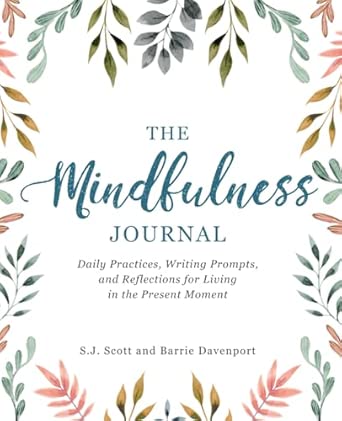 | Best for Prompt-Led Reflection | Format: Guided mindfulness journal | Focus: Present-moment awareness | Content: Daily practices, writing prompts, and reflections | VIEW LATEST PRICE | See Our Full Breakdown |
| Finding Balance: A 100-Day Mental Health Journal |  | Best Spiral-Bound Comfort Pick | Brand: LIFTINSPIRE CO. | Duration: 100 days | Format: Spiral-bound hardcover | VIEW LATEST PRICE | See Our Full Breakdown |
| 5 Minutes a Day Self-Care Journal, 91-Day Guided Reflection Notebook, A5, Green |  | Best Low-Commitment Daily Habit | Format: Guided notebook | Duration: 91 days, undated | Size: A5 (5.8 x 8.3 inches) | VIEW LATEST PRICE | See Our Full Breakdown |
| guided meditation journal | Format | Duration | Structure | Focus |
|---|---|---|---|---|
| Mindfulness & Meditation Guide | Guided journal | 30 days | Daily entries | Calm and happiness |
| A Year of Mindfulness: A 52-We | Guided journal | 52 weeks (one year) | Weekly reflection prompts | Mindfulness, peace, and presence |
| Morning Meditations: A Guided | Guided journal | — | Daily morning entries | Calm and energy to start the day |
| A Year of Zen: A 52-Week Guide | Guided journal | 52 weeks (one year) | Weekly prompts | Zen practice and guided reflection |
| Mindful in Minutes: You Are No | Guided meditation journal | — | Guided weekly program | Mindfulness and observing thoughts |
| Inner Peace: A Guided Meditati | Guided meditation journal | Open-ended (not date-bound) | Prompt-led entries | Guided meditation and reflection |
| Finding Balance Mental Health | — | 6 months | — | — |
| 100-Day Guided Mental Health J | Guided journal | 100 days | — | — |
| The Mindfulness Journal: Daily | Guided mindfulness journal | — | Prompt-led daily entries | Present-moment awareness |
| Finding Balance: A 100-Day Men | Spiral-bound hardcover | 100 days | — | — |
| 5 Minutes a Day Self-Care Jour | Guided notebook | 91 days, undated | — | — |
More Details on Our Top Picks
Mindfulness & Meditation Guided Journal
This journal makes the most sense for anyone who wants a short, structured on-ramp into meditation journaling. The 30-day format lowers the commitment barrier in a way longer books don’t — compared with A Year of Mindfulness, which asks for a full 52 weeks of dedication, this option lets a newcomer build the habit before deciding whether to continue. Daily prompts pair with meditation guidance, so a beginner never faces a blank page wondering what to write.
The tradeoff is depth. Thirty days is enough to establish a rhythm but not enough for the sustained transformation that A Year of Zen or Mindful in Minutes are built around. Someone with an established practice will outgrow it quickly.
Pros:- Short 30-day format is easy to commit to
- Daily prompts remove the blank-page problem
- Combines meditation guidance with journaling in one place
- Great habit-building entry point before a longer program
Cons:- Limited 30-day span means the structure ends just as the habit forms
- Content is geared toward newcomers, so seasoned journalers may find it shallow
Best for: Complete beginners who want a low-commitment, one-month introduction to daily meditation journaling
Not ideal for: Experienced practitioners — the 30-day scope will feel brief and the prompts too foundational
- Format:Guided journal
- Content:Daily mindfulness journal prompts
- Duration:30 days
- Structure:Daily entries
- Focus:Calm and happiness
- Guidance style:Meditation guidance combined with journaling
Our verdict“Choose this if you want the gentlest possible 30-day introduction to guided meditation journaling before investing in a longer program.”
A Year of Mindfulness: A 52-Week Guided Journal to Cultivate Peace and Presence
This is the pick I’d point most buyers toward, because it strikes the broadest and most durable balance of everything in this lineup. The 52-week arc gives the practice room to deepen, while the explicit focus on peace and presence keeps the weekly themes anchored in everyday life rather than abstract philosophy. Where Mindful in Minutes concentrates narrowly on the thought-observation theme over eight weeks, this journal spreads its attention across a full year of changing prompts.
The commitment is the real cost. Compared with the Mindfulness & Meditation Guided Journal‘s 30-day sprint, a year-long book demands sustained motivation, and buyers who have stalled on previous journals should honestly weigh that before choosing it.
Pros:- Full year of weekly structure supports deep, gradual progress
- Clearly focused on cultivating peace and presence
- Weekly cadence is less demanding than daily-entry journals
- Themed progression keeps prompts fresh across twelve months
Cons:- Year-long commitment is a real barrier for inconsistent journalers
- Weekly format offers less day-to-day accountability than daily-prompt options
Best for: Journalers ready to commit to a full year of structured weekly mindfulness reflection
Not ideal for: Habit-challenged buyers or those wanting a short trial — a 52-week structure invites abandonment partway through
- Format:Guided journal
- Duration:52 weeks (one year)
- Focus:Mindfulness, peace, and presence
- Structure:Weekly reflection prompts
- Entry cadence:Weekly
- Guidance style:Themed weekly prompts
Our verdict“If you can commit to a year, this is the most complete and well-rounded guided mindfulness journal in the roundup.”
Morning Meditations: A Guided Journal to Start Each Day Feeling Calm and Energized
What separates this journal from the others here is timing, not duration. Every entry in this book is built to be completed first thing in the morning, pairing calm with energy rather than the wind-down tone most meditation journals take. That makes it a natural companion piece rather than a direct rival: it stacks well alongside A Year of Mindfulness, which is better for deeper weekly reflection but doesn’t anchor your day at sunrise.
Part of the Everyday Inspiration Journals series, it trades depth of theme for ritual consistency. Buyers wanting an evening reflection practice or a long-term transformation arc will find the morning-only framing limiting, since the prompts assume you’re setting intentions, not reviewing your day.
Pros:- Purpose-built morning routine with daily structure
- Balances calm and energy rather than relaxation alone
- Part of an established journal series with consistent design
- Works well as a companion to a longer weekly journal
Cons:- Morning-only framing limits flexibility for other times of day
- Ritual-focused rather than theme-deep, so it may feel repetitive over months
Best for: People who want to build a consistent morning routine and prefer starting the day with intention-setting reflection
Not ideal for: Evening journalers — the prompts are designed around starting the day and won’t suit end-of-day review habits
- Series:Everyday Inspiration Journals
- Volume:10
- Format:Guided journal
- Intended use time:Morning
- Focus:Calm and energy to start the day
- Structure:Daily morning entries
Our verdict“This is the pick for building a specific morning meditation ritual, ideally alongside a deeper journal for weekly reflection.”
A Year of Zen: A 52-Week Guided Journal
On the surface this looks identical to A Year of Mindfulness — same 52-week skeleton — but the Zen orientation shifts the entire reading experience. Zen traditions emphasize simplicity, acceptance, and present-moment awareness, so this pick makes the most sense for buyers drawn to that philosophy specifically, whereas A Year of Mindfulness takes a broader, more secular-psychological approach to peace and presence.
The honest tradeoff is information: the product details describe the year-long structure and guided reflection but say little about the specific prompts inside, so buyers are committing on faith more than with the better-documented options in this lineup. That ambiguity is worth weighing against the philosophical fit.
Pros:- Full 52-week structure for a year-long practice
- Zen orientation offers a distinct philosophical lens
- Guided reflection format suits steady, contemplative journalers
- Weekly pacing is sustainable alongside busy schedules
Cons:- Minimal published detail about the actual prompts inside
- Overlaps heavily with A Year of Mindfulness, so choosing between them is mostly philosophical preference
Best for: Buyers specifically drawn to Zen philosophy who want a full year of themed guided reflection
Not ideal for: Buyers who want to know exactly what prompts they’re getting — the journal’s interior content is thinly documented
- Format:Guided journal
- Duration:52 weeks (one year)
- Focus:Zen practice and guided reflection
- Structure:Weekly prompts
- Entry cadence:Weekly
- Guidance style:Guided reflection
Our verdict“Pick this over A Year of Mindfulness only if Zen philosophy specifically resonates with you — the structure is otherwise very similar.”
Mindful in Minutes: You Are Not Your Thoughts: An 8-Week Guided Meditation Journal
This journal occupies the middle ground nobody else in this roundup claims: longer and more therapeutic than a 30-day starter, far shorter than a year-long commitment. Its eight-week program centers on a single powerful idea — you are not your thoughts — teaching the skill of observing thinking rather than being swept up in it. Where Morning Meditations builds a routine and A Year of Zen builds breadth, this one builds one targeted cognitive skill.
That specificity is both its strength and its limit. Buyers dealing with racing thoughts, rumination, or anxiety will get more from this than any general mindfulness journal, but someone wanting varied weekly themes will find the narrow focus repetitive after a few weeks.
Pros:- Eight-week length balances depth with achievable commitment
- Targeted focus on thought-observation is genuinely therapeutic for overthinkers
- Shorter than year-long journals, easier to actually finish
- Ideal stepping stone between a 30-day starter and a 52-week program
Cons:- Single-theme focus can feel repetitive across eight weeks
- Not a substitute for broader mindfulness coverage found in year-long options
Best for: Overthinkers and ruminators who want a focused eight-week program on observing and detaching from thoughts
Not ideal for: Buyers seeking varied, general-purpose mindfulness prompts — the single-theme focus narrows the content considerably
- Format:Guided meditation journal
- Program length:8 weeks
- Focus:Mindfulness and observing thoughts
- Central theme:You are not your thoughts
- Structure:Guided weekly program
- Guidance style:Meditation journaling with thought-observation exercises
Our verdict“If racing thoughts are your main struggle, this focused eight-week program will serve you better than any general mindfulness journal here.”
Inner Peace: A Guided Meditation Journal for Beginners
Starting a meditation journal is easier when the book does the teaching for you, and Inner Peace leans into that promise. Compared with heavier systems like the Finding Balance Mental Health Journal, which layers mood trackers, habit grids, and monthly reviews on top of daily entries, this one keeps the barrier to entry low — a real advantage for anyone who has abandoned journals two weeks in. The tradeoff is depth: experienced journalers who already know their patterns will likely outgrow the guidance quickly and may prefer the Mindfulness Journal‘s broader range of reflection prompts. Because no page count or dimensions are published, buyers wanting a specific size should check details before ordering. This pick makes the most sense for someone building the habit, not maintaining one.
Pros:- Beginner-focused guidance removes the intimidation of blank pages
- Lower commitment than 100-day or 6-month structured programs
- Meditation-first approach rather than pure mood tracking
- Simple enough to sustain during the fragile first weeks of habit-building
Cons:- Likely to be outgrown quickly by experienced journalers
- Page count and dimensions are not specified, so size expectations are a gamble
Best for: Complete newcomers who want gentle, low-pressure structure while building a daily meditation habit
Not ideal for: Experienced journalers who want dense tracking tools or a long-duration system
- Format:Guided meditation journal
- Audience:Beginners
- Focus:Guided meditation and reflection
- Structure:Prompt-led entries
- Duration:Open-ended (not date-bound)
- Cover:Paperback
Our verdict“If you’ve never kept a meditation journal before and want training wheels rather than a training program, this is the right starting point.”
Finding Balance Mental Health Journal, 6-Month Guided Daily Journal
This is the marathon runner of the lineup. Where the 100-Day Guided Mental Health Journal covers roughly three months, this edition stretches to six months of daily check-ins, weekly reflections, and monthly mood and habit tracking — a format that rewards people who genuinely want to watch long arcs of change rather than quick wins. The 26 structured prompts give enough variety to avoid repetition fatigue, and the sand-colored faux leather hardcover with elastic closure feels more discreet on a desk than flashier alternatives like the lavender Finding Balance edition. The QR-linked audio meditation is a nice bridge to guided practice. My main hesitation: six months is a real commitment, and missing a week can feel like failure — buyers who prefer flexible, undated formats should look elsewhere. Undisclosed dimensions are another minor annoyance.
Pros:- Six-month duration captures long-term mood and habit trends shorter journals miss
- Multi-level structure: daily check-ins, weekly reflections, and monthly tracking
- Progress review section turns raw entries into actionable insight
- Discreet, durable hardcover with elastic closure and guided audio meditation access
Cons:- Six months of daily commitment is demanding and unforgiving of missed days
- Dimensions and page count are not disclosed, complicating size expectations
Best for: Dedicated self-trackers in therapy or recovery who want a six-month window to observe genuine behavioral patterns
Not ideal for: People who journal sporadically — the dated structure punishes gaps and can breed guilt
- Duration:6 months
- Prompts:26 structured prompts
- Tracking:Daily, weekly, and monthly mood and habit tracking
- Cover:Sand-colored faux leather hardcover
- Binding:Spiral-bound
- Closure:Elastic closure
- Extras:Progress review section; guided audio meditation via QR code
Our verdict“Choose this if you want a serious, month-over-month picture of your mental health rather than a short starter journal.”
100-Day Guided Mental Health Journal for Self-Care and Mindfulness
Not everyone wants a journal that announces itself. This option stands out for its plain black hardcover, which reads like a generic notebook in a meeting or on a train — a meaningful difference from the lavender Finding Balance edition or the beige six-month version, both of which signal ‘wellness journal’ at a glance. Functionally it mirrors that structure: daily and weekly check-ins, mood and habit trackers, weekly structured prompts with lined space, and a progress review section, plus the same QR-code audio meditation. Compared with the six-month journal, the 100-day window halves the commitment, making it a smarter entry point for anyone unsure they can sustain a longer program. The catch is rigidity: weekly structured prompts leave little room for freeform writers, and the dated format assumes consistency.
Pros:- Plain black hardcover offers genuine privacy in shared or public settings
- 100-day duration is a manageable commitment versus six-month programs
- Balanced structure with daily check-ins, trackers, and progress reviews
- Includes guided audio meditation via QR code
Cons:- Weekly structured prompts constrain open-ended journaling
- Dated 100-day format can create pressure and guilt after missed days
Best for: Professionals and students who journal in public or shared spaces and want complete visual discretion
Not ideal for: Freeform writers who resist structured prompts and want open pages to think on paper
- Duration:100 days
- Format:Guided journal
- Tracking:Daily, weekly, and monthly mood and habit tracking
- Prompts:Weekly structured prompts with lined writing space
- Cover:Black hardcover
- Extras:Progress review section; guided audio meditation via QR code
Our verdict“The pick for anyone whose journal needs to blend in — same therapeutic structure as the flashier editions, none of the attention.”
The Mindfulness Journal: Daily Practices, Writing Prompts, and Reflections for Living in the Present Moment
Where most journals in this roundup are built around tracking systems — mood grids, habit calendars, progress reviews — this one centers on the writing itself. Its daily practices and prompts push toward present-moment awareness rather than data collection, which makes it a better match for readers who find trackers fussy or clinical. Compared with the beginner-oriented Inner Peace journal, it asks more of the writer: the prompts invite genuine reflection rather than simple guided completion, so it suits someone a few steps into a mindfulness practice. The flip side is what it lacks — no mood or habit tracking, no audio companion, and no specified hardcover or binding details, so it feels less like a durable daily companion and more like a paperback workbook. That simplicity is either its strength or its weakness, depending on what you want from the page.
Pros:- Daily mindfulness practices build present-moment awareness, not just diary entries
- Writing prompts encourage deeper reflection than checkbox-style trackers
- Unburdened by rigid tracking formats, so it flexes with your mood
- Approachable for journalers at several experience levels
Cons:- No mood or habit tracking for pattern-focused journalers
- Lacks the hardcover durability and audio extras of pricier structured journals
Best for: Reflective writers who value thoughtful daily prompts over tracking grids and metrics
Not ideal for: Data-driven self-trackers who rely on mood and habit charts to spot patterns
- Format:Guided mindfulness journal
- Focus:Present-moment awareness
- Content:Daily practices, writing prompts, and reflections
- Structure:Prompt-led daily entries
- Tracking:None
- Cover:Paperback
Our verdict“Pick this if you journal to think, not to measure — it trades tracking tools for better questions.”
Finding Balance: A 100-Day Mental Health Journal
This lavender edition is essentially the softer sibling of the black 100-day journal — identical therapeutic architecture, different personality. The spiral binding lays flat, which matters more than it sounds when you’re writing at a desk or in bed, and the lavender hardcover signals self-care rather than anonymity. Compared with the beige six-month Finding Balance journal, the 100-day window halves the commitment while keeping the daily check-ins, weekly reflections, mood and habit trackers, progress review, and QR-code audio meditation. That makes it a sensible middle path: more structure than The Mindfulness Journal, less pressure than the six-month version. The drawbacks are familiar — a fixed 100-day format leaves no grace period for lapses, and the bold lavender cover is the opposite of discreet, so it won’t suit anyone journaling in open view who values privacy.
Pros:- Spiral binding lies completely flat for comfortable desk or bedtime writing
- Full feature set: daily check-ins, weekly reflections, mood and habit tracking, and progress reviews
- 100-day duration balances commitment with achievability
- Includes guided audio meditation via QR code
Cons:- Fixed 100-day dated format offers no flexibility for missed days
- Bold lavender cover is conspicuous in shared or professional spaces
Best for: Buyers who want the full tracking experience in a gentler 100-day format and enjoy journaling as a visible act of self-care
Not ideal for: Anyone needing a discreet journal — the bright lavender cover draws attention — or who wants undated flexibility
- Brand:LIFTINSPIRE CO.
- Duration:100 days
- Format:Spiral-bound hardcover
- Cover color:Lavender
- Target audience:Adults
- Tracking:Daily, weekly, and monthly mood and habit tracking
- Extras:Reflection prompts, progress review, guided audio meditation via QR code
- Model number:FB-100-SPIRAL-PURPLE
Our verdict“The friendliest full-featured option here — flat-lay comfort and complete tracking for buyers who don’t need to hide their self-care.”
5 Minutes a Day Self-Care Journal, 91-Day Guided Reflection Notebook, A5, Green
Where most options in this roundup ask for a bigger investment of time or emotional energy — A Year of Mindfulness runs a full 52 weeks, and the Finding Balance 6-Month Journal spans half a year — this one bets on a five-minute daily format over 91 undated days. That framing matters: for anyone who has abandoned longer journals before week three, a shorter commitment with small daily wins is what makes the habit stick. The mood, symptom, and habit trackers also go further than prompt-only books like Morning Meditations, turning reflection into visible data over time. The tradeoff is real, though — the undated format puts schedule discipline entirely on you, and the daily entries stay brief, so readers wanting deeper guided meditation instruction should look at Mindful in Minutes instead.
Pros:- Five-minute format keeps the daily habit sustainable when longer journals feel overwhelming
- Mood, health symptom, and habit trackers add a progress-monitoring layer most prompt journals lack
- Premium build details — linen hardcover, 100gsm FSC paper, three ribbon bookmarks, pen loop, and back pocket
- Compact A5 size travels easily in a bag alongside daily essentials
Cons:- Undated pages mean no built-in accountability — missed days are easy to hide from yourself
- Entries are intentionally brief, so it won’t satisfy anyone wanting in-depth meditation guidance
Best for: Busy adults who want a short, low-pressure daily reflection habit with light tracking, not a meditation course
Not ideal for: Buyers seeking structured meditation teaching or a dated program — the prompts are brief and you must manage your own schedule
- Format:Guided notebook
- Duration:91 days, undated
- Size:A5 (5.8 x 8.3 inches)
- Cover:Linen hardcover
- Paper:100gsm FSC-certified
- Tracking features:Mood, health symptom, and habit trackers
- Extras:3 ribbon bookmarks, pen loop, elastic closure, back pocket
- Weight:0.39 kg
- Audience:Adults
Our verdict“Pick this if you want the easiest possible on-ramp to daily journaling with light self-tracking; skip it if you need structured meditation instruction or a dated program to stay accountable.”

How We Picked
I evaluated each journal against four criteria that actually determine whether a meditation journal gets used past week two: prompt quality and variety (whether entries repeat or evolve), structure and pacing (dated versus undated, session length, total program duration), instruction depth (does it teach meditation technique or just pose reflection questions), and physical usability (paper quality, binding, layout room, portability). I also weighed format honesty — several ‘meditation’ journals in this space are really mood trackers with a mindfulness label, and I flagged that distinction rather than treating all eleven as interchangeable.
The ranking order reflects a simple premise: the best guided meditation journal is the one a buyer will finish. Journals that balance structure with flexibility ranked higher than rigid daily programs, and journals that genuinely guide a meditation practice ranked above those focused on general self-care. Where two journals overlapped heavily — as with the two Finding Balance titles — I separated them by intended user and commitment level rather than ranking them back to back.
| guided meditation journal | Format |
|---|---|
| Mindfulness & Meditation Guide | Guided journal |
| A Year of Mindfulness: A 52-We | Guided journal |
| Morning Meditations: A Guided | Guided journal |
| A Year of Zen: A 52-Week Guide | Guided journal |
| Mindful in Minutes: You Are No | Guided meditation journal |
| Inner Peace: A Guided Meditati | Guided meditation journal |
| Finding Balance Mental Health | — |
| 100-Day Guided Mental Health J | Guided journal |
| The Mindfulness Journal: Daily | Guided mindfulness journal |
| Finding Balance: A 100-Day Men | Spiral-bound hardcover |
| 5 Minutes a Day Self-Care Jour | Guided notebook |
Factors to Consider When Choosing Guided Meditation Journals
Beyond the individual journals above, a few category-wide dynamics shape whether your purchase pays off. These are the mistakes and tradeoffs I see buyers run into most often with guided meditation journals.Dated Programs vs. Undated Journals
The single biggest decision is whether you want a time-bound program or an open-ended journal. Dated programs like the 52-week and 100-day formats create momentum and a clear finish line, which is exactly what most people need to build a habit. The catch: skipped days create guilt, and guilt kills more meditation practices than boredom does. Undated journals remove that pressure entirely, but without a structure pushing you forward, many sit half-empty on a nightstand. My honest advice is to under-commit — buy the shorter program if you have any doubt, because a finished 8-week journal builds more momentum than an abandoned year-long one.
Session Length and Realistic Time Budget
Journals in this category range from 2-minute quick entries to 20-minute reflection spreads, and buyers routinely overestimate their available time. A journal asking for morning intention, evening reflection, and gratitude entries three times a day sounds lovely in week one and becomes a chore by week three. Match the journal to your actual schedule, not your aspirational one: commuters and parents tend to stick with five-minute formats, while people with a established morning routine can sustain longer spreads. The time-per-entry figure is usually buried in the product description, so read it before buying.
Meditation Instruction vs. Reflection Prompts
This is where the category gets murky. Some journals — particularly the beginner and Zen-focused titles — include actual breathing exercises, body scans, and guided techniques alongside the writing. Others are essentially guided reflection notebooks with a mindfulness theme: great for emotional processing, but they will not teach you to meditate. Neither approach is wrong, but buying the wrong one leads to disappointment. If your goal is a meditation habit, verify the journal includes technique instruction. If your goal is stress relief through writing, the reflection-heavy options may actually serve you better.
Mental Health Framing and Emotional Intensity
Several journals in this lineup are positioned around mental health and self-care rather than pure mindfulness, and their prompts dig into mood, anxiety, and emotional triggers. That depth is valuable — but it is a different emotional experience than a calm, present-moment focus. Buyers dealing with acute stress sometimes find trigger-focused prompts heavier than expected, while others find gentle mindfulness prompts too shallow to be useful. Know which side of that line you want before choosing. And a fair caveat for the whole category: no journal is a substitute for professional support if you are struggling.
Binding, Size, and Where You Will Use It
The practical stuff matters more than buyers expect. Spiral-bound journals lie flat, which sounds trivial until you are trying to write one-handed on a couch — hardcover bound journals often will not stay open on their own. A5 and smaller formats travel well and suit on-the-go entries, while large-format journals give more writing room but stay home. Paper weight matters if you use fountain pens or markers; thin pages show ghosting that makes rereading your entries less pleasant. If you journal in one spot at one desk, ignore all of this. If you do not, treat it as a real filter.
Entry Count and Total Program Value
Journals range from about 60 entries to a full year, and cost per use varies enormously even before looking at any price tag — a 91-entry journal used fully delivers far more guided sessions than a shorter one abandoned early. The mistake I see most: buying the longest program because it feels like the best value, then quitting at the six-week mark. Long journals only deliver value to buyers with an established journaling habit. Everyone else gets more from a shorter, denser program they complete, then a second one afterward. Treat your first journal as a trial, not a lifetime purchase.
Frequently Asked Questions
Can a guided meditation journal actually replace a meditation app?
For many people, yes — but they solve different problems. Apps provide audio instruction and timers, which help beginners learn technique, while journals force active reflection that audio alone rarely prompts, and reflection is where most of the behavioral benefit of journaling comes from. A journal also has no subscription and no screen, which matters if part of your motivation is reducing phone time. The strongest approach for newcomers is often combining both for the first month or two: an app for learning the meditation itself, the journal for processing what came up. If you already know how to meditate, a well-designed journal with built-in technique prompts can fully replace the app.
How long should my first guided meditation journal be — 8 weeks, 100 days, or a full year?
If you have never journaled consistently before, start with an 8-week program like Mindful in Minutes — it is long enough to build a real habit but short enough that the finish line stays visible. A 100-day or 91-day format is a reasonable middle step once you have completed something shorter and know you will show up. Year-long journals reward commitment with the deepest long-term payoff, but they are the format most often abandoned, usually somewhere in the second month. The pattern I see in this category is consistent: completion rate matters more than program length, because a finished short journal builds the confidence to start a longer one.
What is the difference between a meditation journal and a mental health journal?
A meditation journal centers on present-moment awareness — noticing thoughts, anchoring attention, observing without judgment — and its prompts usually follow a meditation session. A mental health journal centers on emotional processing — tracking mood, identifying triggers, working through anxiety or low periods — and can stand entirely on its own. The overlap is real, and journals like the Finding Balance titles deliberately blend both, which suits buyers who want stress relief plus emotional insight in one book. The distinction matters most for beginners: if you want to learn meditation specifically, the reflection-heavy journals will feel like they keep missing the point. If you want emotional clarity, the strict meditation journals may feel too quiet.
What if I miss days in a dated guided journal — is the journal ruined?
No, and letting perfectionism decide this is one of the most common ways people quit. Most dated journals are structured by week or day-count rather than calendar date, so skipping a day just extends your timeline rather than leaving blank, guilt-inducing pages. My suggestion is to adopt a simple rule: never miss two sessions in a row, and if you do, re-enter without backtracking or trying to catch up. Journals with weekly themes, like A Year of Mindfulness, are the most forgiving format here, because one missed day barely dents the week. Rigid daily spreads are the least forgiving, which is worth knowing before you buy one.
Are the cheaper guided meditation journals noticeably worse than premium ones?
In this category, price differences mostly reflect paper quality, binding, and page count rather than prompt quality — some of the most thoughtful guided programs come in modestly produced books, and some beautifully made journals contain repetitive prompts. Spiral binding and heavier paper genuinely improve the daily experience, so they are worth paying more for if you journal at a desk or use ink-heavy pens. Where premium production falls flat is on portability: heavy hardcovers often stay home and get used less. Judge the prompt structure first by reading the entry layout, then decide whether the physical upgrade is worth it for how and where you will actually write.
Conclusion
The right choice here depends less on quality — most of these journals are competent — and more on matching format to your habits. For best overall, A Year of Mindfulness earns the top spot for blending weekly structure with daily flexibility, a combination that fits the widest range of real schedules. For best value, the 100-Day Guided Mental Health Journal delivers a high entry count with genuinely varied prompts at a modest commitment level. For beginners, Inner Peace explains the purpose behind every prompt, which the intensive and Zen-oriented journals simply do not do. For busy buyers and habit skeptics, the 5 Minutes a Day Self-Care Journal is the most realistic daily commitment in the lineup. For buyers who want depth, A Year of Zen offers the most substantive long-term program, and for people focused on emotional wellbeing rather than technique, the spiral-bound Finding Balance Mental Health Journal is the better tool. Whichever you choose, start with the shortest program you would genuinely finish — a completed journal beats an ambitious one every time.
Halloween Picks
halloween
As an affiliate, we earn on qualifying purchases.